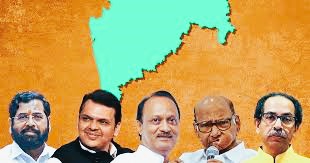
“From Maratha Uprising to Urban Development Dramas: Maharashtra’s Election Sparks Battles Across Alliances, Identities, and Ideologies”
As Maharashtra prepares for its assembly elections on November 20, the political atmosphere is electric, with each party striving for dominance amid a complex landscape of caste, class, and community interests. This year’s election is not merely a battle for seats; it is a vigorous clash of ideologies and evolving alliances, addressing long-standing grievances that have long been simmering beneath the surface.
At the forefront of this political contest is the ruling Mahayuti alliance, a potent coalition led by the Bharatiya Janata Party (BJP), with the support of the Shinde faction of the Shiv Sena and Ajit Pawar’s NCP faction. Opposing them is the Maha Vikas Aghadi (MVA), which includes Uddhav Thackeray’s Shiv Sena, Sharad Pawar’s NCP, and the Congress party. Both coalitions have intensified their campaigns, conducting mass rallies and delivering impassioned speeches from notable leaders like BJP’s Devendra Fadnavis and NCP’s Jayant Patil, each aiming to sway voter sentiment as election day approaches.
The Maharashtra assembly elections are crucial to India’s democratic framework, comprising 288 seats, with 26 reserved for Scheduled Castes and 13 for Scheduled Tribes. The 2019 election witnessed a turnout of approximately 61.15%, with around 7.28 crore voters participating, underscoring the significance of the upcoming electoral showdown.
Central to this election is the intricate reality of caste politics, which continues to dominate Maharashtra’s political narrative. The demand for reservations for the Maratha community has emerged as a flashpoint, with Maratha activists vociferously advocating for their cause. This urgency has raised concerns among Other Backward Classes (OBC) groups, who fear their own reservation entitlements may be diluted. At the heart of this debate is activist Manoj Jarange-Patil, whose protests in the Marathwada region have thrust the issue into the limelight. With approximately 46 assembly seats potentially affected by these tensions, the ruling Mahayuti faces the formidable challenge of appeasing the Marathas without alienating the OBCs, both significant voting blocs. How the parties navigate this intricate balance will undoubtedly influence voter turnout and sway undecided voters, which could ultimately determine the election’s outcome.
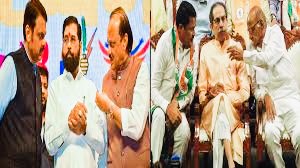
In a bid to assert their influence, both alliances have unveiled welfare promises that resonate with Maharashtra’s diverse demographics. Chief Minister Eknath Shinde, seeking to fortify his position, announced a massive ₹1 lakh crore welfare package aimed at benefiting various communities. Key initiatives, such as the “CM Majhi Ladki Bahin” scheme to support economically disadvantaged women and toll tax waivers designed to appeal to urban middle-class voters in Mumbai, exemplify the Mahayuti’s strategic approach to broaden its appeal. In contrast, the MVA has countered with its own welfare initiatives, specifically designed to address the needs of marginalized groups, aiming to redirect attention from the ruling coalition’s agenda. The stakes are exceptionally high, and these competing welfare packages reflect the fierce competition to secure core constituencies while courting undecided segments of Maharashtra’s electorate.
Beneath this facade of unity, both alliances are grappling with fractured loyalties and splintered allegiances. The MVA hopes to leverage discontent among disillusioned supporters from the Shiv Sena and NCP, channelling it into a “sympathy wave” against what they perceive as the destabilizing influence of the BJP. They argue that voters are frustrated by continuous infighting and blame the BJP for undermining the stability of regional political legacies. This message resonated in the recent Lok Sabha elections, where a significant segment of the electorate exhibited growing skepticism towards the BJP’s governance. Whether this sentiment translates into tangible electoral support remains uncertain, but for the MVA, the stakes are substantial—every vote is critical.
For the ruling Mahayuti, infrastructure development is presented as a hallmark of their governance success. Projects such as the Navi Mumbai Airport and the redevelopment of Dharavi are highlighted as symbols of growth and progress under their stewardship. However, these initiatives have not escaped criticism, with opposition parties alleging corruption, environmental concerns, and potential displacement of vulnerable communities. This debate over infrastructure could fracture the urban voter base, with supporters of development leaning towards the Mahayuti, while others, wary of transparency and ethics, may gravitate toward the MVA.
Additionally, the emergence of smaller regional parties and independent candidates adds an unpredictable layer to the electoral contest. Maharashtra’s complex political landscape is notorious for fragmenting votes, and this election is no exception. These minor players could siphon votes from major alliances, potentially enabling unexpected victories in specific constituencies. Historical precedents in states like Haryana illustrate how multi-cornered contests can disrupt opposition unity, compelling both the Mahayuti and MVA to strategize effectively to secure a clear mandate. In a state where voter loyalty is notoriously fickle, even slight shifts in allegiance could dramatically alter the election’s trajectory, favouring the alliance that can build a robust and stable base.
A significant demographic at the heart of this election is the influential Maratha community, which constitutes approximately 14% of Maharashtra’s population and exerts considerable influence over a fifth of the state’s Lok Sabha seats. Despite the ruling coalition’s attempts to address the Maratha reservation demand, many remain unconvinced, with figures like activist Manoj Patil vocally criticizing politicians for failing to deliver on their promises. His activism resonates strongly in Marathwada, stirring renewed mobilization among the Maratha community. Patil’s pointed critiques of various political figures underline a frustration that could alienate the Mahayuti’s traditional support base, adding another layer of uncertainty to the electoral equation.
The BJP recognizes the significance of the Maratha vote and has endeavoured to bridge the gap by engaging with community leaders and emphasizing their commitment to addressing longstanding demands. However, scepticism lingers due to previous unfulfilled promises, casting doubts on the sincerity of recent outreach efforts. Should the Marathas, OBCs, and Dalits unite under the MVA’s banner, it could disrupt the Mahayuti’s calculations and pose a serious challenge to the ruling alliance’s campaign.
The MVA’s strategy focuses on building a broad coalition, aiming to garner support from Marathas, Dalits, and Muslims—communities that many perceive as marginalized by the current administration. By emphasizing socioeconomic issues and advocating for unity, the MVA seeks to replicate its recent Lok Sabha success in the assembly elections. If this coalition strategy proves effective, it could shift the balance in regions marked by economic hardship and disenfranchisement, presenting a formidable counterforce to the Mahayuti’s urban and development-centric agenda.
Compounding this already intricate scenario are communal considerations. The MVA’s support from Muslim voters has prompted the BJP to employ divisive rhetoric, with allegations of “vote jihad” entering public discourse. Although the Election Commission has attempted to moderate such statements, the polarized rhetoric continues to loom large over the campaign. As both alliances navigate these sensitive issues, the potential for alienating key voter segments adds to the electoral stakes in Maharashtra.
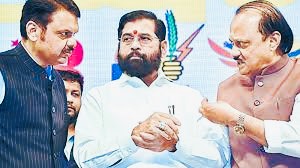
As Maharashtra approaches what could be one of its most contentious elections, the Maratha Mayhem serves as a critical juncture. This political saga extends beyond mere electoral victory; it reflects a deep-seated need to address enduring social divides, navigate caste dynamics, and acknowledge the frustrations of communities often overlooked in political discourse. As alliances vie for supremacy, each vote carries significant weight, and every community’s voice is vital. The future of Maharashtra hangs in the balance, with the election’s outcome likely to resonate beyond state borders, shaping alliances and policies that will have lasting implications on the national stage.
Visit arjasrikanth.in for more insights
 SOCIAL PERSPECTIVES