
Gandhi’s Wisdom in a Tech-Driven World: Reimagining Humanity in the Age of Isolation
As we commemorate the birth anniversary of Mahatma Gandhi on October 2nd, it becomes imperative to reflect on his enduring legacy and the relevance of his philosophies in today’s rapidly evolving world. Gandhi, revered as the ‘Mahatma’ or ‘great soul,’ is celebrated not only for his contributions to India’s independence but also for his profound impact on global movements advocating for civil rights, social justice, and non-violence. In an era marked by technological advancements and increasing isolation, Gandhi’s teachings offer valuable insights into addressing contemporary challenges, including human rights, sustainable development, climate change, and socio-political instability.
Gandhi’s life was a testament to the power of truth and non-violence, principles he steadfastly advocated through his philosophy of Satyagraha. This approach to social and political change emphasized the importance of standing up for justice without resorting to violence, a concept that resonates deeply in today’s world, where conflicts and violence often overshadow dialogue and understanding. His ideologies continue to inspire movements across the globe, emphasizing the need for a collective approach to address pressing issues that transcend national boundaries.

In a world increasingly defined by technological advancements, the impact of isolation and disconnection is palpable. The digital age, while offering unprecedented access to information and connectivity, has also fostered a sense of alienation among individuals. This paradoxical reality calls for a re-evaluation of our values and priorities, and Gandhi’s teachings provide a moral compass for navigating these complexities. His philosophy encourages us to prioritize human connections and empathy, reminding us that technology should serve as a tool for enhancing our humanity rather than diminishing it.
The relevance of Gandhi’s philosophy of non-violence in today’s world is undeniable. Terrorism, political unrest, and violence continue to plague various regions, and Gandhi’s call for peaceful resistance serves as a potent reminder that sustainable change can be achieved through dialogue and mutual understanding rather than through force and coercion. His principles of Satyagraha, advocating peaceful protest and civil disobedience, have been effectively employed by numerous social movements, including the Civil Rights Movement in the United States and the anti-apartheid struggle in South Africa. These instances highlight the transformative power of non-violent resistance in the face of oppression.

Moreover, Gandhi’s emphasis on sustainable living aligns seamlessly with the global imperative for environmental stewardship. In a time when climate change poses one of the most significant threats to humanity, his advocacy for simplicity and minimalism resonates strongly. Gandhi famously stated, “There is enough on earth for human needs but not for human greed.” This assertion serves as a poignant reminder of the need to re-evaluate our consumption patterns and prioritize sustainability over excessive consumerism. In a world where resource depletion and environmental degradation are rampant, embracing Gandhi’s principles of frugality and mindful consumption can guide us toward a more sustainable future.
Gandhi’s commitment to social justice and human rights remains just as relevant today, particularly as we witness growing disparities and injustices across the globe. His belief in the inherent dignity of every individual serves as a reminder of the importance of advocating for the marginalized and oppressed. Gandhi’s principle of Sarvodaya, or the welfare of all, emphasizes that true progress can only be achieved when the rights and needs of the most vulnerable members of society are addressed.

In today’s society, where technological advancements have the potential to exacerbate inequalities, Gandhi’s philosophies can guide us toward creating a more equitable world. The digital divide, which leaves many without access to technology and information, mirrors the socio-economic disparities that Gandhi sought to eradicate. By championing inclusive development and ensuring that technological progress benefits all segments of society, we can honour Gandhi’s legacy and work toward a more just and equitable world. Addressing the digital divide is critical to ensuring that no individual or community is left behind as the world continues to evolve.
A key aspect of Gandhi’s vision for a just society was the concept of decentralization. He believed that power should be distributed among local communities rather than concentrated in the hands of a few. This principle is particularly relevant in today’s globalized world, where corporate interests often overshadow local needs. Gandhi’s support for self-sufficient villages and local industries underscores the importance of empowering communities to take control of their own destinies. In modern contexts, this can translate into promoting local economies, supporting small businesses, and encouraging sustainable agricultural practices. By fostering local empowerment and resilience, we can build communities that are better equipped to face global challenges while honoring the ideals Gandhi championed.
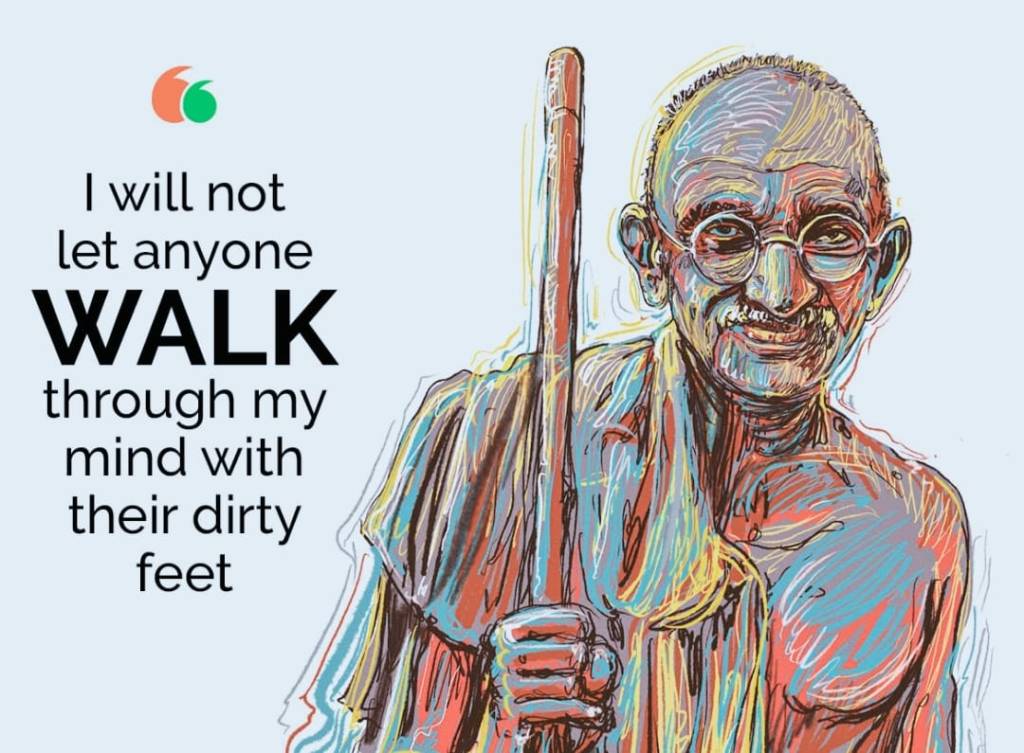
Education, in Gandhi’s vision, was not merely about intellectual development but also about fostering moral and ethical growth. His commitment to education as a means of promoting peace and understanding is critical in today’s world, where misinformation and divisive narratives can spread easily through digital platforms. Gandhi envisioned an education system that nurtured critical thinking, compassion, and a sense of responsibility toward others. As we navigate the complexities of a globalized society, fostering a sense of global citizenship and empathy is essential.
In an era characterized by rapid technological change, it is crucial to cultivate media literacy and ethical reasoning to confront misinformation and divisiveness. By promoting education that emphasizes the values of peace, tolerance, and understanding, we can create a generation that is equipped to navigate the complexities of the 21st century with compassion and wisdom. Gandhi’s educational philosophy serves as a blueprint for fostering a more peaceful and just world.

Climate change, one of the most pressing global challenges of our time, necessitates urgent action and collective responsibility. Gandhi’s advocacy for environmental stewardship and sustainable living provides a valuable framework for addressing this crisis. His belief in the interconnectedness of all life and the importance of living in harmony with nature resonates strongly in the context of contemporary environmental movements. The Gandhian philosophy of simplicity and minimalism offers practical guidance for combating climate change. Emphasizing the need to reduce consumption and prioritize sustainability aligns with global efforts to mitigate the impacts of climate change.
Technology, while it has the potential to isolate individuals and foster disconnection, can also serve as a powerful tool for promoting Gandhian values. Social media platforms and digital communication tools can facilitate dialogue, raise awareness about social issues, and mobilize communities for collective action. By leveraging technology to promote empathy, understanding, and social justice, we can harness its potential to advance the ideals Gandhi espoused.

Moreover, technology can play a crucial role in promoting sustainable practices and empowering local communities. Innovations in renewable energy, sustainable agriculture, and ethical production can align with Gandhi’s vision for self-sufficiency and local empowerment. By embracing technology that aligns with ethical values, we can create a future that honours Gandhi’s teachings while addressing the pressing challenges of our time.
As we reflect on the legacy of Mahatma Gandhi on this auspicious occasion, it is clear that his teachings hold profound relevance in our technologically driven and often isolated society. His unwavering commitment to truth, non-violence, and social justice provides a moral compass for navigating the complexities of the 21st century. In a world grappling with challenges such as climate change, inequality, and socio-political unrest, Gandhi’s philosophy encourages us to prioritize human connections, advocate for the marginalized, and embrace sustainable practices.

The birth anniversary of Mahatma Gandhi serves as a powerful reminder of his timeless influence on the world. His principles of truth, non-violence, and social justice have shaped the course of history and continue to resonate in contemporary society. Gandhi’s philosophy of peaceful resistance has transcended borders, offering a blueprint for addressing civil rights, social inequality, and environmental challenges. His emphasis on simplicity and sustainable living aligns seamlessly with current global efforts to combat climate change. Moreover, his vision of decentralization and self-sufficiency encourages local empowerment and community resilience. Gandhi’s teachings are not relics of the past but essential tools for navigating modern complexities. His call for inclusivity, justice, and compassion is particularly significant in a world increasingly driven by technological advancements. As the world evolves, Gandhi’s enduring legacy remains a source of inspiration, guiding efforts toward a more just, equitable, and sustainable future. The continued relevance of his vision offers a path forward for addressing the most pressing challenges of the present age.
VISIT ARJASRIKANTH.IN FOR MORE INSIGHTS
 SOCIAL PERSPECTIVES