
In the annals of Indian cinema, the name Akkineni Nageswara Rao, or ANR as he was fondly called, stands tall as a towering figure whose impact on the art of storytelling through film is unparalleled. Born on September 20, 1924, in the small town of Ramapuram, Andhra Pradesh, ANR embarked on a cinematic journey that would span seven decades, leaving an indelible mark on the hearts and minds of millions of viewers.
From his humble beginnings as a stage actor to his meteoric rise as one of the most celebrated and influential actors in the history of Indian cinema, ANR’s life was a testament to the power of passion, dedication, and an unwavering commitment to his craft. His body of work, spanning over 250 films, is a testament to his versatility, his ability to seamlessly inhabit a wide range of characters, and his unparalleled contribution to the art of storytelling.
One of the most remarkable aspects of ANR’s career was his willingness to take on challenging and unconventional roles. Whether it was portraying the Tamil saint Thondaradippodi Alvar in the 1954 film “Vipra Narayana,” the Sanskrit poet Kalidas in the 1960 film “Mahakavi Kalidasu,” or the Marathi saint Tukaram in the 1971 film “Bhakta Tukaram,” ANR consistently pushed the boundaries of his craft, often taking on roles that required meticulous research and an in-depth understanding of the historical and cultural context.
His versatility was not limited to biographical films; ANR also excelled in romantic dramas, with memorable performances in classics like “Laila Majnu” (1949), “Devadasu” (1953), and “Anarkali” (1955). His ability to captivate audiences with his on-screen chemistry and his nuanced portrayal of complex emotional arcs was a testament to his mastery of the craft.

But ANR’s impact on the Telugu film industry went far beyond his acting prowess. He was one of the instrumental figures in moving the industry from Madras to Hyderabad in the early 1960s, a move that would have far-reaching consequences for the industry’s growth and development. In 1975, he established Annapurna Studios, which would go on to become a hub of cinematic activity, providing much-needed infrastructural support to the thriving Telugu film industry.
ANR’s legacy, however, extends far beyond his work on the silver screen. In 2011, he launched the Annapurna International School of Film and Media within Annapurna Studios, a testament to his commitment to nurturing and developing the next generation of storytellers. Through this institution, he ensured that his passion for the art of filmmaking would continue to inspire and shape the future of the industry he loved so dearly.
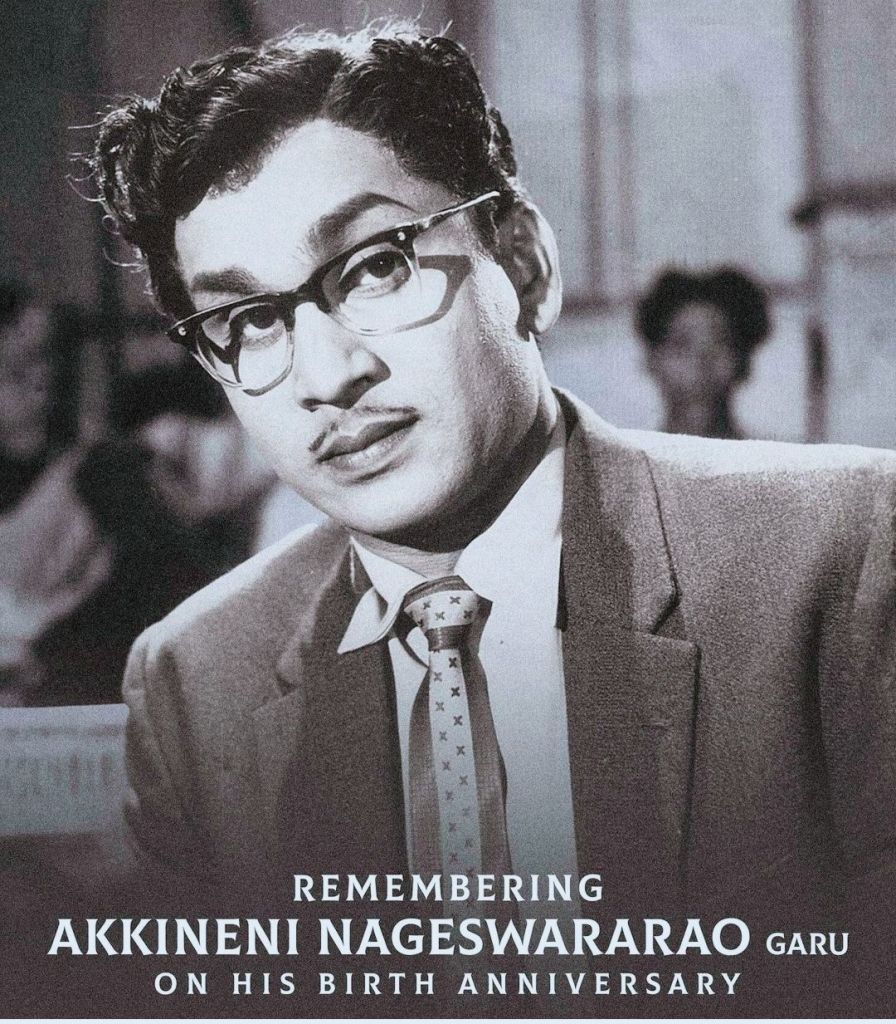
Throughout his illustrious career, ANR was recognized for his contributions to the art of cinema, receiving numerous accolades and awards, including the prestigious Dada Saheb Phalke Award, India’s highest award in the field of cinema, and the Padma Vibhushan, the country’s second-highest civilian honor. These honors were a testament to the profound impact he had on the cultural landscape of India, and the enduring legacy he would leave behind.
Tragically, ANR’s remarkable journey came to an end on January 22, 2014, during the production of his final film, “Manam.” But even in his passing, he remained true to his lifelong commitment to the art of storytelling, as “Manam” was hailed as a “befitting swansong” to his legendary career, a film that encapsulated the essence of his artistry and his unwavering dedication to his craft.

The legacy of Akkineni Nageswara Rao is one that will continue to inspire and captivate generations of filmmakers, actors, and cinephiles alike. His remarkable body of work, his unwavering commitment to his craft, and his profound impact on the Telugu film industry and beyond, have cemented his place as one of the true titans of Indian cinema. As we look back on his life and his enduring impact, we can only marvel at the immense contributions he made to the art of storytelling, and the enduring inspiration he will continue to provide to all who seek to follow in his footsteps.
The legacy of Akkineni Nageswara Rao, or ANR as he was affectionately known, is one that transcends the boundaries of the Telugu film industry and stands as a shining example of the transformative power of cinema. Through his remarkable body of work, spanning over seven decades and 250 films, ANR left an indelible mark on the hearts and minds of millions of viewers, becoming one of the most influential and celebrated figures in the history of Indian cinema.
His willingness to take on complex and unconventional roles, his mastery of emotional nuance, and his unwavering commitment to the art of storytelling, cemented his status as one of the greatest actors of his generation. But ANR’s impact went far beyond his on-screen achievements; he was also a visionary who played a pivotal role in shaping the growth and development of the Telugu film industry, establishing the Annapurna Studios and the Annapurna International School of Film and Media to nurture and support the next generation of storytellers.

In the annals of Indian cinema, the name Akkineni Nageswara Rao will forever be etched as a titan, a figure whose legacy will continue to inspire and captivate audiences for generations to come. His indelible mark on the cultural landscape of India, and his enduring contribution to the art of filmmaking, serve as a testament to the power of passion, dedication, and the unquenchable thirst for creative expression. As we celebrate the life and legacy of this cinematic giant, we can only marvel at the profound impact he had on the world of Indian cinema, and the enduring inspiration he will continue to provide to all who seek to follow in his footsteps.
VISIT ARJASRIKANTH.IN FOR MORE INSIGHTS
 SOCIAL PERSPECTIVES