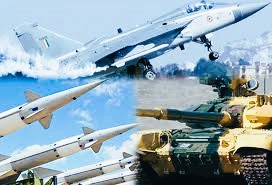
Strategic Policy Shifts and Geopolitical Dynamics Propel India to the Forefront of the Global Arms Market
India’s defense export landscape has experienced a dramatic transformation over the past decade, evolving from a country heavily dependent on imported weaponry to one emerging as a significant player in the global arms market. This remarkable shift has seen India’s defense exports grow more than 30 times, a testament to the country’s growing capabilities in defense manufacturing and its ability to compete internationally. The factors driving this transformation are multifaceted, including the ongoing Russia-Ukraine war, the Israel-Hamas conflict, and the Indian government’s proactive policies aimed at promoting domestic manufacturing and simplifying export regulations.
Data from the Defense Ministry underscores the scale of this transformation. In the first quarter of the 2024-2025 fiscal year alone, India’s defense exports soared by 78%, reaching Rs 6,915 crore (approximately $863 million), up from Rs 3,885 crore in the same period the previous year. This impressive growth builds on the record highs achieved in the 2023-2024 fiscal year, when defense exports reached Rs 21,083 crore ($2.63 billion), marking a 32.5% increase from the previous year. These figures are not merely statistical achievements but reflect India’s burgeoning capabilities in the defense sector.

The Indian government’s ambitious target of achieving a defense manufacturing turnover of Rs 1.75 lakh crore ($25 billion) by 2025, with an export target of Rs 35,000 crore ($5 billion) in aerospace and defense goods and services, has been a major catalyst in this growth. The surge in defense exports is indicative of a broader strategy to enhance India’s role in the global defense market, moving beyond its traditional status as an importer to become a key supplier of advanced military hardware and systems.
India’s defense exports now cover a wide range of products, from ammunition and small arms to more sophisticated systems like armoured vehicles, lightweight torpedoes, simulators, drones, and fast-attack vessels. This diversification marks a significant departure from the past when India’s defense exports were limited to a few select items. Countries such as Myanmar have traditionally been significant recipients of Indian defense exports, but in recent years, new markets have emerged. Notably, Israel, Armenia, and the United States have become important buyers of Indian defense products.
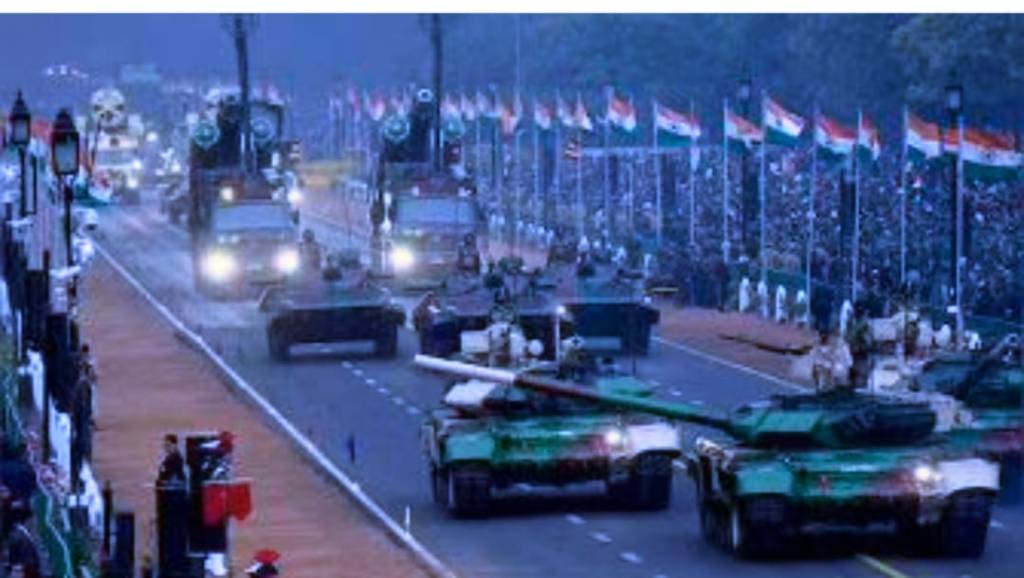
The United States, in particular, has become India’s largest defense export destination, accounting for nearly 50% of the country’s total defense exports. American defense companies are increasingly sourcing a wide array of systems, subsystems, and parts from India to integrate into their global supply chains and meet offset commitments. Major U.S. defense contractors, including some of the world’s leading names, have established joint ventures and manufacturing facilities in India, signalling a significant shift in the global arms trade. India is no longer just a buyer of advanced defense technologies; it is becoming a supplier to some of the world’s most powerful militaries.
While state-owned enterprises like Munitions India and Hindustan Aeronautics Limited (HAL) continue to play a significant role in India’s defense exports, the private sector has also emerged as a major contributor. For example, a Bengaluru-based company specializing in metal injection moulding parts has become India’s leading defense exporter, supplying products to over 50 countries. The rise of private sector players in the defense industry is a direct result of the government’s efforts to foster public-private partnerships and create an environment conducive to defense manufacturing.
Despite these successes, India’s defense export sector still faces several challenges. One of the most significant is the need to further develop a robust domestic manufacturing base, which includes improving quality control and enhancing technological capabilities. The government’s initiatives to streamline licensing, provide easier lines of credit, and engage in diplomatic outreach have been critical in addressing these issues. However, achieving the full potential of India’s defense export ambitions will require sustained efforts to overcome these challenges.
The impressive growth in defense exports is a clear indication of India’s rising prominence in the global arms market. In the fiscal year 2023-2024, India recorded its highest-ever defense exports, reaching approximately $2.5 billion (Rs 20,915 crore), as reported in the Economic Survey 2023-2024. This marked a 25% increase from the $2 billion recorded in the previous fiscal year. Moreover, the value of defense production in India has also seen substantial growth, with production reaching Rs 1,26,887 crore in 2023-2024, representing a 16.8% increase from the previous financial year.
This rapid expansion of defense exports is not an isolated phenomenon but part of a broader trend in India’s defense industry. Over the past decade, India’s defense exports have seen a 30-fold increase, from a modest Rs 686 crore in the financial year 2013-2014 to a record Rs 21,083 crore in FY 2023-2024. This growth reflects the increasing global acceptability of Indian defense products and technologies. The government’s recent pledge to more than double India’s annual military exports to Rs 50,000 crore by 2028-2029 is further evidence of the country’s ambitious plans to become a major global defense player.
Munitions India, a state-run enterprise, leads the charge among defense public sector undertakings (PSUs) in terms of exports. The company manufactures a wide range of munitions and ammunition, including rockets and artillery shells, and is a significant contributor to India’s defense export success. The country’s defense industry now supplies products to over 90 countries, and the range of exported items is vast, from small arms to sophisticated armored vehicles.

The ongoing Russia-Ukraine war and the Israel-Hamas conflict have provided additional impetus to India’s defense exports, as countries around the world seek to bolster their arsenals. India’s growing defense industry, which now serves over 90 countries, has benefited from the government’s efforts to simplify licensing procedures, accelerate approval processes, and overcome traditional hesitancy in supplying lethal arms. The U.S. remains India’s largest defense export market, but the government is also focusing on expanding its reach into Africa and other regions by offering easier lines of credit and engaging in diplomatic outreach.
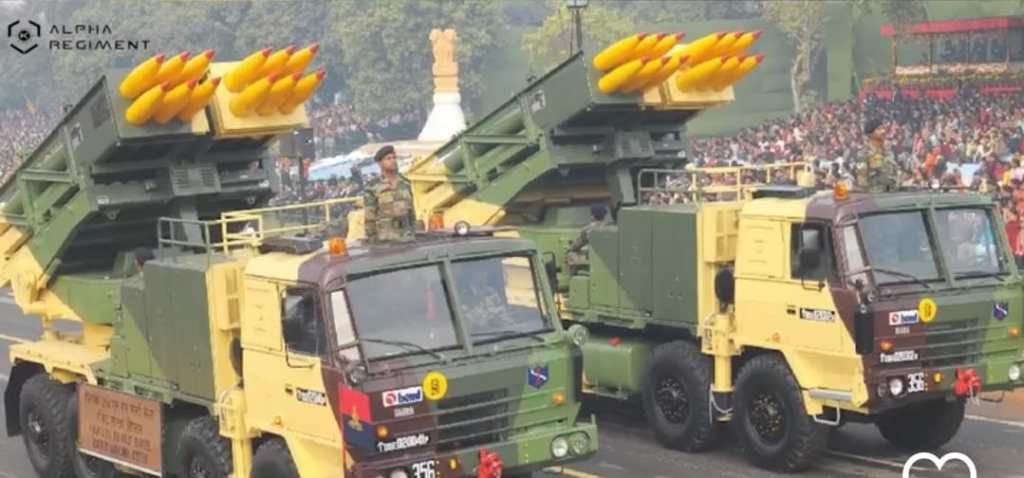
India’s defense exports hit an all-time high of approximately Rs 16,000 crore in the fiscal year 2022-2023, representing a more than 10-fold increase since 2016-2017. The range of defense products exported includes major platforms like the Do-228 aircraft, 155 mm artillery guns, BrahMos missiles, Akash missile systems, radars, simulators, mine-protected vehicles, armored vehicles, Pinaka multi-barrel rocket launchers (MBRL), ammunition, thermal imagers, and body armor. These achievements underscore India’s growing capabilities and its emergence as a significant player in the global defense market.

Despite these successes, India is still not among the top 10 arms-exporting countries globally. The country is currently ranked 28th on the list of arms exporters, well behind countries like China, which ranks 7th and exports arms to various regions, including Asia, Oceania, Africa, and the Middle East. India’s defense industry has not yet achieved full self-reliance, and its performance in exports, while improving, still faces challenges. These challenges include the need to develop more competitive weapons systems, enhance technological innovation, and address procedural inefficiencies.
In 2022-2023, India’s export of military hardware reached an all-time high of Rs 15,920 crore, a significant achievement that was celebrated as a clear manifestation of the country’s enthusiasm for the ‘Make in India’ initiative. This record export figure represents a ten-fold increase compared to the Rs 1,521 crore recorded in 2016-2017. The government has committed to continuing its support for the defense industry, with a focus on making India a hub for defense production.
India’s defense export achievements include the export of key platforms such as the Dornier-228 aircraft, 155 mm Advanced Towed Artillery Guns (ATAGs), BrahMos missiles, Akash missile systems, radars, mine-protected vehicles, armored vehicles, Pinaka rockets and launchers, ammunition, thermal imagers, and various components of avionics and small arms. There is also growing global demand for Indian-made Light Combat Aircraft Tejas, light combat helicopters, aircraft carriers, and maintenance, repair, and operations (MRO) facilities. India currently exports military hardware to over 85 countries, and the number of Indian firms involved in defense exports is growing, with over 100 firms currently participating in the market.
The Indian government’s policy initiatives, combined with the defense industry’s growing capabilities, have led to remarkable achievements in defense exports. The sector has reached new heights, with defense exports reaching an all-time high of approximately Rs 16,000 crore in 2022-2023. This growth is a testament to the effectiveness of government policies and the contributions of the defense industry. India’s defense exports have seen consistent growth, with figures rising from Rs 8,434 crore in 2020-2021 to Rs 9,115 crore in 2019-2020 and Rs 10,745 crore in 2018-2019.
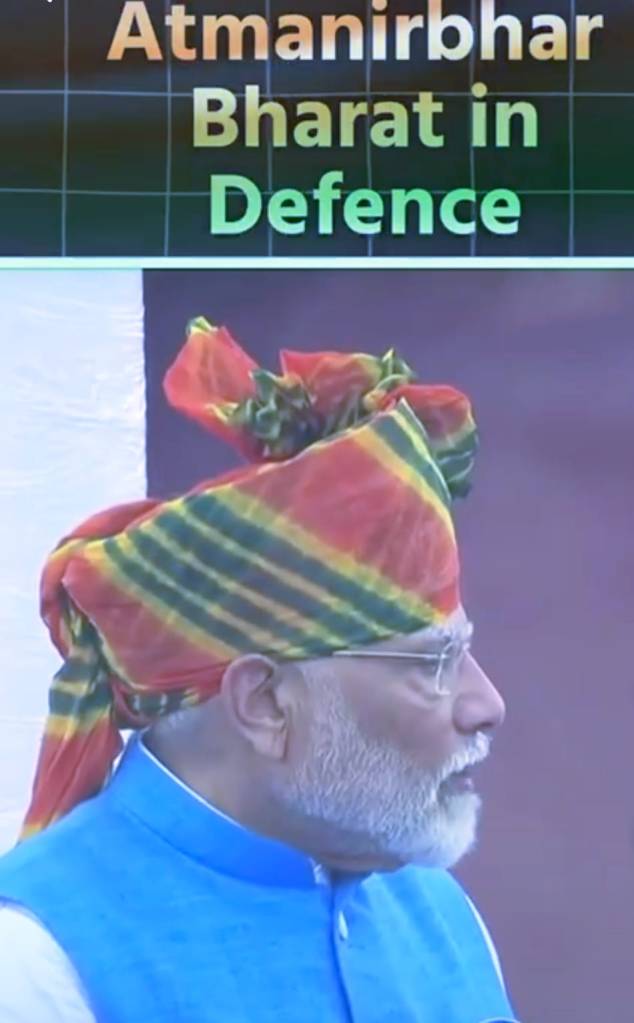
Looking ahead, India aims to achieve a defense manufacturing turnover of Rs 1.75 lakh crore ($25 billion) by 2025, with an ambitious export target of Rs 35,000 crore ($5 billion) in military hardware. The government has implemented several policy initiatives to support this goal, including simplifying industrial licensing, relaxing FDI norms, and increasing the defense budget. To further promote the ‘Atmanirbhar Bharat’ (self-reliant India) campaign, the government has included 411 items in a 4th positive indigenization list, which will be procured from domestic sources under the Defense Acquisition Procedure (DAP) 2020.
Over the past decade, India’s defense export landscape has undergone a remarkable transformation. The country has shifted from a reliance on imports to becoming a formidable player in the global arms market. This transformation has been driven by strategic policy shifts, proactive government actions , and the private sector’s growing participation in defense manufacturing. The ongoing Russia-Ukraine war and the Israel-Hamas conflict have further highlighted India’s emergence as a key player in global defense exports.
In the first quarter of the 2024-2025 fiscal year alone, India’s defense exports surged by 78%, reaching Rs 6,915 crore (approximately $863 million), a significant increase from the previous year. These achievements are a testament to the government’s commitment to making India a global defense hub and the defense industry’s growing capabilities. The impressive growth in defense exports is a clear indication of India’s rising prominence in the global arms market. However, the journey towards self-reliance and global leadership in defense exports is far from over. The country still faces several challenges, including developing more competitive weapons systems, enhancing technological innovation, and addressing procedural inefficiencies.
As India continues to make strides in defense exports, it is essential to maintain the momentum and address these challenges to realize the country’s full potential in the global arms market. The government’s ambitious targets, combined with the defense industry’s growing capabilities, will be critical in shaping the future of India’s defense exports and its role in the global arms market.

In conclusion, India’s defense export sector has seen unprecedented growth over the past decade, transforming the country into a formidable player in the global arms market. This growth is the result of strategic policy shifts, proactive government actions, and the private sector’s increasing participation in defense manufacturing. While challenges remain, the future of India’s defense exports looks promising, with the country poised to become a significant player in the global defense industry.
visit arjasrikanth.in for more insights
 SOCIAL PERSPECTIVES