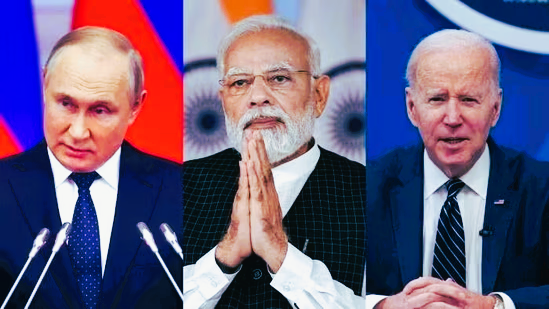
Navigating a Complex Geopolitical Landscape, India Positions Itself as a Key Mediator and Advocate for Peace
India’s diplomatic efforts have gained significant global attention in recent years, with Prime Minister Narendra Modi’s historic visit to Ukraine standing out as a testament to the country’s growing influence on the world stage. This visit marks the first time an Indian Prime Minister has set foot in Ukraine since its independence from the Soviet Union in 1991. The global media, from The New York Times to Le Monde, has extensively covered this momentous event, highlighting India’s nuanced approach to international relations, especially amid ongoing geopolitical tensions. As a rising global power, India’s diplomatic manoeuvres reflect its aspiration to balance strategic interests with a commitment to peace and stability, underscoring its emerging role as a mediator in international conflicts.
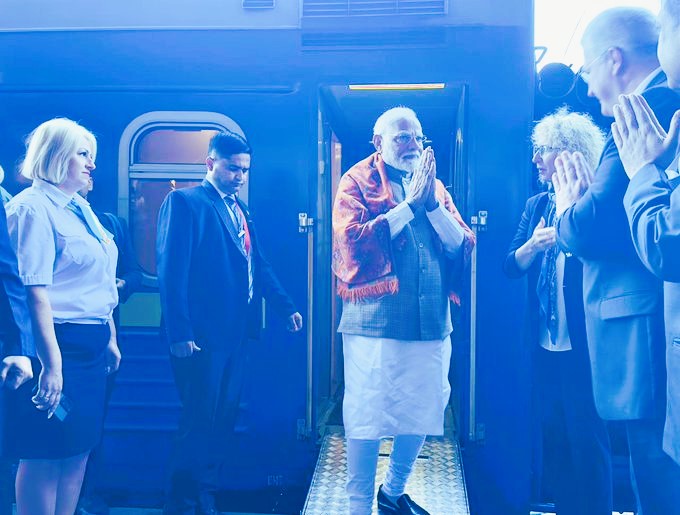
The visit to Ukraine came at a particularly critical juncture in international politics, with the ongoing conflict between Russia and Ukraine drawing the attention of nations worldwide. The war has polarized many nations, and global leaders have been forced to navigate a complex web of alliances and historical relationships. India’s position in this conflict has been under scrutiny, given its historical ties with Russia and its recent diplomatic overtures toward Ukraine. As noted by The New York Times, “Mr. Modi has carefully calibrated his country’s relations with the two warring nations.” This statement underscores India’s strategic balancing act of maintaining cordial relations with both Russia and Ukraine while advocating for peace and dialogue. It reflects India’s broader strategy of non-alignment and strategic autonomy, allowing it to engage with multiple sides in a conflict without overtly taking sides.

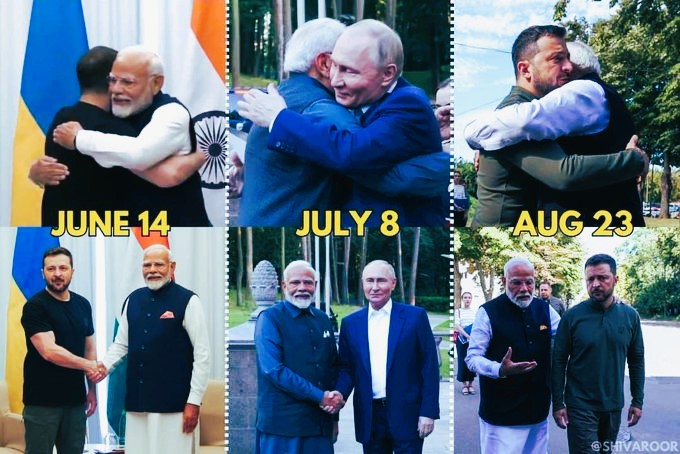
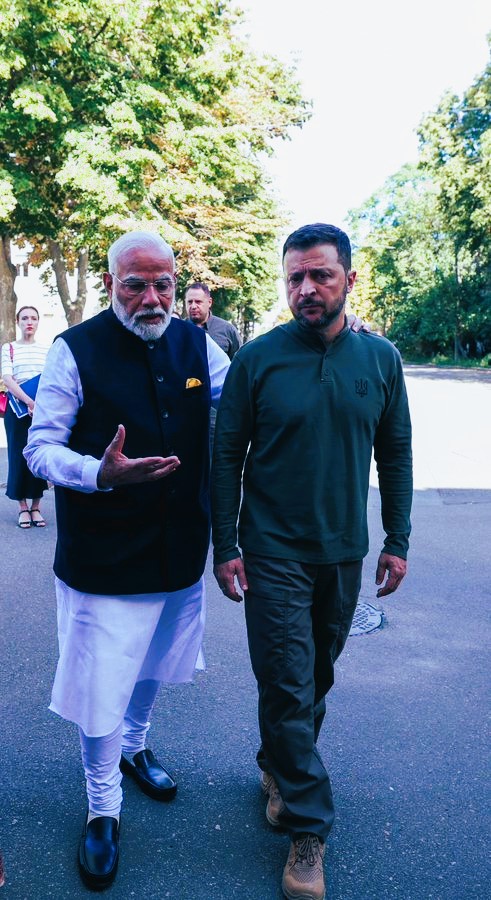
During his visit to Ukraine, PM Modi met with President Volodymyr Zelensky, a meeting that was viewed by many as a significant diplomatic step. Modi’s trip was seen as a gesture of goodwill and a move to assert India’s position as a global mediator. The New York Times also highlighted India’s participation in a Ukrainian-organized peace summit in June, demonstrating India’s proactive engagement in seeking a resolution to the conflict. However, India’s decision not to sign the communique supporting the Ukrainian plan at the end of the summit indicates its cautious approach, avoiding overt alignment with either side while continuing to promote dialogue as the pathway to peace. This cautious approach is a hallmark of India’s foreign policy, emphasizing dialogue and negotiation over confrontation.
BBC’s coverage of the visit adds depth to India’s diplomatic stance. The outlet noted that “India had never been neutral in the war,” with PM Modi emphasizing that India’s position from the outset has been centered on peace. This statement underscores India’s commitment to its long-standing foreign policy principle of strategic autonomy, which allows it to engage constructively with all parties in a conflict without explicitly aligning with any side. This approach has enabled India to maintain flexibility and independence in its foreign relations, navigating complex international dynamics without being limited by rigid alliances. The focus on peace and dialogue highlights India’s dedication to multilateralism and its belief in inclusive discussions as essential to resolving global conflicts.
India’s call for peace, grounded in its historical association with Mahatma Gandhi’s philosophy of non-violence, resonates with many around the world. Modi’s visit to a statue of Gandhi in Kyiv during his trip was a symbolic gesture that reinforced India’s commitment to peaceful resolution and dialogue. This move not only highlighted India’s cultural diplomacy but also its moral stance on global conflicts. However, as BBC pointed out, India’s refusal to condemn Russia’s full-scale invasion and its continued import of Russian oil, despite Western sanctions, presents a paradox. This paradox is a reflection of India’s pragmatic foreign policy, which seeks to balance moral imperatives with national interests. While advocating for peace, India also ensures its economic security and energy needs are met, demonstrating a realist approach to international relations.
The Guardian’s report on the visit further illustrates the challenges India faces in balancing its diplomatic relationships. The visit came after a period of strained relations between Ukraine and India, especially after Modi’s trip to Moscow coincided with a Russian missile attack on a children’s hospital in Kyiv. The Guardian highlighted Zelensky’s criticism of Modi’s Moscow visit, which underscores the tightrope India must walk in its diplomatic engagements. While India has called for dialogue and diplomacy, it has also continued its economic and military ties with Russia, reflecting its desire to maintain a diversified foreign policy that does not overly depend on any single nation or bloc. This strategy allows India to keep its options open, ensuring it remains a relevant player on the global stage.
Nikkei Asia provided additional insights into India’s strategic calculations, noting that “despite Western pressure, India has not explicitly condemned traditional ally and weapons supplier Russia for invading Ukraine.” This stance is indicative of India’s long-term strategic interests and its reliance on Russian military hardware and energy resources. India’s decision to continue buying discounted Russian oil, as noted by Nikkei Asia, highlights its priority of securing energy supplies at affordable prices, especially in the face of global economic uncertainties and rising energy costs. This economic pragmatism is a critical component of India’s foreign policy, which seeks to ensure national security and economic stability amidst global turbulence.

India’s balanced approach has drawn both praise and criticism internationally. On one hand, it has been lauded for its pragmatic stance, which prioritizes national interests and energy security. On the other hand, it has faced criticism for what some perceive as a lack of moral clarity in its foreign policy. Le Monde’s coverage of the visit underscored this point by describing Zelensky’s characterization of Modi’s visit as a “historic moment,” but also highlighting that no breakthrough was achieved. Indian Foreign Minister Subrahmanyam Jaishankar’s statement that the situation is “clearly a complex issue” and that Russia should be involved in peace efforts reflects India’s belief in inclusive dialogue that involves all stakeholders.

This multifaceted approach reflects India’s broader foreign policy strategy under PM Modi’s leadership. The strategy is one of engagement, dialogue, and balancing multiple interests in a complex international environment. India’s diplomatic engagements with both Russia and Ukraine, as well as its participation in various multilateral forums, demonstrate its willingness to act as a bridge between different sides in global conflicts. This role is particularly significant given India’s growing economic and political clout on the world stage, which allows it to influence global outcomes in ways that were not possible in the past.
India’s diplomacy, as demonstrated by PM Modi’s visit to Ukraine, is also a reflection of its aspiration to be a global leader that advocates for peace and stability. The visit was not just about bilateral relations with Ukraine but also about sending a message to the international community that India is committed to playing a constructive role in global affairs. The visit showcased India’s ability to engage with diverse nations and act as a mediator in conflicts, a role that is increasingly being recognized and valued by the world. This growing recognition is a testament to India’s evolving foreign policy, which combines traditional principles of non-alignment with a modern approach to global diplomacy.
The global media’s extensive coverage of the visit indicates that India’s diplomatic efforts are being closely watched and analysed. From The New York Times to Le Monde, each outlet highlighted different aspects of India’s diplomacy, reflecting the complexity and significance of its actions on the global stage. These reports suggest that India’s efforts to balance its relations with both Russia and Ukraine are seen as part of a broader strategy to assert itself as a global power capable of mediating conflicts and contributing to global peace. This balanced approach is crucial for India as it seeks to enhance its global standing while safeguarding its strategic interests.

India’s approach also underscores its strategic autonomy in international relations. By maintaining a balanced stance, India ensures that it does not become overly reliant on any one country or bloc, allowing it to pursue its national interests more freely. This approach has been particularly evident in its handling of the Russia-Ukraine conflict, where it has managed to maintain relations with both sides while advocating for peace and dialogue. This strategy has allowed India to navigate the complexities of global geopolitics without compromising its core interests. The emphasis on strategic autonomy also reflects India’s desire to shape a multipolar world where it can play a significant role in shaping global governance structures.
Furthermore, India’s diplomatic efforts are also aimed at showcasing its values on the global stage. By emphasizing its commitment to peace and dialogue, India positions itself as a moral leader in international relations. This is particularly important in the current global context, where many countries are grappling with the challenges of maintaining peace and stability in the face of rising geopolitical tensions. India’s emphasis on non-violence and dialogue, rooted in its cultural and historical traditions, provides a valuable perspective in the global discourse on peace and conflict resolution. This value-based diplomacy is a critical aspect of India’s soft power, enhancing its influence and appeal on the world stage.
India’s diplomacy, as highlighted by PM Modi’s visit to Ukraine, is also about building bridges and fostering understanding between nations. By engaging with both Russia and Ukraine, India is demonstrating its commitment to dialogue and its belief in the importance of involving all stakeholders in peace efforts. This inclusive approach is crucial for ensuring that any resolution to the conflict is sustainable and acceptable to all parties involved. India’s emphasis on inclusive dialogue reflects its broader vision of a multipolar world where diverse voices are heard, and where peaceful coexistence is the norm. This vision aligns with India’s aspirations to contribute to global governance in a meaningful way, promoting a more equitable and just international order.
India’s balanced diplomatic approach is not only about navigating current conflicts but also about shaping its future role on the global stage. By maintaining strategic autonomy and advocating for peace, India is positioning itself as a credible voice in global affairs, one that is capable of mediating conflicts and contributing to global stability. The global media’s positive coverage of Modi’s visit to Ukraine highlights the value that the world places on India’s diplomatic efforts and its ability to navigate complex international situations with skill and finesse. As India continues to assert itself on the global stage, its balanced approach to diplomacy will remain a key factor in its ability to influence global outcomes and contribute to global peace and stability.
India’s diplomacy, as showcased in PM Modi’s Ukraine visit, also reflects its growing confidence as an emerging power. By engaging with both sides in the conflict and calling for inclusive dialogue, India is not only asserting its independence but also its potential to act as a global mediator. This balanced approach is critical for India as it seeks to enhance its global standing while safeguarding its strategic interests. The visit to Ukraine is thus emblematic of India’s broader diplomatic strategy under PM Modi, which seeks to balance multiple interests, engage with diverse partners, and contribute to global peace and stability.

In conclusion, India’s diplomatic efforts, as highlighted by PM Modi’s visit to Ukraine, demonstrate its commitment to peace, dialogue, and strategic autonomy. The visit was a significant diplomatic gesture that underscored India’s balanced approach to international relations. By maintaining relations with both Russia and Ukraine, advocating for dialogue, and emphasizing its commitment to peace, India has positioned itself as a key player in global diplomacy. The global media’s extensive coverage of the visit reflects the importance of India’s role in international affairs and its growing influence on the world stage. As India continues to navigate complex geopolitical landscapes, its balanced approach to diplomacy will be crucial in shaping its future role in global governance and contributing to international peace and stability.
visit arjasrikanth.in for more insights
 SOCIAL PERSPECTIVES