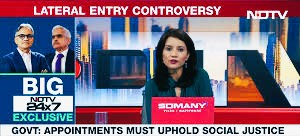
Balancing Modernization and Social Justice in a New Era of Civil Service Reform
The evolution of Indian bureaucracy has always been shaped by the dynamic needs of governance, economic development, and social justice. In recent years, the introduction of lateral entry has emerged as a pivotal reform aimed at infusing specialized knowledge and expertise into the traditionally career-centric civil services. This reform has sparked a vigorous debate, raising fundamental questions about its impact on the principles of merit, reservation, and the overall effectiveness of the bureaucracy. This exploration delves deep into the concept of lateral entry, its historical roots, the rationale behind its implementation, and the controversies that surround it.
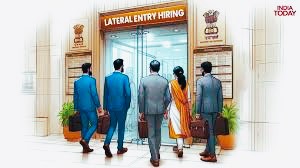
Lateral entry is a mechanism that allows individuals from outside the traditional government service cadres to be recruited into mid and senior-level positions within the bureaucracy. Unlike the conventional route where civil servants are recruited through competitive exams and ascend through the ranks over time, lateral entry offers an alternative pathway for professionals with at least a bachelor’s degree and significant experience in their respective fields to join the bureaucracy. In the educational context, lateral entry typically refers to an alternative route to teaching, where individuals with at least a bachelor’s degree are hired as teachers with the expectation that they will complete a teacher education program over the next three years. However, in the context of Indian bureaucracy, lateral entry has a broader and more impactful meaning. It involves the recruitment of domain experts from the private sector, public sector undertakings (PSUs), state governments, research institutes, and universities to fill positions such as Joint Secretary, Director, and Deputy Secretary within various ministries of the Union government.
The concept of lateral entry is not entirely new. It has been a topic of discussion and recommendation by several reform commissions over the years. The idea gained formal recognition in 2017 when the NITI Aayog, in its three-year Action Agenda, recommended the recruitment of personnel from outside the All India Services for middle and senior management positions within the central government’s bureaucracy. This recommendation was echoed by the Sectoral Group of Secretaries (SGoS) on Governance in their report submitted in February of the same year. However, the seeds of lateral entry were sown much earlier. The Second Administrative Reforms Commission (ARC), established by the Congress-led United Progressive Alliance (UPA-I) government in 2005 and chaired by Congress leader Veerappa Moily, recommended the recruitment of experts to fill gaps in roles that required specialized knowledge. This was a recognition of the fact that the complexities of modern governance often necessitate expertise that may not be readily available within the traditional civil service structure.

The actual implementation of lateral entry began under the National Democratic Alliance (NDA) government in 2018. This marked a significant departure from the traditional recruitment practices of the Indian bureaucracy, where senior positions were almost exclusively filled by career civil servants from the All India Services (IAS, IPS, etc.) and Central Civil Services. The first lateral-entry recruitment in 2018 targeted senior-level positions, specifically the post of Joint Secretary. A Joint Secretary is a senior officer in the Indian government, second only to the Secretary and Additional Secretary in terms of hierarchy within a ministry. The government advertised for these positions, seeking experts from emerging fields such as technology, economics, and public policy. The rationale was that career bureaucrats, while experienced in governance, might not possess the specialized skills required for these roles. Since 2018, a total of 63 individuals have been recruited through lateral entry, with around 35 of them coming from the private sector. These recruits include eight Joint Secretaries in 2019 and 30 officers (three Joint Secretaries and 27 Directors) in 2022. As of now, there are 57 lateral entrants serving in various ministries and departments. The ranks of Director and Deputy Secretary were opened for lateral entry later, reflecting the growing acceptance and need for this recruitment method.
The primary objective of lateral entry is to infuse fresh ideas, innovation, and specialized knowledge into the bureaucracy. The traditional recruitment system, while effective in producing well-rounded administrators, may not always meet the demands of highly specialized fields that are critical to modern governance. For instance, areas such as cybersecurity, environmental policy, digital economy, and investment management require expertise that may not be readily available within the pool of career civil servants. Lateral recruits bring with them valuable experiences from the private sector, non-governmental organizations (NGOs), or other specialized fields. This diversity of experience can help reform and enhance administrative processes, making them more efficient and aligned with global best practices. The infusion of new perspectives can also lead to more innovative solutions to complex governance challenges, fostering a culture of continuous improvement within the bureaucracy.
One of the key reasons behind the push for lateral entry is the shortage of officers in the Indian Administrative Service (IAS). According to data from the Department of Personnel and Training, there is a shortage of about 1,500 IAS officers. This gap creates a significant strain on the existing bureaucracy, affecting the government’s ability to effectively implement policies and programs. Lateral entry helps bridge this gap by bringing in experts who can hit the ground running and take on leadership roles without the need for extensive training. The modern world presents a myriad of challenges that require specialized knowledge and expertise. From managing the digital economy to addressing climate change, the government needs professionals who understand these domains deeply and can navigate their complexities. Lateral entry allows the government to recruit individuals with the specific skill sets needed to tackle these challenges, ensuring that the administration remains agile and responsive to changing needs.
While lateral entry has been lauded as a much-needed reform, it has not been without its critics. The introduction of this recruitment method has sparked significant controversy, particularly from opposition parties and civil service advocates. Critics argue that lateral entry undermines the merit-based recruitment process that has been the cornerstone of Indian bureaucracy. The Union Public Service Commission (UPSC) conducts one of the most rigorous and competitive examinations in the world to recruit civil servants. This process is designed to ensure that only the most capable and meritorious individuals enter the civil services. Lateral entry, according to critics, bypasses this meritocratic process and opens the door to potential favouritism and cronyism. There are concerns that appointments through lateral entry could be influenced by political considerations, leading to the recruitment of individuals who may not be the best fit for the roles they are appointed to.
One of the most significant criticisms of lateral entry is that it could lead to crony capitalism, where the nexus between political parties and capitalists results in the appointment of individuals who are ideologically aligned with the ruling party. This concern is particularly relevant in the context of India’s complex political landscape, where the lines between public and private interests can sometimes blur. Opposition leaders have raised alarms about the potential for lateral entry to be used as a tool to bring ideologically like-minded individuals into key positions within the government. They argue that this could lead to a bureaucracy that is less independent and more susceptible to political influence, undermining the principle of impartial governance.
One of the most contentious issues surrounding lateral entry is its exclusion from the ambit of caste-based reservations. In India, reservations are a crucial tool for ensuring social justice and equitable representation of marginalized communities within the bureaucracy. The absence of reservations in lateral entry appointments has led to accusations that the government is undermining the constitutional mandate of affirmative action. Opposition parties, particularly the Congress, have vehemently opposed lateral entry on these grounds. They argue that the lack of reservations in lateral entry appointments disproportionately affects Scheduled Castes (SC), Scheduled Tribes (ST), and Other Backward Classes (OBC), further marginalizing these communities within the bureaucracy.
The exclusion of lateral entry from the ambit of reservations has also raised questions about its legality and constitutionality. The Indian Constitution enshrines the principles of social justice, and reservations are a key mechanism for achieving this goal. By excluding lateral entry from reservations, the government is perceived to be undermining these constitutional principles. Union Minister Jitendra Singh, however, defended the government’s position by arguing that lateral entry appointments are single-cadre appointments, similar to the appointment of a bureaucrat to a specific department. Since reservations do not apply to single-cadre appointments, lateral entry is exempt from these provisions. He also argued that the small pool of lateral entrants and the short duration of their contracts (up to five years) make the application of reservations impractical. Despite these justifications, the debate over the legality and constitutionality of lateral entry continues to be a point of contention. Legal experts and civil rights advocates have called for greater scrutiny of the lateral entry process to ensure that it aligns with the principles of social justice enshrined in the Constitution.
As the Indian government continues to push for lateral entry, it is essential to strike a balance between embracing expertise and upholding the principles of social justice. The need for specialized knowledge in governance is undeniable, and lateral entry offers a viable solution to this challenge. However, it is equally important to ensure that this reform does not undermine the core values of meritocracy, fairness, and inclusivity that have been the pillars of the Indian bureaucracy.
One way to address the concerns surrounding lateral entry is to enhance transparency and accountability in the recruitment process. The government could establish clear and objective criteria for lateral entry appointments, ensuring that the selection process is based on merit and not influenced by political considerations. Additionally, involving independent bodies, such as the UPSC, in the selection process could help mitigate concerns about favouritism and cronyism. To address the issue of social justice, the government could consider implementing reservation policies within the lateral entry framework. While the small pool of candidates and the short-term nature of their appointments pose challenges, innovative solutions could be explored to ensure that marginalized communities are not excluded from this new recruitment process.

The success of lateral entry will ultimately depend on its ability to bring about tangible improvements in governance. It is crucial to monitor and evaluate the performance of lateral entrants to ensure that they contribute positively to the bureaucracy. Regular performance assessments, feedback mechanisms, and outcome-based evaluations could help identify the impact of lateral entry on the effectiveness of governance. The Indian bureaucracy stands at a crossroads, where the need for modernization and the imperative of social justice must be carefully balanced. Lateral entry offers a promising pathway to infuse new ideas and expertise into the administration, but it must be implemented with a commitment to fairness, transparency, and inclusivity. By addressing the concerns surrounding lateral entry and refining the process, India can ensure that its bureaucracy remains both effective and equitable in the years to come.
visit arjasrikanth.in for more insights
 SOCIAL PERSPECTIVES