
###Revolutionary Minds: Youth-Driven Innovation in India’s Fight for Freedom###
India’s struggle for independence was not just a fight against colonial rule but a powerful movement driven by the collective will of the people, especially the youth. The younger generation was not content with being mere spectators; they were active participants, innovators, and leaders who used their creativity and energy to fuel the freedom movement. Their actions, from the Dandi March to various grassroots protests, were instrumental in spreading the message of independence to the farthest corners of the country, ensuring that the struggle was a people’s movement in every sense.

Mahatma Gandhi, with his philosophy of Satyagraha, provided a framework for resistance that resonated deeply with the youth. His emphasis on non-violence, civil disobedience, and self-reliance was not just a strategy for political change but a moral compass that guided the young freedom fighters. They took Gandhi’s ideas and transformed them into innovative forms of protest, ensuring that the movement remained dynamic and widespread.
One of the most iconic events of the Indian independence movement was the Dandi March of 1930. Gandhi’s 240-mile journey to the Arabian Sea was a protest against the British salt tax, a symbol of the broader injustices of colonial rule. The involvement of young people in this march was crucial. They were not just followers; they were the driving force that gave the march its energy and urgency. Young men and women from all walks of life joined the march, seeing it as an opportunity to assert their identity and their commitment to the cause of freedom. Their participation was an act of defiance, a statement that the youth of India were ready to take the reins of their destiny into their own hands.

While the Dandi March was a large-scale event, the youth also engaged in smaller, yet equally powerful, acts of resistance. In Lucknow, during the anti-Simon Commission protests in 1928, young people turned kite flying into a form of protest. The Simon Commission, which was established by the British government to review the political situation in India, did not include any Indian members, which was seen as a direct insult to the Indian people. In response, the youth of Lucknow took to the skies, flying kites with messages like “Go Back, Simon” emblazoned on them. This innovative form of protest captured the public’s imagination and demonstrated the creative ways in which the youth were contributing to the freedom movement.
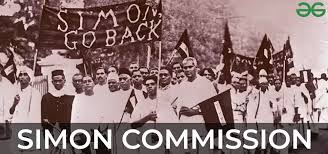
The Simon Commission protests saw a variety of creative responses from the youth. In Bombay, students and activists organized black flag demonstrations to greet the commission. However, a group of young students decided to take it a step further. They hired a lorry, decorated it with black flags, and followed the commission’s train, creating a moving spectacle that drew attention wherever it went. This act of protest was not just about showing defiance; it was about making a statement that the youth of India were ready to challenge the colonial authorities in new and unexpected ways.
In Andhra Pradesh, the heroic actions of Thota Narsayya Naidu during the Salt Satyagraha of 1930 highlighted the immense sacrifices made by young activists. Born in 1910 in Pagolu village, Krishna district, Naidu was a passionate freedom fighter. During a protest in Machilipatnam, led by Bhogaraju Pattabhi Sitaramaiah, Naidu seized the national flag and climbed a tower to hoist it, despite facing brutal police violence. His determination to protect the flag, even at the cost of his own safety, was a powerful symbol of the youth’s commitment to the cause. Naidu was beaten severely by the police, but he refused to let go of the flag and managed to hoist it before falling from the tower, sustaining serious injuries. His unwavering spirit and dedication to the freedom movement led to multiple imprisonments, but he never gave up the fight for India’s independence until his death in 1964.

The role of the youth in the freedom struggle extended beyond these well-known events. In Surat, young girls formed the “Flag Army,” where they wore dresses dyed in the colours of the Indian flag and paraded through the streets. This act of defiance against the British authorities was not just about national pride; it was about asserting their identity and challenging the norms imposed by colonial rule. These young girls, through their actions, demonstrated that the fight for freedom was not limited to any one group; it was a collective effort that required the participation of every Indian, regardless of age or gender.

The innovative spirit of the youth was also evident in their everyday acts of resistance. During the non-cooperation movement, young people organized campaigns to boycott British goods and institutions. They used their creativity to design posters, pamphlets, and public demonstrations that effectively communicated their message. These grassroots efforts were crucial in spreading the ideas of the freedom movement to the masses. The youth understood that for the movement to succeed, it had to resonate with ordinary people, and they worked tirelessly to ensure that the message of independence reached every corner of the country.
The involvement of the youth in the freedom struggle was not just about fighting against British rule; it was about envisioning and creating a new India. They were driven by a desire to see an India free from colonial oppression, where all people could live with dignity and equality. This vision inspired them to take bold and innovative actions, often at great personal risk. Their contributions were not just acts of defiance against colonial rule; they were also acts of creation, laying the foundation for the future of India.

The legacy of the youth in the freedom struggle is a testament to their indomitable spirit and innovative mindset. Their actions, whether through organized protests or everyday acts of defiance, contributed to the larger narrative of resistance against colonial rule. The stories of young revolutionaries, activists, and everyday citizens who rallied for freedom are essential to understanding the complexity of India’s struggle for independence. Their legacy is not just in the history books; it is in the freedoms we enjoy today, the democratic values that guide our nation, and the spirit of resilience that continues to define India.
As we reflect on the innovative spirit of the youth during India’s freedom struggle, we are reminded of the enduring importance of their contributions. The stories of kite flying in Lucknow, flag hoisting in Surat, and the relentless pursuit of freedom by young individuals across the nation are powerful reminders of the potential of youth to effect change. In today’s world, where challenges persist, the spirit of innovation and activism exhibited by the youth during the freedom struggle serves as an inspiration. It encourages current and future generations to engage in social and political issues actively, carrying forward the legacy of those who fought for the rights we cherish today.

The history of India’s freedom struggle is not just a tale of the past; it is a call to action for young people to continue the fight for justice, equality, and freedom. As we celebrate our independence, let us honour the contributions of the youth who played a pivotal role in shaping our nation and strive to uphold the values for which they fought so valiantly. Their innovative spirit, courage, and commitment to a better future remain timeless ideals that can guide us in our ongoing journey toward progress and empowerment.

In conclusion, the youth of India played an instrumental role in the freedom struggle, not just as participants but as innovators who kept the movement alive and spread it to the grassroots level. Their creative and courageous actions were crucial in galvanizing public support and challenging the colonial authorities. The legacy of these young freedom fighters is a reminder of the power of youth to shape the future. As we move forward, their spirit of innovation and resilience should continue to inspire us to fight for a just and equitable society. The history of India’s struggle for independence is a testament to the power of collective action, and the youth were at the heart of this movement, driving it forward with their energy, creativity, and unwavering commitment to the cause of freedom.
visit arjasrikanth.in for more insights
 SOCIAL PERSPECTIVES