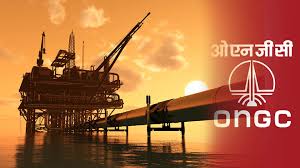
ONGC-Celebrating Decades of Dedication, Discovery, and Development in Securing the Nation’s Energy Future
Today marks a landmark moment in India’s energy sector as we celebrate the foundation day of Oil and Natural Gas Corporation Limited (ONGC). Established on August 14, 1956, ONGC has transformed from a fledgling public sector entity into India’s largest government-owned oil and gas exploration and production company. Over the past six decades, ONGC has played a crucial role in shaping India’s economic landscape, driving wealth creation, generating employment, and fortifying the nation’s energy security. This milestone offers an opportunity to extend our deepest appreciation and congratulations to every ONGC employee whose dedication and expertise have been central to the company’s enduring success.

The origins of ONGC are deeply rooted in the visionary leadership of Pandit Jawaharlal Nehru, India’s first Prime Minister. Nehru recognized the pivotal role that oil and gas would play in India’s rapid industrialization and national defense. In 1955, he tasked Shri Keshav Dev Malviya with establishing a specialized division within the Geological Survey of India, dedicated to oil and gas exploration. This initiative swiftly evolved into the Oil and Natural Gas Directorate and was officially constituted as the Oil & Natural Gas Commission on August 14, 1956. This transition marked the inception of ONGC’s journey, laying the groundwork for its future as a cornerstone of India’s energy infrastructure.

From its early days, ONGC has been instrumental in transforming India’s upstream sector into a significant global player. The company’s achievements are underscored by its impressive production metrics: approximately 70 percent of India’s domestic crude oil and around 84 percent of its natural gas come from ONGC’s operations. ONGC’s vertically integrated model encompasses the entire oil and gas value chain—from exploration and production to refining and distribution. This holistic approach has enabled ONGC to maintain a commanding presence in India’s energy sector, ensuring energy security and reducing dependency on imports.
One of ONGC’s most noteworthy milestones was the discovery of the Bombay High (now Mumbai High) oil field in the early 1970s. This discovery was a game-changer for India, substantially boosting domestic oil production and decreasing the nation’s reliance on imported oil. The Mumbai High field, along with subsequent discoveries in the Western offshore region, contributed to the discovery of over 5 billion tonnes of hydrocarbons in India. These developments not only enhanced India’s energy security but also positioned ONGC as a formidable player in the global energy market.

In 1994, ONGC underwent a significant transformation, evolving from the Oil & Natural Gas Commission to the Oil & Natural Gas Corporation Limited under the Companies Act of 1956. This restructuring marked a new chapter, granting ONGC greater operational autonomy and efficiency. The Indian government has recognized ONGC’s contributions and achievements with prestigious accolades: the Navratna status in 1997 and Maharatna status in 2010. These honours underscore ONGC’s strategic importance to the Indian economy and its leadership in the energy sector.
ONGC’s commitment to corporate social responsibility (CSR) and transparency has been a defining feature of its operations. The company has garnered numerous awards for its CSR initiatives, including the esteemed Golden Peacock Award for CSR and occupational safety. ONGC’s dedication to ethical practices and its reputation as a top employer in the energy sector have earned it a place among the world’s most transparent companies, as recognized by Transparency International.

ONGC has faced its share of challenges, particularly in security and operational domains. In April 2021, three ONGC employees were reportedly abducted from the Lakuwa field in Assam’s Sivasagar district. The abduction, suspected to be orchestrated by the United Liberation Front of Asom (Independent), highlighted the risks associated with operations in volatile regions. Despite such adversities, ONGC has demonstrated resilience and adaptability, continuing its mission to secure India’s energy future.
Headquartered in New Delhi, ONGC operates across 26 sedimentary basins in India and manages over 11,000 kilometers of pipelines and a fleet of 210 drilling and workover rigs. The company’s international subsidiary, ONGC Videsh, extends its reach to 15 countries, further solidifying its global presence. ONGC’s international ventures emphasize its status as a global energy giant, capable of competing with leading oil and gas corporations worldwide.

A key strength of ONGC lies in its capacity to sustain production from mature fields like Mumbai High through significant investments in Improved Oil Recovery (IOR) and Enhanced Oil Recovery (EOR) technologies. These investments have enabled ONGC to maintain production levels from fields that would otherwise experience declining output. ONGC has discovered seven of the eight producing basins in India, adding over 7.15 billion tonnes of in-place oil and gas volume. These discoveries have been pivotal in ensuring India’s energy security and reducing dependence on imports.
ONGC’s financial performance further underscores its industry dominance. Consistently ranked among the largest profit-making Central Public Sector Undertakings (PSUs) in India, ONGC was recognized as the largest profit-making PSU for the fiscal year 2019-20. In 2023, the company contributed over ₹0.7 trillion to the exchequer—a notable increase from the previous year. This substantial financial contribution highlights ONGC’s vital role in the Indian economy and its impact on wealth creation.
ONGC’s commitment to sustainable development is reflected in its adoption of the Clean Development Mechanism (CDM), which supports emission-reduction projects in developing countries to earn Certified Emission Reduction (CER) credits. This initiative underscores ONGC’s dedication to reducing its carbon footprint and aligning with global efforts to combat climate change. ONGC’s focus on sustainability is not only a corporate responsibility but also a strategic imperative, ensuring its competitiveness in an increasingly environmentally conscious global market.

Looking ahead, ONGC is pursuing new opportunities to reinforce its leadership in the energy sector. The company’s acquisition of a 51.11% stake in Hindustan Petroleum Corporation Limited (HPCL) in 2017, completed in early 2018, has further strengthened its downstream sector presence. This strategic acquisition allows ONGC to capture additional value across the entire oil and gas value chain.
ONGC is also focusing on a greener future with plans to establish two green-field O2C (oil-to-chemical) plants in India. Additionally, the company is investing approximately ₹1 trillion by the end of this decade in green initiatives and aims to scale up its renewable energy portfolio to 10 GW by 2030. These efforts reflect ONGC’s commitment to sustainability and its proactive approach to the evolving energy landscape.

In terms of financial growth, ONGC’s share price targets for the coming years indicate steady progress: ₹267.68 INR in 2024, ₹338.01 INR in 2025, ₹364.6 INR in 2026, and ₹392.51 INR in 2027. These projections highlight ONGC’s ongoing strength and strategic foresight as it navigates the evolving energy market.
As ONGC commemorates its foundation day, it is an occasion to reflect on the company’s remarkable journey and its invaluable contributions to India’s energy sector. From its modest beginnings to its current status as a global energy leader, ONGC’s success is a testament to the dedication and hard work of its employees. As we look to the future, ONGC will undoubtedly continue to play a crucial role in securing India’s energy future and contributing to the nation’s economic growth.
On this auspicious day, we extend our heartfelt congratulations to every ONGC employee and wish the company continued success in all its endeavours.
visit arjasrikanth.in for more insights
 SOCIAL PERSPECTIVES