Taking Flight for a Greener Tomorrow: How the Aviation Sector Can Lead the Charge in Emission Reduction
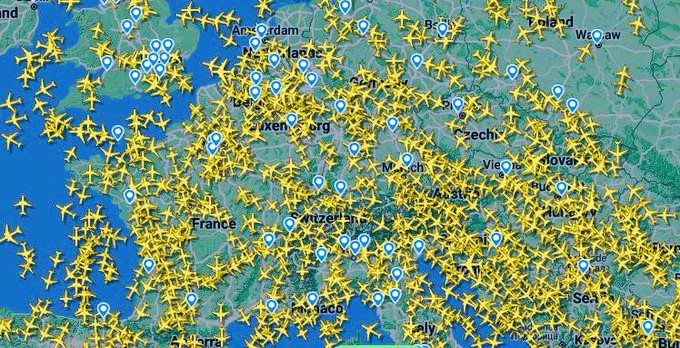
In an era where climate change presents an escalating threat, the aviation industry is highlighted as a major contributor to carbon emissions. With an average of 9,728 planes in the sky at any given moment, transporting approximately 1,270,406 passengers, the sector’s environmental impact is considerable. Aviation’s high carbon footprint is driven primarily by jet fuel, which is responsible for 99% of its emissions being CO2. For instance, a Boeing 737-400 emits about 115 grams of CO2 per passenger per kilometre, equating to around 90 kilograms of CO2 per passenger per hour. Despite technological advancements and increased energy efficiency, the sector’s reliance on fossil fuels remains a significant challenge, underscoring the need for urgent action towards achieving net-zero air travel.
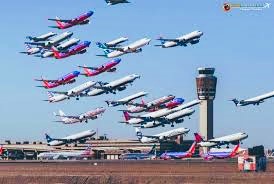
Aviation accounts for roughly 2.5% of global CO2 emissions and contributes about 4% to global warming. This high carbon intensity is a consequence of the sector’s reliance on jet fuel, a major source of CO2 emissions. While the energy efficiency of air travel has improved—more than doubling from 2.9 megajoules per passenger-kilometre in 1990 to 1.3 megajoules in 2019—the sector’s carbon footprint remains substantial due to unchanged carbon intensity of aviation fuel. To address this, the industry must focus on several key strategies for reducing emissions and moving towards a more sustainable future.
One promising avenue for reducing aviation’s carbon emissions is the adoption of Sustainable Aviation Fuels (SAF). SAFs, derived from waste feedstocks, oils, and agricultural and forestry residues, have the potential to reduce carbon emissions by up to 80%. However, their widespread adoption is currently constrained by production challenges and high costs. To overcome these barriers, it is crucial to scale up SAF production and make the fuels more economically viable. This involves investing in new technologies and infrastructure to support SAF production and blending with traditional jet fuels.

Another important strategy is to promote alternatives to air travel. High-speed rail and other efficient transportation modes offer viable options for reducing the reliance on airplanes. Investing in these alternatives not only lowers the carbon footprint associated with air travel but also provides sustainable transportation solutions for the future. By enhancing rail networks and other modes of transport, we can reduce the demand for air travel and subsequently decrease aviation emissions.
Renewable energy investments are also crucial for offsetting aviation emissions. Supporting projects such as reforestation and other nature-based climate solutions can help mitigate the environmental impact of the aviation sector by removing carbon from the atmosphere. Investing in renewable energy sources and purchasing carbon credits are essential for balancing the sector’s carbon budget and achieving long-term sustainability goals.

The aviation industry’s emissions have risen steadily in recent decades, driven by increased demand for air travel and improvements in technology. Despite advancements in aircraft design and operational efficiency, the carbon intensity of aviation fuel remains unchanged. The industry’s goal is to achieve near-zero CO2 emissions by 2050, in alignment with a 1.75 °C global temperature rise pathway. Achieving this target requires a multi-faceted approach, including further innovations in aircraft efficiency and a shift towards sustainable fuels.
Efforts to reduce aviation pollution must involve several strategies. Increasing aircraft fuel efficiency is critical, and this can be achieved by developing and implementing more efficient aircraft designs and technologies. Innovations in aircraft engineering and design can lead to significant improvements in fuel efficiency, thereby reducing emissions per passenger-kilometre.
Expanding the production and use of SAF is another key component of reducing aviation’s carbon footprint. Although SAF currently constitutes a minimal fraction of global fuel demand, its potential to cut emissions by up to 80% makes it a vital element in the push towards net-zero air travel. Investment in SAF production and infrastructure is essential for scaling up its adoption and achieving meaningful emission reductions.

Promoting travel alternatives, such as trains and buses, is also important for reducing the sector’s carbon footprint. Encouraging the use of less carbon-intensive travel options can help decrease the demand for air travel and lower overall emissions. Effective transportation planning and investment in alternative modes of transport are necessary to support this strategy.
Investing in renewable energy projects and purchasing carbon credits are crucial for offsetting emissions and supporting the aviation industry’s sustainability goals. Renewable energy investments help balance the sector’s carbon budget, while nature-based solutions, such as reforestation, complement technological and operational improvements by absorbing atmospheric carbon.
Accurate measurement and reporting of carbon emissions are vital for understanding and mitigating aviation’s impact. Key methodologies include the GHG Protocol for calculating total emissions, the GREET Model for determining lifecycle fuel emissions, and CORSIA for providing default lifecycle emission values for SAF. These tools help track emissions and assess the effectiveness of reduction strategies.
Several industry trends influence aviation’s carbon footprint. SAF adoption is crucial for reducing emissions, but challenges in production and blending with traditional fuels need to be addressed. Policy incentives and technological advancements are necessary to increase SAF usage and overcome current limitations. Disclosure regulations are shifting from voluntary to mandatory reporting of Scope 3 emissions, requiring comprehensive assessments across the value chain. New technologies, such as electric and hydrogen planes, offer future opportunities for emission reductions, while SAF’s compatibility with existing aircraft provides an immediate advantage for emission cuts.

In conclusion, the aviation sector plays a significant role in global carbon emissions, with its impact growing as air travel increases. Achieving net-zero air travel requires a comprehensive strategy that includes the adoption of sustainable aviation fuels, advancements in aircraft efficiency, promotion of alternative travel modes, and investment in renewable energy. As the world faces the climate crisis, the aviation industry must accelerate its efforts toward sustainability. By embracing innovation, collaboration, and rigorous emissions reporting, the industry can significantly reduce its carbon footprint and contribute to global climate goals, ensuring a greener future for air travel.
arjasrikanth.in for more insights
 SOCIAL PERSPECTIVES