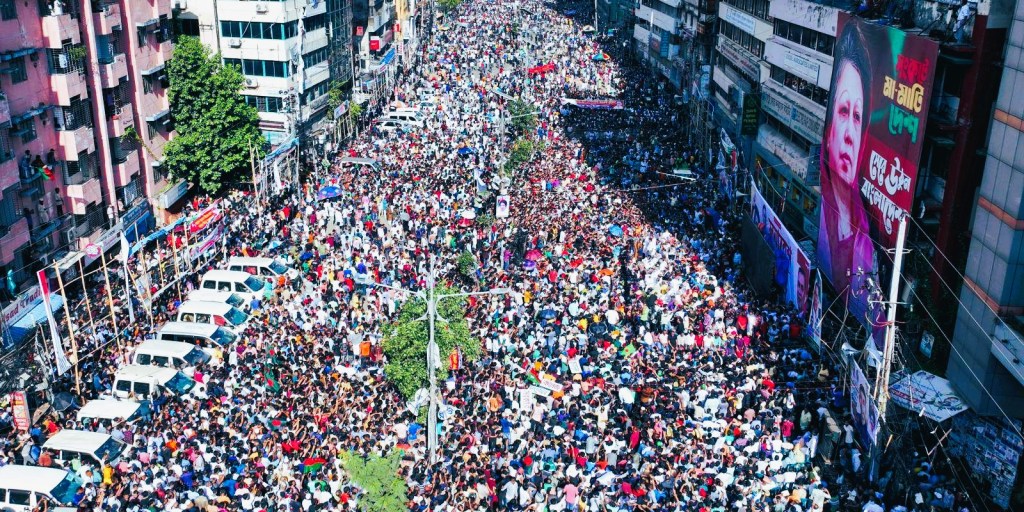
Navigating the Fall of Sheikh Hasina and Its Implications for India and the West!!
Bangladesh, with its population exceeding 171 million, is currently witnessing a period of intense political upheaval. The sudden resignation of Prime Minister Sheikh Hasina, who had led the nation for over 16 years, has not only sparked widespread protests but has also created a significant political vacuum with potential repercussions extending beyond its borders. This crisis unfolds against the backdrop of Bangladesh’s remarkable economic ascent, marked by impressive growth and regional influence, making the current turmoil all the more critical.
Sheikh Hasina’s tenure has been a blend of notable economic achievements and increasing political control. Under her leadership, Bangladesh emerged from its previous status as one of the world’s poorest nations to become a prominent economic player, even surpassing India in terms of per-capita GDP. However, her rule was also characterized by growing authoritarian tendencies, with frequent accusations of suppressing dissent and stifling political opposition.

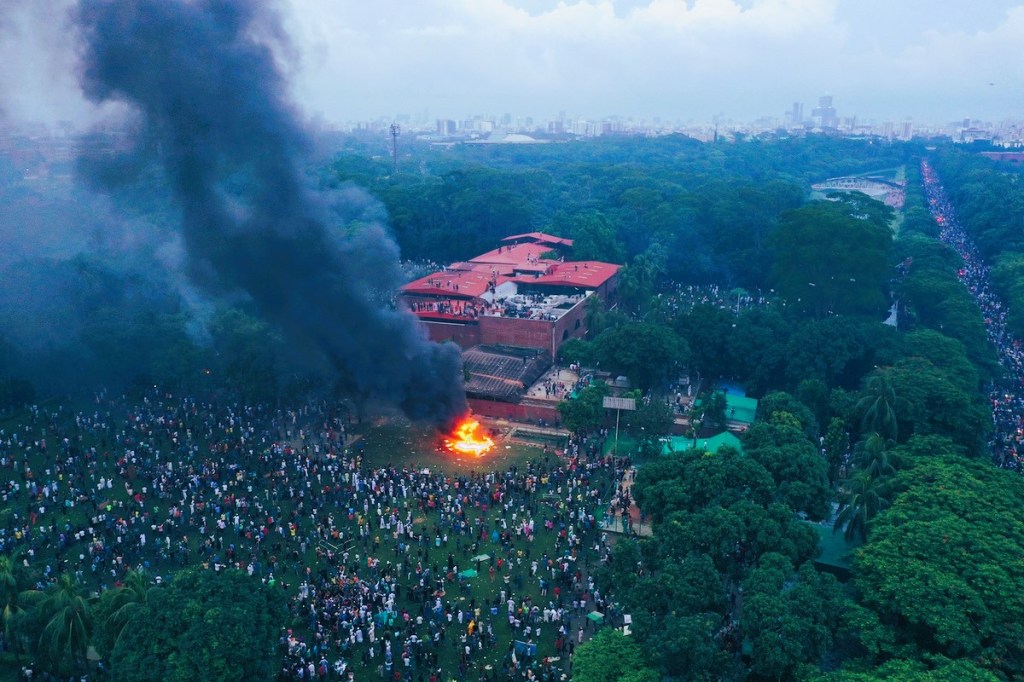
The recent unrest began with protests against a controversial job reservation policy that allocated a substantial portion of government positions to the descendants of freedom fighters. Many perceived this as discriminatory, fuelling widespread dissatisfaction and sparking a series of demonstrations. Initially focused on job reservations, the protests quickly expanded into a broader challenge against Hasina’s increasingly autocratic rule. Social media played a crucial role in organizing and amplifying these protests, transforming what began as localized demonstrations into a significant political crisis.
The rapid escalation of protests led to violent clashes between demonstrators and law enforcement, resulting in numerous fatalities. This unrest has exposed the deep-seated frustrations of a younger generation that feels marginalized by a political system perceived as entrenched and unresponsive. The protests reflect broader systemic issues and a demand for more inclusive governance.
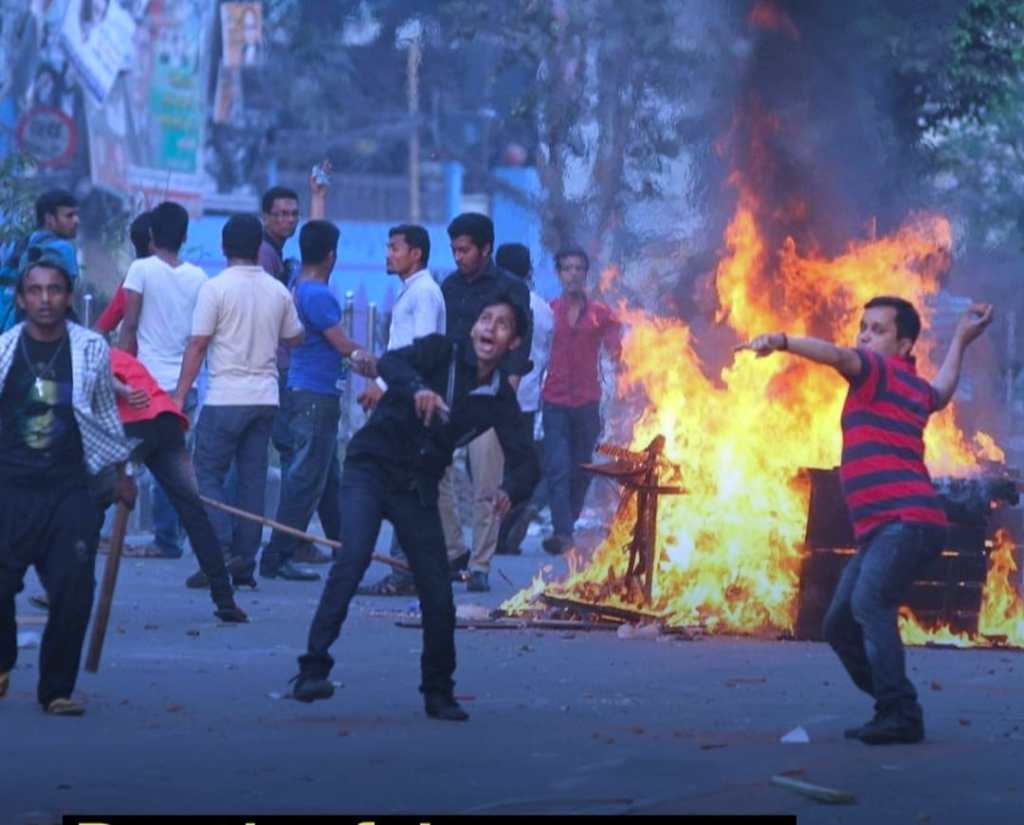
As the situation evolved, Sheikh Hasina’s sudden departure and potential asylum in India have created a substantial political vacuum in Bangladesh. This development raises significant questions about the future trajectory of Bangladeshi politics and regional stability. Historically, Hasina’s administration maintained a strategic alliance with India, focusing on shared security interests and economic cooperation. Her exit and the potential rise of a new, possibly unstable administration could disrupt these established relations and create uncertainties for both countries.
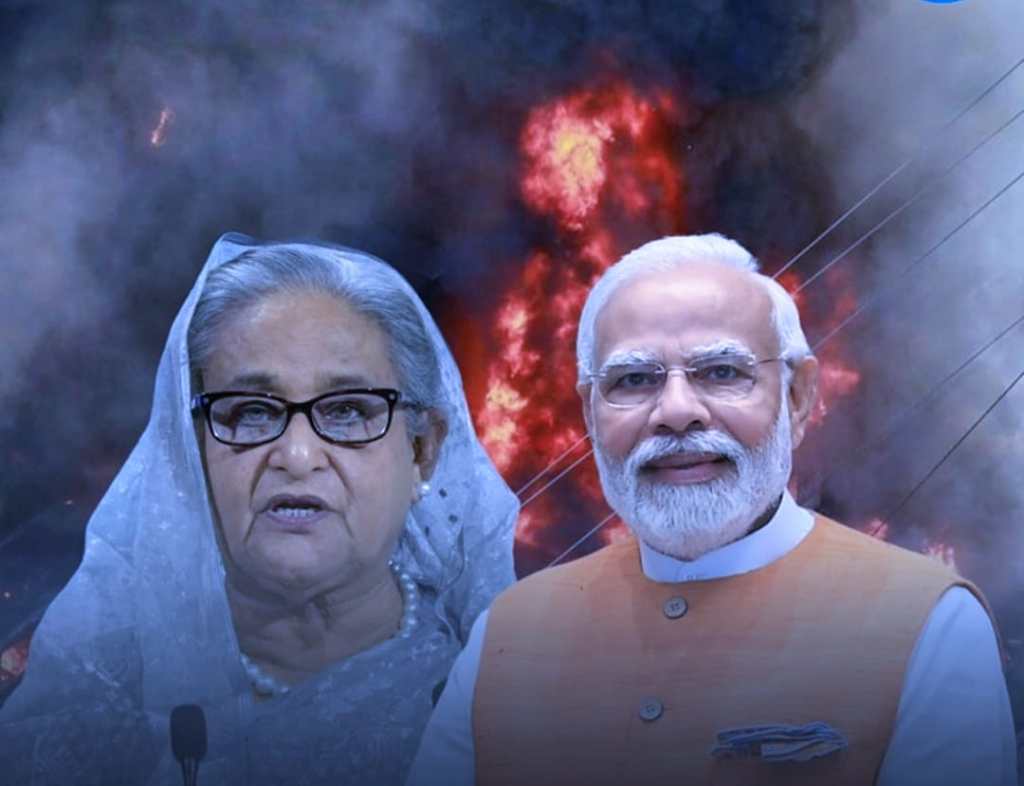
India, which has long supported Hasina and benefited from her leadership in terms of regional stability, now faces a complex diplomatic challenge. The possibility of strained relations with the incoming Bangladeshi government, coupled with potential demands for Hasina’s extradition, places India in a delicate position. Additionally, the safety of approximately 19,000 Indian nationals and business interests in Bangladesh could be jeopardized by the current instability.

The regional implications of this crisis are significant. Bangladesh’s strategic location in South Asia makes its stability crucial for neighboring countries, particularly India. The political turmoil in Bangladesh has the potential to spill over its borders, impacting regional security and economic relations. India, already contending with instability in Myanmar, Afghanistan, and Sri Lanka, must navigate the evolving situation in Bangladesh with caution.
China’s increasing influence in Bangladesh, highlighted by its Belt and Road Initiative and substantial investments, adds another layer of complexity to the situation. The fall of Hasina could provide China with new opportunities to enhance its position in South Asia, potentially at the expense of India’s regional influence. Similarly, Pakistan might seek to leverage the situation to improve its standing in the region, further complicating the geopolitical landscape.

The economic impact of the unrest is also profound. Bangladesh’s impressive economic growth, driven by its garment industry and other sectors, faces significant threats from the current instability. High inflation, youth unemployment, and a vulnerable export-dependent economy pose serious risks. The disruptions caused by the protests could affect global markets, particularly impacting Western brands and investors with interests in Bangladesh.
The International Monetary Fund (IMF) remains committed to supporting Bangladesh with a planned $4.7 billion loan, aimed at stabilizing the economy amidst the crisis. However, the ongoing political instability poses a threat to these efforts and could undermine Bangladesh’s economic development prospects.
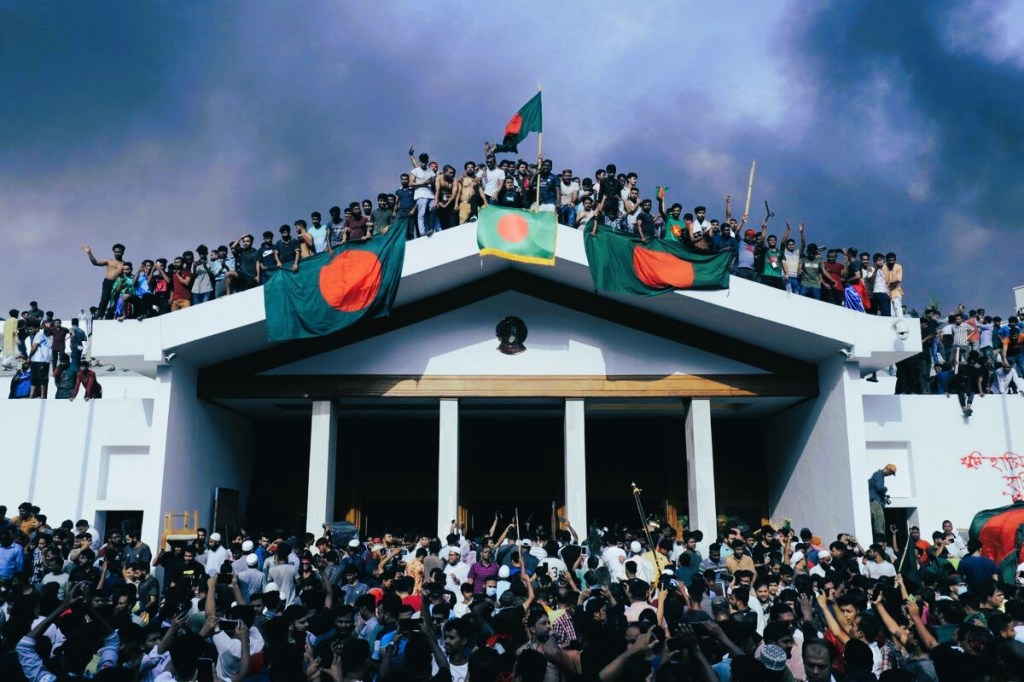
To understand the current crisis fully, it is essential to consider Bangladesh’s historical context. The nation’s turbulent history, marked by military coups and political instability, has shaped its current political landscape. The legacy of the 1971 liberation war and the rise of Sheikh Hasina’s Awami League have contributed to the current discontent. With approximately 70% of the population under the age of 30, the youth are particularly dissatisfied with the political system, which they perceive as failing to address their needs and aspirations. The protests underscore the need for substantial political reform and greater accountability.
In conclusion, the resignation of Sheikh Hasina marks a pivotal moment for Bangladesh, with implications extending well beyond its borders. As the country navigates this period of transition, the need for political stability, economic resilience, and regional cooperation is increasingly apparent. India and other regional players face both challenges and opportunities in responding to the evolving situation. The crisis serves as a reminder of the delicate balance required in managing political power and the necessity for leaders to heed the voices of their people. The world watches with anticipation, hopeful for a resolution that fosters stability, democracy, and continued progress in Bangladesh.
visit arjasrikanth.in for more insights
 SOCIAL PERSPECTIVES