Enhancing Equity and Justice for India’s Most Marginalized Communities
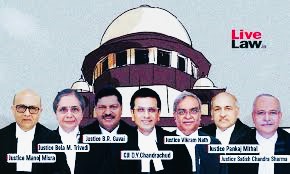
In a significant stride toward social equity and justice, a seven-judge bench of the Supreme Court of India recently delivered a landmark judgement regarding the classification of Scheduled Castes (SC) and Scheduled Tribes (ST). This ruling, the first of its kind since the introduction of reservations in the Constitution in 1956, reframes how the SC and ST codes operate in the country. Headed by Chief Justice DY Chandrachud, the court’s decision to create sub-classifications within these categories aims to provide enhanced protection and representation for the most marginalized communities, ensuring that the benefits of affirmative action reach those who truly need them.
Historically, the SC and ST classifications were established to address the systemic discrimination faced by certain communities, particularly in the context of untouchability and social exclusion. Chief Justice Chandrachud emphasized that “there is no caste called Scheduled Caste.” Instead, this classification encompasses a variety of castes that have historically faced prejudice and discrimination. Since the Presidential Order of 1950, which established the central list of Scheduled Castes, the Parliament has had the authority to make additions to this list. Currently, 15% of reservations in education and public jobs are allocated for Scheduled Castes, while Scheduled Tribes receive 7.5%.
The Supreme Court’s ruling seeks to rectify the homogenization that has occurred within the Scheduled Castes, where all castes are treated as a uniform group despite the varying levels of discrimination they face. This decision acknowledges that reservation is not merely a tool for elevating backwardness; it is a mechanism for ensuring equitable representation across all societal dimensions. The court noted that after 75 years of independence, it is imperative to reassess how these classifications function, particularly regarding the efficacy of affirmative action in reaching the most deserving individuals.
One of the key aspects of the Supreme Court’s judgement is the recognition that certain castes within the SC category may have benefited more from affirmative action than others. For instance, in various states, some caste groups may dominate the SC list, thereby overshadowing less represented groups that still face significant socio-economic challenges. In Punjab, for example, castes like the Bhangi or Valmiki have been left behind, despite being part of the broader Scheduled Caste classification. The ruling allows for the possibility of giving differential reservations to these underrepresented groups, ensuring that the most marginalized among the marginalized receive the protections they require.
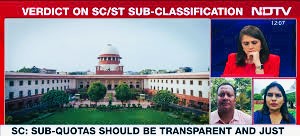
This judgement is particularly timely, given the political landscape in India, where parties have increasingly sought to consolidate their support among non-dominant Scheduled Castes. The Supreme Court’s ruling aligns with a broader political consensus on sub-classification, indicating that both state and central governments recognize the need for reform in this area. The judgement opens the door for states to undertake empirical studies to assess representation within public jobs and education, allowing for a more nuanced approach to reservation.
Furthermore, the court has underscored the importance of fair and reasonable classification, cautioning that states must avoid arbitrary categorization. This means that any sub-classification must be backed by substantial data demonstrating the need for such differentiation. The ruling also addresses the contentious issue of the “creamy layer” within Scheduled Castes, suggesting that states may have the discretion to exclude individuals above a certain income threshold from quota benefits. While this remains a sensitive topic, the court’s emphasis on empirical evidence serves as a guide for states looking to implement these changes.
The Supreme Court’s judgement is a recognition of the evolving nature of society and the need for affirmative action to adapt accordingly. It represents a significant shift in how the legal framework governing SC and ST classifications can be applied to better serve the needs of the most vulnerable communities. By allowing for sub-classification, the court acknowledges that the social landscape is dynamic and that past classifications may no longer adequately address current disparities.
Justice Bela M. Trivedi and Justice Surya Kant highlighted the historical context of untouchability and its lingering effects on various castes within the Scheduled Caste classification. Their opinions reinforce the idea that progress requires more than just a one-size-fits-all approach. The court’s decision empowers states to create tailored policies that reflect the unique challenges faced by different communities, ultimately fostering a more equitable society.
As the implications of this judgement unfold, it is essential to recognize both the opportunities and challenges it presents. The potential for politicization of sub-classifications exists, and there are legitimate concerns about the misuse of this ruling for electoral gains. However, the court has provided a framework that requires any classification to undergo judicial scrutiny, ensuring that the process remains transparent and accountable.

Supreme Court of India’s landmark judgement on the sub-classification of Scheduled Castes (SC) and Scheduled Tribes (ST) marks a significant advancement in social equity and justice, aiming to enhance protection and representation for the most marginalized communities. This ruling, the first of its kind since the introduction of reservations in 1956, recognizes the varying levels of discrimination within SCs, allowing for differential reservations to ensure that benefits reach those who need them most. The court emphasizes the need for data-driven classifications to avoid arbitrary categorization and addresses the issue of the “creamy layer,” proposing that states may exclude higher-income individuals from quota benefits. By promoting a nuanced approach to affirmative action, the judgement encourages states to tailor policies to reflect the unique challenges faced by different communities, ultimately fostering a more equitable society while maintaining transparency and accountability in the classification process.
visit arjasrikanth.in for more insights
 SOCIAL PERSPECTIVES