
A Village Girl’s Unwavering Determination to Shine on the World Stage
The Paris Olympics witnessed a historic moment for India as Manu Bhaker, the talented shooter, became the first woman from the country to win an Olympic medal in shooting. At just 22 years old, Manu claimed a bronze medal in the women’s 10m air pistol event, bringing pride and glory to the nation. Her remarkable achievement not only marks a significant milestone in Indian shooting but also serves as an inspiration for aspiring athletes across the country.

Manu Bhaker’s journey from a village girl to an Olympic medal winner is a testament to her resilience and determination. Born on February 18, 2002, in Jhajjar, Haryana, a state famous for its athletes, Bhaker initially excelled in various sports, showcasing her natural talent and passion. From a young age, she was actively involved in tennis, skating, boxing, and thang ta, a martial art form, winning medals at the national level. Her versatility in sports highlighted her exceptional athletic prowess and laid a solid foundation for her future in competitive sports.
The pivotal moment in Manu’s life came after the Rio 2016 Olympics. Inspired by the performances of the athletes, she impulsively decided to try her hand at shooting. At just 14, she approached her father with a request for a sports shooting pistol to hone her new-found passion. Her father, recognizing her potential and determination, supported her decision. Within a week, she began her training, quickly demonstrating her exceptional talent and precision in shooting.
Despite her early successes, Bhaker faced significant challenges in her journey. As a young shooter, she struggled with anxiety and mental pressure, which led to a temporary decline in her performance. Additionally, she battled injuries, including a wrist fracture that kept her out of competition for several months. These setbacks tested her resolve, but Bhaker’s unwavering determination and perseverance saw her through these tough times. She worked tirelessly to overcome her struggles, emerging stronger and more focused on her goals.

The Tokyo 2020 Olympics was a significant milestone in Bhaker’s career, albeit one filled with disappointment. She was a strong contender, but a pistol malfunction in the women’s 10m air pistol event thwarted her chances of advancing, leaving her heartbroken. Despite failing to qualify in all three rounds, including the women’s 25m pistol and mixed 10m air pistol events, Bhaker did not let this setback deter her. Instead, it fuelled her desire to excel further, and she set her sights on redemption at the Paris Olympics.
The Paris Olympics presented a new opportunity for Manu to showcase her talent and redeem herself. With a focused mindset and unwavering determination, she entered the competition. Manu displayed exceptional skills and maintained her composure throughout the event. With each shot, she inched closer to victory, securing her place among the top contenders.
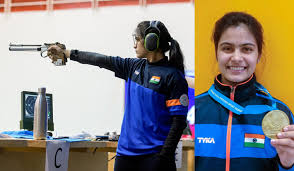
Manu’s outstanding performance in the women’s 10m air pistol event earned her a well-deserved bronze medal. She faced tough competition from South Korean shooters but held her ground with confidence and precision. This historic achievement not only brought India its first medal at the Paris Olympics but also highlighted Manu’s exceptional talent and hard work.
Manu’s success has had a profound impact on the shooting community in India. Her achievement serves as a beacon of hope for aspiring shooters and athletes across the country. With her dedication and perseverance, she has paved the way for future generations to dream big and strive for excellence.
Manu Bhaker was born in the small village of Goria in Jhajjar, Haryana, a state renowned for producing some of India’s finest athletes. Despite being from a modest background, Manu’s parents, Ram Kishan Bhaker and Sumedha Bhaker, were highly supportive of her interests in sports. Her father, a chief engineer in the Merchant Navy, and her mother, a school principal, understood the importance of nurturing her talent from a young age.
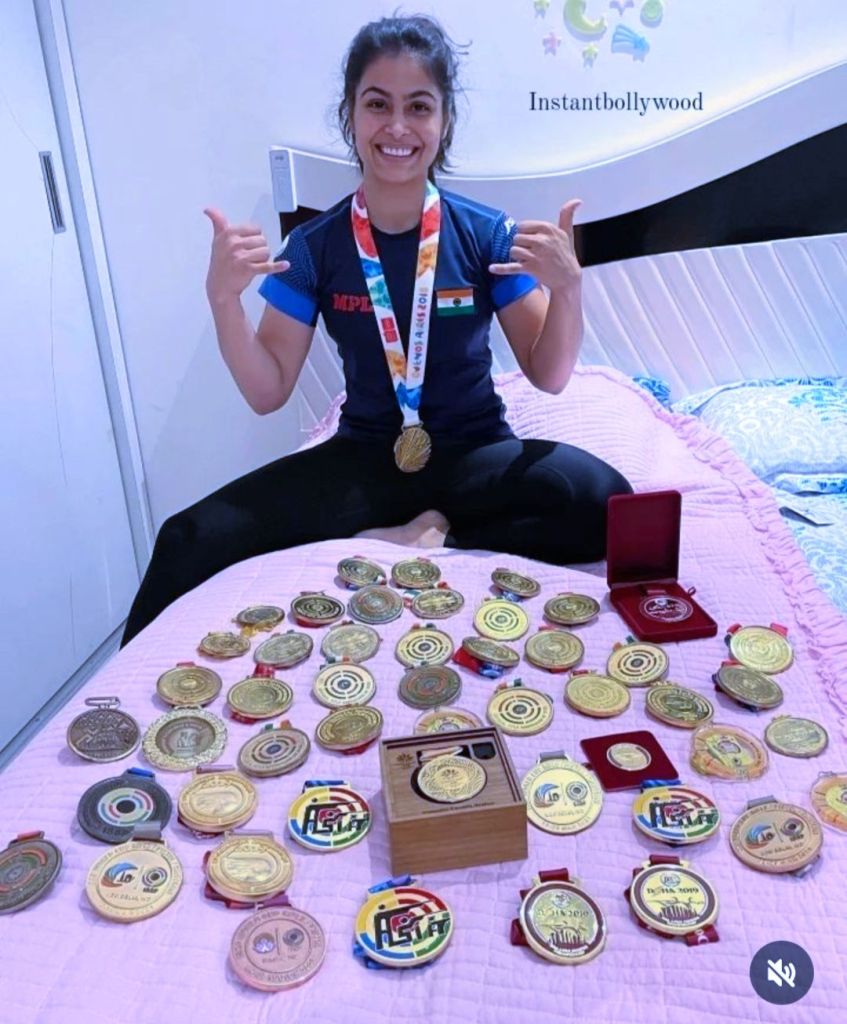
Growing up in a rural setting, Manu was exposed to various sports through her school and local competitions. She participated in tennis, skating, and boxing, demonstrating her athleticism and competitive spirit. Her involvement in thang ta, a Manipuri martial art, further showcased her versatility and drive to excel in different disciplines.
In 2016, Manu’s interest in shooting was piqued while watching the Rio Olympics. She was captivated by the precision and skill of the shooters, which inspired her to take up the sport. At the age of 14, she decided to pursue shooting seriously. Her father, recognizing her determination and potential, supported her decision by purchasing a sports shooting pistol and enrolling her in a local shooting academy.
Under the guidance of her coaches, Manu quickly mastered the basics of shooting and began competing in local and national tournaments. Her rapid progress and natural talent did not go unnoticed. Within a short period, she started winning medals at various competitions, setting the stage for her journey to the international arena.

Manu’s initial success in shooting came at the National Shooting Championships, where she won multiple medals in different categories. Her impressive performances caught the attention of national selectors, and she was soon inducted into the Indian shooting team. Her breakthrough came in 2017 when she won a gold medal at the World Junior Shooting Championships in Suhl, Germany. This victory was a significant milestone in her career, establishing her as a rising star in Indian shooting.
Despite her rapid ascent, Manu faced numerous challenges that tested her resilience and determination. One of the most significant obstacles was dealing with anxiety and mental pressure. As a young athlete competing at the highest level, she often found it challenging to manage the expectations and stress associated with international competitions. These mental struggles affected her performance, leading to periods of self-doubt and frustration.
In addition to mental challenges, Manu also dealt with physical injuries. A wrist fracture in 2018 temporarily side lined her, forcing her to withdraw from several competitions. The injury was a significant setback, but Manu’s determination to overcome it was unwavering. She underwent rigorous rehabilitation and training to regain her form, demonstrating her resilience and commitment to her sport.

Manu’s failure to qualify in the women’s 25m pistol and mixed 10m air pistol events further compounded her frustration. The Tokyo Olympics, which she had hoped would be a crowning achievement, became a painful memory. However, Manu’s response to this setback was nothing short of inspirational. Instead of succumbing to disappointment, she used the experience as a motivation to work harder and improve her performance.
After the Tokyo setback, Manu Bhaker focused on her preparation for the next Olympic cycle. She identified areas that needed improvement and worked tirelessly to enhance her skills. Her training regimen became more rigorous, and she adopted a holistic approach to her preparation, focusing not only on her technical skills but also on her mental and physical fitness.

Manu’s efforts paid off as she began to show improved performances in subsequent competitions. She won several medals at the World Championships, Asian Games, and Commonwealth Games, reaffirming her status as one of the top shooters in the world. Her success at these events bolstered her confidence and set the stage for her redemption at the Paris Olympics.
The Paris 2024 Olympics presented Manu with an opportunity to redeem herself and prove her mettle on the world stage. She entered the competition with a focused mindset and an unwavering determination to succeed. Her performance in the women’s 10m air pistol event was a testament to her hard work and perseverance.
Throughout the competition, Manu displayed exceptional skill and composure. She faced tough competition from South Korean shooters but held her ground with confidence and precision. Each shot brought her closer to victory, and she remained within the top three throughout the event. Her final score of 221.7 secured her a well-deserved bronze medal, marking a historic moment for Indian shooting.
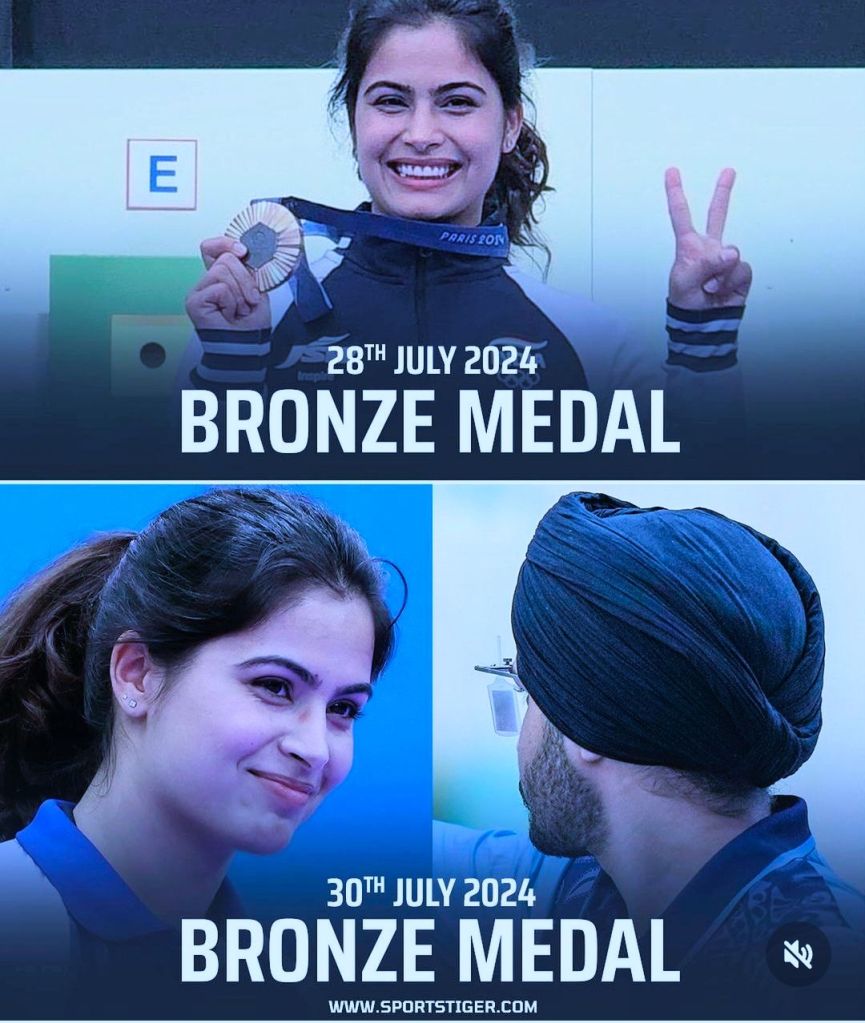
Manu’s bronze medal at the Paris Olympics was a moment of immense pride for India. Her achievement not only ended a 12-year Olympic shooting medal drought for the country but also made her the first Indian woman to win an Olympic medal in shooting. The nation celebrated her success, and she received accolades from various quarters, including a congratulatory message from the Prime Minister of India.
Her victory was not just a personal triumph but also a significant milestone for Indian sports. It highlighted the potential of Indian athletes and inspired countless aspiring shooters across the country. Manu’s journey from a village girl to an Olympic medalist became a source of motivation for young athletes, demonstrating that with hard work, dedication, and perseverance, they too could achieve their dreams.
Manu Bhaker’s success at the Paris Olympics had a profound impact on the Indian shooting community and the sports ecosystem as a whole. Her achievement served as a beacon of hope for aspiring shooters, encouraging them to pursue their passion with determination and resilience. It also underscored the importance of providing young athletes with the necessary support and infrastructure to excel in their chosen sports.
Her victory brought increased attention to the sport of shooting in India, leading to greater investment in training facilities, coaching, and equipment. The government and various sports organizations recognized the need to nurture and support young talent, and initiatives were launched to identify and train promising shooters from an early age.
Manu Bhaker’s journey is a testament to the potential of Indian athletes on the global stage. Her success has paved the way for future generations of shooters and athletes, inspiring them to aim for excellence. The Indian shooting community continues to grow, with more young talent emerging from different parts of the country.
The future of Indian shooting looks promising, with increased support from the government and sports organizations. Initiatives to promote grassroots development and provide world-class training facilities are expected to produce more champions like Manu Bhaker. As India continues to nurture its athletes
, the nation can look forward to more historic moments and achievements in the world of sports.

Manu Bhaker’s journey from a village girl in Jhajjar, Haryana, to an Olympic medalist in Paris is a story of unwavering determination, resilience, and passion for shooting. Her historic bronze medal at the Paris Olympics has not only brought pride to the nation but also inspired countless individuals to pursue their dreams relentlessly. Manu’s triumph is a reminder that hard work, perseverance, and unwavering dedication can lead to extraordinary achievements. As India continues to nurture and support talented athletes like Manu, the future holds immense promise for the nation on the global sporting stage.
Her story is not just about winning a medal; it is about the journey, the struggles, the setbacks, and the ultimate triumph. It is a story that will continue to inspire generations to come, proving that with the right mindset and effort, nothing is impossible. Manu Bhaker has not only made India proud but has also set a benchmark for excellence in sports, leaving a lasting legacy for future athletes to follow.
visit arjasrikanth.in for more insights
 SOCIAL PERSPECTIVES