
In the words of Captain Vikram Batra, “Either I will come back after hoisting the tricolour, or I will come back wrapped in it, but I will be back for sure.”
Kargil Vijay Diwas, celebrated on July 26 every year, commemorates the extraordinary bravery and sacrifice of the Indian soldiers who fought against Pakistani infiltrators in the 1999 Kargil War. This day holds immense significance in Indian history, not only as a tribute to the fallen heroes but also as a testament to the nation’s resolve to protect its sovereignty against all odds. The Kargil War stands out as a high-altitude conflict marked by treacherous terrain, extreme weather conditions, and the indomitable spirit of the Indian Armed Forces.

The Kargil War, also known as Operation Vijay, was fought between May and July 1999 in the Kargil district of Jammu and Kashmir. Pakistani soldiers and militants infiltrated the Indian side of the Line of Control (LoC), occupying strategic heights that overlooked the vital Srinagar-Leh highway. The intrusion was detected in early May, leading to a full-scale military operation by India to evict the intruders. The conflict ended on July 26, 1999, with the Indian Army regaining control of the peaks, marking a decisive victory for India.
Kargil’s strategic importance lies in its location along the Line of Control (LoC) and its proximity to the Srinagar-Leh highway. Control over these heights would have given the Pakistani military a significant advantage, potentially disrupting the supply routes to Leh and the Siachen Glacier. The conflict’s high-altitude terrain, with peaks rising over 16,000 feet, posed significant challenges to both logistics and combat operations.
The Kargil War is etched in the annals of history as a demonstration of unparalleled valour and determination. The Indian soldiers, fighting at altitudes where oxygen levels were low and temperatures plummeted, displayed extraordinary courage. The stories of individual bravery and sacrifice are numerous, but a few stand out as particularly emblematic of the spirit of the Indian Armed Forces.

Captain Vikram Batra, posthumously awarded the Param Vir Chakra, India’s highest military honour, is remembered for his fearless leadership and indomitable spirit. Leading his men in the capture of Point 5140, he famously radioed the success of the mission with the phrase “Yeh Dil Maange More!” His bravery during the recapture of Point 4875, where he laid down his life, continues to inspire generations.
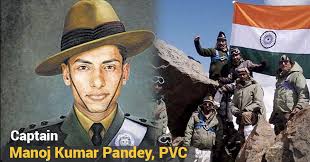
Lieutenant Manoj Kumar Pandey, another Param Vir Chakra awardee, led his men in the assault on Jubar Top. His daring leadership under heavy enemy fire was crucial in securing the position, although he succumbed to his injuries. His last words, “Na chhodnu” (I will not spare them), encapsulate the resolve and bravery of the Indian soldiers.

Grenadier Yogendra Singh Yadav, also a recipient of the Param Vir Chakra, survived despite sustaining multiple injuries during the assault on Tiger Hill. His actions, which involved climbing a sheer rock face under heavy fire and neutralizing enemy positions, were pivotal in the capture of the strategic peak.
The Kargil War highlighted the critical role of technology and communication in modern warfare. The use of satellite imagery, surveillance drones, and real-time intelligence provided the Indian Army with a tactical advantage. Communication networks ensured coordination between various units, essential for the success of operations in such challenging terrain.
Kargil Vijay Diwas is not just a day of remembrance but also a celebration of national unity and the collective resolve to safeguard India’s borders. The war underscored the importance of robust military preparedness, effective intelligence gathering, and inter-service cooperation. It also highlighted the need for strong security measures and the continuous modernization of the armed forces to counter emerging threats.

Every year, on Kargil Vijay Diwas, the Prime Minister of India pays homage to the fallen soldiers at Amar Jawan Jyoti at India Gate, New Delhi. Commemorative events are organized across the country to honour the bravery and sacrifice of the armed forces. These ceremonies serve as a reminder of the supreme sacrifice made by the soldiers and the enduring gratitude of the nation.
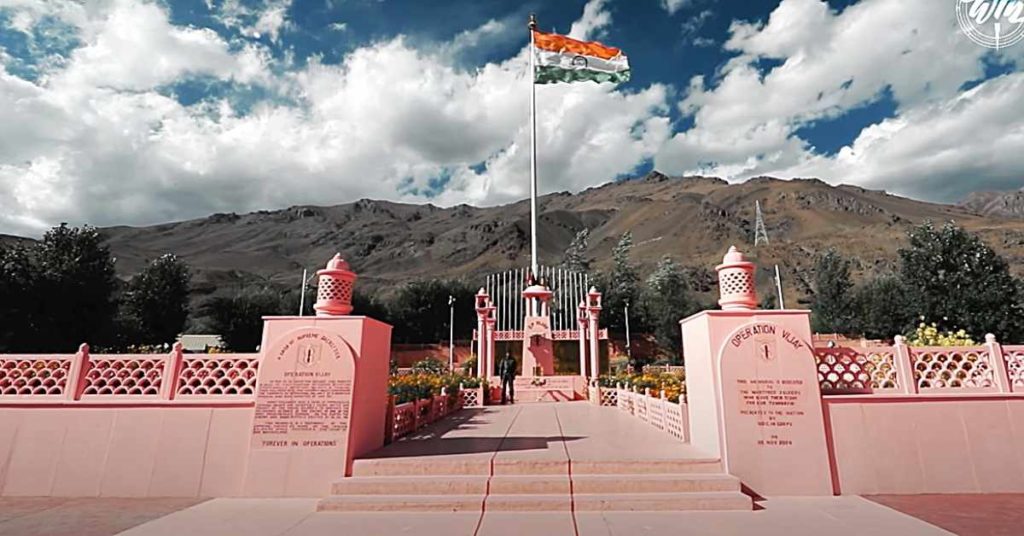
Located in Dras, the Kargil War Memorial stands as a poignant tribute to the soldiers who lost their lives in the conflict. Built in pink sandstone, the memorial features the names of the fallen soldiers inscribed on the Wall of Heroes. It is a place of pilgrimage for many Indians, symbolizing the nation’s respect and admiration for its brave soldiers.
The Kargil War, though a brief conflict, holds enduring lessons. It serves as a reminder of the importance of military preparedness and the need for continuous vigilance. The war also highlighted the human cost of conflict and the importance of dialogue and peaceful resolution of disputes. The resilience and determination displayed by the Indian soldiers continue to inspire and motivate the armed forces and the nation as a whole.
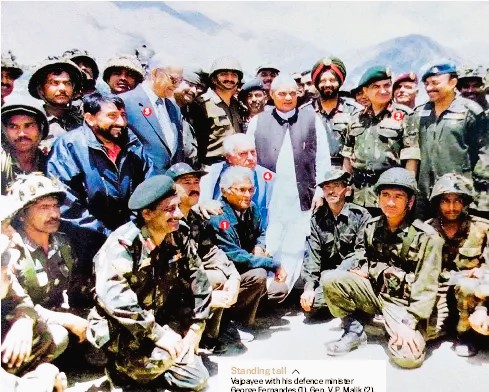
Kargil Vijay Diwas is a solemn yet proud occasion that celebrates the bravery, sacrifice, and patriotism of the Indian soldiers who fought in the Kargil War. The day serves as a powerful reminder of the nation’s commitment to protecting its sovereignty and honoring the memory of those who laid down their lives for the country. As we salute these heroes, we reaffirm our dedication to upholding the values they fought for and ensuring that their sacrifices are never forgotten. Their legacy lives on, inspiring future generations to serve the nation with the same courage and determination.
In the words of Captain Vikram Batra, “Either I will come back after hoisting the tricolour, or I will come back wrapped in it, but I will be back for sure.” These words encapsulate the spirit of Kargil Vijay Diwas, a day to remember, honour, and draw inspiration from the extraordinary sacrifices of our brave soldiers.
visit arjasrikanth.in for more insights
 SOCIAL PERSPECTIVES