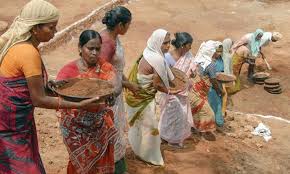
Achieving financial excellence and impactful asset creation, Andhra Pradesh’s innovative MGNREGA approach sets a new benchmark for rural employment and development.
The Mahatma Gandhi National Rural Employment Guarantee Act (MGNREGA), established in September 2005, represents a significant stride towards alleviating rural poverty and unemployment by guaranteeing 100 days of wage employment annually to rural households willing to engage in unskilled manual labour. While MGNREGA has made considerable advancements in improving rural livelihoods and infrastructure, its implementation has encountered various challenges. Andhra Pradesh has emerged as a notable example of how strategic management and innovative approaches can enhance the efficacy of this program.

Between 2020 and 2024, as per MGNREGA Portal source, Andhra Pradesh exhibited exceptional financial performance under MGNREGA, drawing funds amounting to 106% of its target, with allocations rising from ₹4,277 crore to ₹10,365 crore during this period. This financial achievement underscores the state’s commitment to optimizing MGNREGA’s potential. However, questions persist regarding whether these funds were effectively utilized for asset creation and whether they reached the intended beneficiaries, particularly the rural poor. This debate highlights the necessity for meticulous analysis of fund utilization and impact assessment.
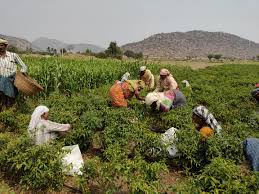
The core objective of MGNREGA extends beyond mere employment generation to the creation of durable rural assets. Andhra Pradesh has made notable progress in this area, yet there are ongoing concerns about the alignment between fund allocation and asset creation. The state’s approach integrates MGNREGA with local development needs and the scaling of small-scale industries, ensuring that labour not only contributes to project execution but also drives rural economic development.
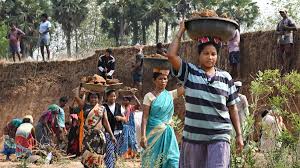
To maximize the benefits of MGNREGA, Andhra Pradesh has implemented several innovative strategies. By synchronizing employment generation with asset creation, the state has efficiently utilized labour to build essential infrastructure. For instance, MGNREGA projects have been integrated with water conservation and soil improvement initiatives, yielding sustainable assets that support long-term rural development. Additionally, the state is exploring the use of MGNREGA funds to bolster small-scale industries. By offering labour as an incentive for industry development, Andhra Pradesh likely to stimulate local entrepreneurship and economic growth. This approach not only advances asset creation but also promotes self-sufficiency and economic resilience within rural communities.
Effective monitoring and transparency are vital for ensuring that MGNREGA funds are utilized efficiently. Andhra Pradesh has made significant strides in this area through technological integration. The use of geo-tagging technology has improved project monitoring, enabling real-time tracking of asset creation. Collaborations with institutions such as the National Remote Sensing Centre (NRSC) and the Indian Space Research Organisation (ISRO) have facilitated this process, ensuring that all assets are geo-tagged and accessible on the Bhuvan Portal. Additionally, the state has implemented robust financial management systems, including the Electronic Fund Management System (EFMS), to manage expenditures and generate payments within 15 days. This system has ensured high compliance and transparency, with fund utilization consistently above target.
Despite these successes, Andhra Pradesh has encountered challenges that required proactive solutions. One notable issue was the increase in the number of Gram Panchayats (GPs) with no expenditure, rising from 72 in 2020 to 509 in 2024. To address this, the state implemented targeted interventions, such as training technical resource persons, improving infrastructure, and enhancing community participation. These measures have facilitated effective fund utilization across all GPs, ensuring that the benefits of MGNREGA reach intended areas. Additionally, Andhra Pradesh has faced scrutiny regarding fund allocation and impact, underscoring the need for transparency and accountability to address these concerns and maintain public trust.
Looking ahead, Andhra Pradesh’s MGNREGA model offers valuable lessons for other states. To sustain and scale its successes, the state must continue investing in capacity building, infrastructure, and technological integration. Strengthening community engagement and responsive governance will also be crucial for ensuring the long-term impact of MGNREGA. The state’s approach to aligning MGNREGA with asset creation and small-scale industry development serves as a model for integrating labour components into broader rural development strategies. By focusing on these areas, Andhra Pradesh has demonstrated how MGNREGA can be utilized not merely as an employment program but as a catalyst for rural economic growth.
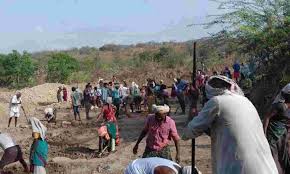
Andhra Pradesh’s experience with MGNREGA over the past five years highlights the program’s transformative potential. The state has achieved notable success in employment generation, asset creation, and financial management, demonstrating a strategic approach that can serve as a model for others. By overcoming challenges, embracing innovative solutions, and emphasizing sustainability, Andhra Pradesh has established a high standard for MGNREGA implementation. This success provides valuable insights for other states seeking to replicate these outcomes. Andhra Pradesh’s commitment to transparency, accountability, and alignment with local needs underscores MGNREGA’s potential as a tool for inclusive and sustainable rural development. The state’s ongoing efforts highlight the importance of adapting strategies to local contexts and continuously improving processes.
As Andhra Pradesh looks to build on this legacy with new government initiatives, there is an opportunity to enhance the effectiveness and impact of MGNREGA even further. With sustained dedication to these principles, the program can continue to drive significant improvements in rural livelihoods and contribute to broader economic growth across India.
visit arjasrikanth.in for more insights
 SOCIAL PERSPECTIVES