After eight months of silence, NASA’s Voyager 1 reawakens, sending data from over 15 billion miles away, reigniting our cosmic curiosity and pushing the boundaries of human exploration!!!
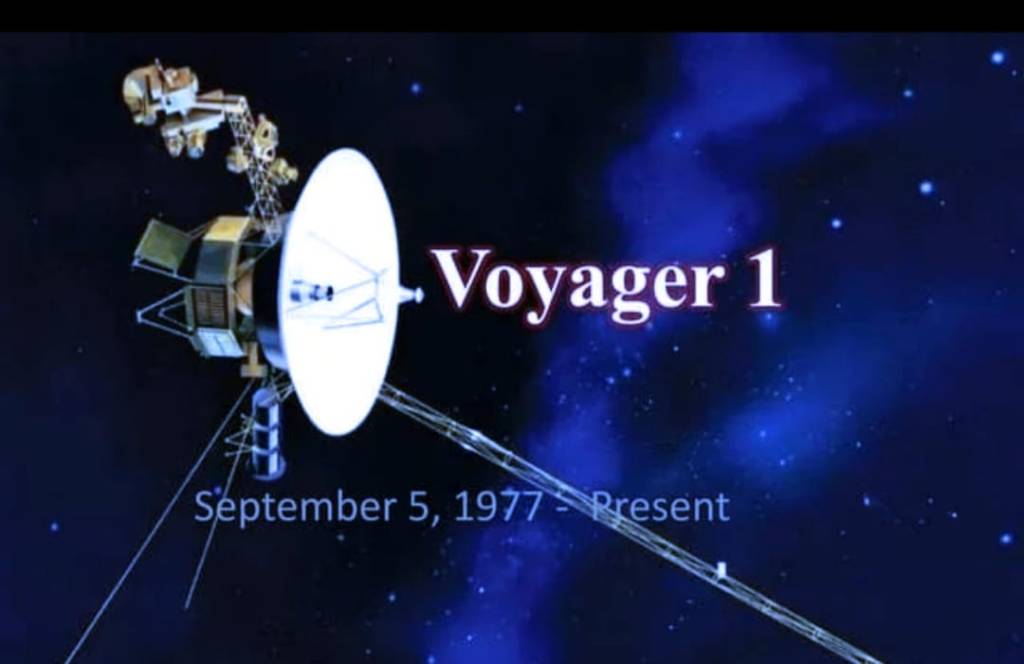
In a triumphant moment for space exploration, NASA’s Voyager 1 has resumed its extraordinary journey after an eight-month hiatus, sending back valuable data from a staggering distance of over 15 billion miles. This achievement marks a testament to human ingenuity and the enduring legacy of the Voyager missions, which began their voyage in 1977 with the ambitious goal of exploring the outer planets and beyond.
The Voyager mission emerged from a rare planetary alignment opportunity recognized by NASA in the early 1970s—a celestial alignment occurring once every 176 years. This favourable positioning enabled a spacecraft to undertake a grand tour of Jupiter, Saturn, Uranus, and Neptune with minimal fuel consumption. Thus, Voyager 1, alongside its twin Voyager 2, embarked on a pioneering mission to unravel the mysteries of the solar system.
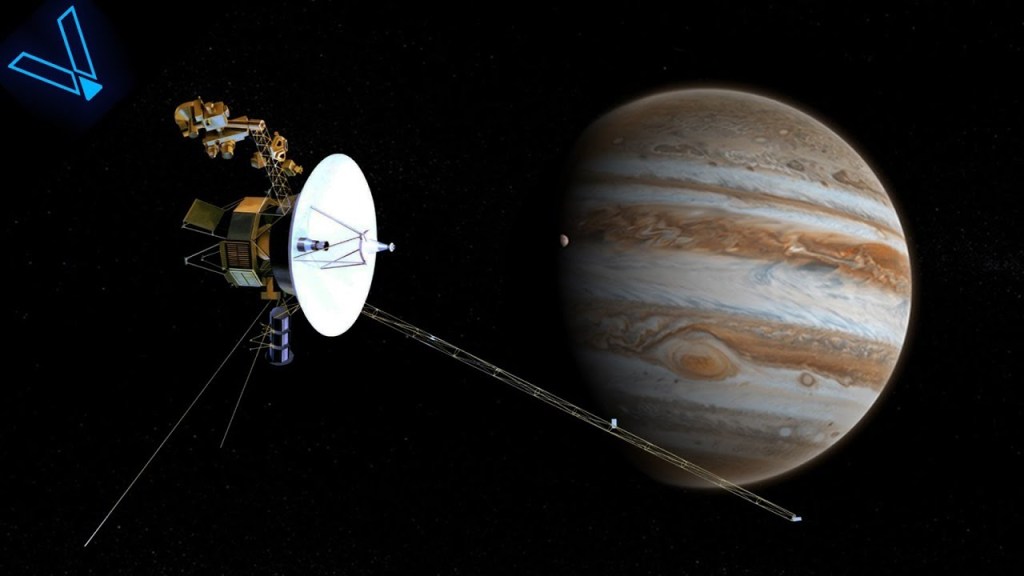
Voyager 1, a marvel of engineering comparable in size to a small car, was equipped with 11 sophisticated scientific instruments designed to capture detailed data and images of the planets and their moons. Among its cargo was the iconic golden record, a cultural time capsule intended to communicate the diversity of life and civilization on Earth to potential extra-terrestrial beings. This record encapsulated sounds, music, and images from our planet, symbolizing humanity’s curiosity and desire for connection beyond our cosmic borders.
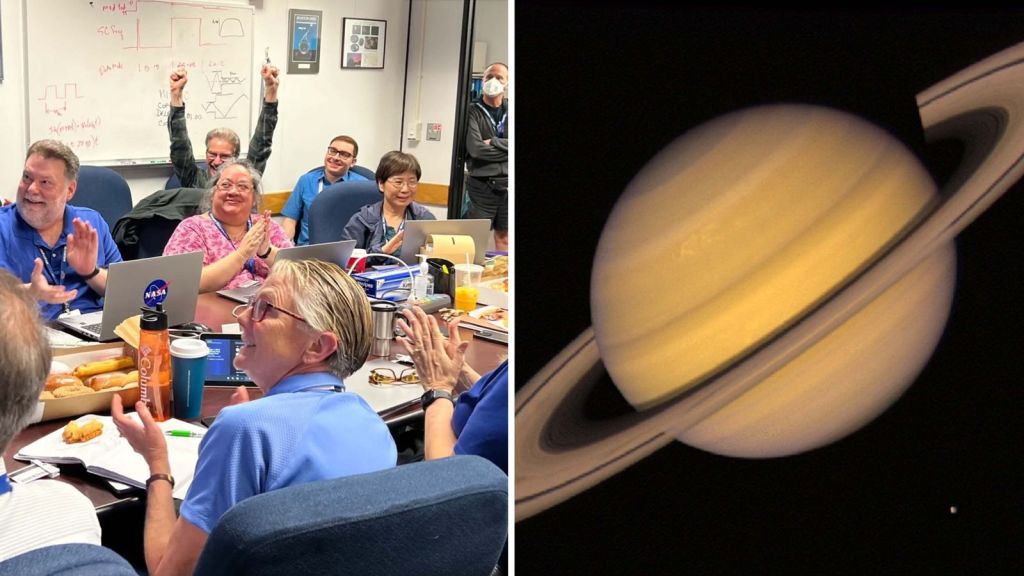
As Voyager 1 ventured deeper into the cosmos, it provided humanity with unprecedented views and discoveries. At Jupiter, the spacecraft revealed active volcanoes on Io and unveiled intricate details of the giant planet’s turbulent atmosphere. Journeying onward to Saturn, Voyager 1 captured breath taking images of its majestic rings and discovered new moons, fundamentally reshaping our understanding of these distant worlds and their complex dynamics.
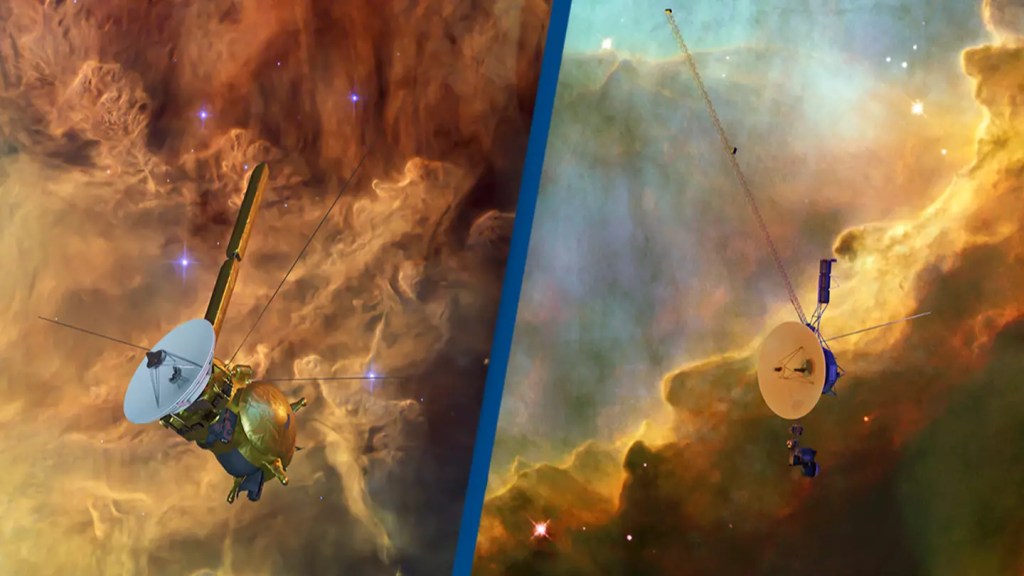
Voyager 2, launched just 16 days before its twin, embarked on a trajectory that allowed it to explore Uranus and Neptune, becoming the only spacecraft to date to visit these outermost planets of our solar system. At Uranus, Voyager 2 discovered ten new moons, two previously unknown rings, and a highly tilted magnetic field, significantly enriching our knowledge of this ice giant. Its arrival at Neptune unveiled the Great Dark Spot—a massive storm comparable in scale to Jupiter’s Great Red Spot—and discovered six additional moons, further expanding our understanding of planetary systems beyond the asteroid belt.
In August 2012, Voyager 1 achieved a historic milestone by crossing into interstellar space, becoming humanity’s first emissary to venture beyond the heliosphere—a protective bubble of particles and magnetic fields emanating from the Sun. This monumental feat allowed scientists to study the interstellar medium, the vast expanse between stars filled with remnants of ancient stellar explosions and cosmic debris, offering unprecedented insights into the broader galactic environment.

Despite the vast distances and harsh conditions of space, Voyager 1 encountered its share of challenges, including a critical communication failure in November 2023 that threatened its mission continuity. The dedicated team at NASA exhibited extraordinary resilience and ingenuity in diagnosing and resolving the issue, restoring communication after an arduous eight-month silence. This episode underscored the tenacity and dedication of the Voyager mission team, highlighting their unwavering commitment to pushing the boundaries of exploration.
The enduring legacy of Voyager 1 extends far beyond scientific discovery, inspiring awe and wonder among people worldwide. Its images and findings have ignited the imaginations of generations, fostering a deeper appreciation for the vastness and beauty of the universe. The spacecraft’s trajectory embodies humanity’s insatiable curiosity and relentless pursuit of knowledge, reinforcing our place within the cosmic tapestry.
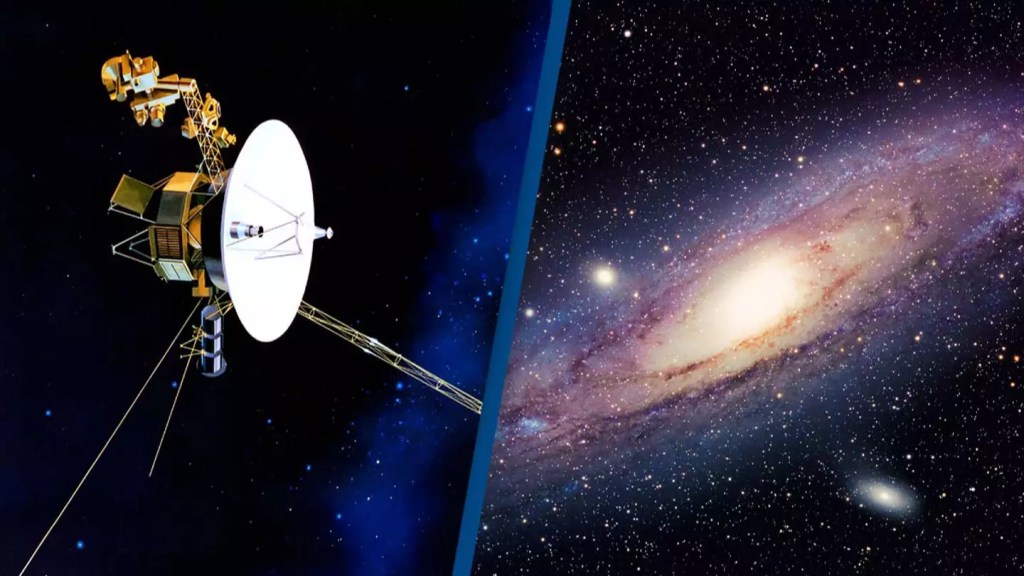
Central to the Voyager mission’s legacy is the golden record—a symbolic gesture of humanity’s aspiration to connect with potential extra-terrestrial civilizations. This meticulously crafted record contains a diverse array of greetings, music, natural sounds, and images, encapsulating the essence of life on Earth. Conceived as a cultural artifact, the golden record serves as a testament to our collective history and identity, transcending time and space to convey the story of our existence to distant cosmic voyagers.
As Voyager 1 and Voyager 2 continue their interstellar journey, they remain operational through the innovative use of radioisotope thermoelectric generators (RTGs), which convert heat from decaying plutonium-238 into electricity. While these power sources are projected to sustain operations until at least 2025, with potential extension until 2030, ongoing management of power allocation is essential to optimize scientific output. Despite eventual operational limitations, the enduring impact of the Voyager missions will endure, serving as a beacon of inspiration for future explorations and discoveries.
In conclusion, Voyager 1’s odyssey has illuminated the wonders of the universe, from its pioneering exploration of the outer planets to its historic entry into interstellar space. It stands as a testament to human ingenuity, resilience, and our unwavering pursuit of knowledge. As we continue to expand the frontiers of space exploration, Voyager 1 will forever symbolize our collective aspiration to understand the cosmos and our place within it—a timeless journey that transcends the boundaries of time, space, and human imagination.
visit arjasrikanth.in for more insights
 SOCIAL PERSPECTIVES