
A Strategic Vision for Economic Growth, Employment Creation, and Social Justice!!
The Union Budget for 2024-25 is a meticulous roadmap designed to foster economic growth, create employment opportunities, and ensure social justice. With a strategic allocation of resources and a clear vision, this budget addresses key sectors such as agriculture, employment, manufacturing, and urban development. It sets ambitious targets to reduce the fiscal deficit and stabilize inflation, laying the groundwork for a more resilient and inclusive economy.
The budget projects total receipts excluding borrowings at ₹32.07 lakh crore and total expenditure at ₹48.21 lakh crore. The net tax receipt target is set at ₹25.83 lakh crore, with the fiscal deficit aimed at 4.9% of GDP, projected to fall below 4.5% in the next fiscal year. Inflation remains low and stable, nearing the 4% target, with core inflation at 3.1%. These figures underscore the government’s commitment to fiscal prudence while driving economic expansion.
A cornerstone of the budget is the Prime Minister’s Package of 5 Schemes, focusing on employment and skilling. Targeting 4.1 crore youth over five years, these schemes include provisions for first-time employees, job creation incentives in manufacturing, and employer reimbursements for hiring additional employees. Additionally, a centrally sponsored scheme aims to skill 20 lakh youth over five years by upgrading 1,000 Industrial Training Institutes, complemented by an internship program with 500 top companies benefiting 1 crore youth over the same period.
The budget emphasizes higher female workforce participation through initiatives like working women hostels, crèches, women-specific skilling programs, and market access for women SHG enterprises. The Model Skill Loan Scheme will be revised to facilitate loans up to ₹7.5 lakh, with financial support for loans up to ₹10 lakh for higher education for those ineligible under current schemes.
With an allocation of ₹1.52 lakh crore, the government plans to release 109 high-yielding and climate-resilient crop varieties. One crore farmers will be initiated into natural farming, and 10,000 bio-input resource centres will be established. The Digital Public Infrastructure (DPI) for Agriculture will cover farmers and their lands within three years, enhancing agricultural productivity and resilience.
The budget introduces a credit guarantee scheme for MSMEs without collateral, a mechanism to maintain credit during stress periods, and enhances Mudra loan limits under the ‘Tarun’ category from ₹10 lakh to ₹20 lakh. Mandatory onboarding on the TReDS platform will be expanded, and financial support will be provided to set up 50 food irradiation units in the MSME sector. E-Commerce Export Hubs will be developed, and a Critical Mineral Mission will address domestic production and recycling, ensuring a sustainable supply chain for critical industries.
Transit Oriented Development plans will be formulated for 14 large cities. PM Awas Yojana Urban 2.0 proposes a ₹10 lakh crore investment, including ₹2.2 lakh crore central assistance, to address urban housing needs. A new scheme will support the development of 100 weekly ‘haats’ or street food hubs annually for five years, promoting urban development and local economies.
A policy on ‘Energy Transition Pathways’ will balance employment, growth, and environmental sustainability. Key initiatives include promoting pumped storage projects for electricity storage, R&D for small and modular nuclear reactors, and joint ventures for Advanced Ultra Super Critical Thermal Power Plants. Regulations will support the transition of ‘hard to abate’ industries to the ‘Indian Carbon Market’ mode.
The central government will invest ₹11,11,111 crore in capital expenditure, with state governments receiving ₹1.5 lakh crore in long-term interest-free loans for infrastructure investment. Phase IV of Pradhan Mantri Gram Sadak Yojana will provide all-weather connectivity to 25,000 rural habitations. Projects like the Kosi-Mechi link and flood mitigation in several states will receive financial support, ensuring comprehensive infrastructure development.
The Anusandhan National Research Fund will be operationalized, with a financing pool of ₹1 lakh crore to spur private sector-driven research. A venture capital fund of ₹1,000 crore will expand the space economy, driving innovation and technological advancement. The government aims to simplify and rationalize the GST structure, leveraging its success to include remaining sectors. Sector-specific customs duty proposals include exemptions for critical medicines and medical equipment, reductions in duties on mobile phones and precious metals, and adjustments in duties for various other sectors including electronics, chemicals, and plastics.
Efforts to simplify taxes, improve taxpayer services, provide tax certainty, and reduce litigation continue. Key initiatives include merging two tax exemption regimes for charities into one, rationalizing TDS rates, and decriminalizing delays in TDS payments. Reopening of assessments will be limited to significant escaped income, and time limits for search cases will be reduced. Capital gains tax rates will be rationalized, and exemption limits increased.
All remaining services of Customs and Income Tax will be digitized over the next two years. The ‘Vivad Se Vishwas Scheme, 2024’ aims to resolve income tax disputes pending in appeal, and monetary limits for filing tax-related appeals have been increased to reduce litigation. The budget abolishes the angel tax for all classes of investors to bolster the start-up ecosystem. It also introduces a simpler tax regime for foreign shipping companies operating domestic cruises and reduces the corporate tax rate for foreign companies from 40% to 35%.
Measures to deepen the tax base include increasing the Security Transactions Tax on futures and options of securities and taxing income received on the buyback of shares. Social security benefits are enhanced, with the deduction of expenditure by employers towards NPS increased from 10% to 14% of the employee’s salary. Non-reporting of small movable foreign assets up to ₹20 lakh is de-penalized, ensuring better social security for employees and pensioners.
The budget introduces a revised tax rate structure, increasing standard deductions for salaried employees and enhancing deductions on family pensions. The new tax regime aims to simplify personal income tax and provide significant savings for taxpayers. Land-related actions include the Unique Land Parcel Identification Number (ULPIN) and digitization of cadastral maps. Integration of e-shram with other portals will provide a one-stop solution for labour services. Open architecture databases will address the labour market’s changing needs, and NPS Vatsalya will facilitate contributions for minors.
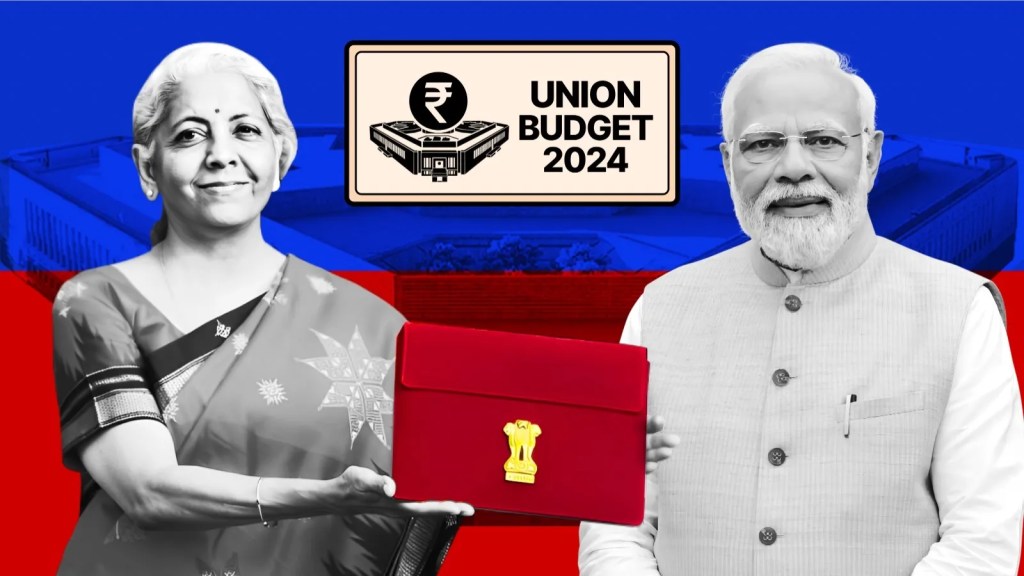
The Union Budget 2024-25 presents a holistic and forward-looking approach to economic development, employment generation, and social justice. By addressing critical sectors with targeted initiatives and significant investments, the budget aims to build a resilient and inclusive economy. The government’s strategic vision, reflected in its comprehensive plan, sets the stage for sustained growth and prosperity, ensuring that the benefits of development reach all sections of society.
visit arjasrikanth.in for more insights
 SOCIAL PERSPECTIVES