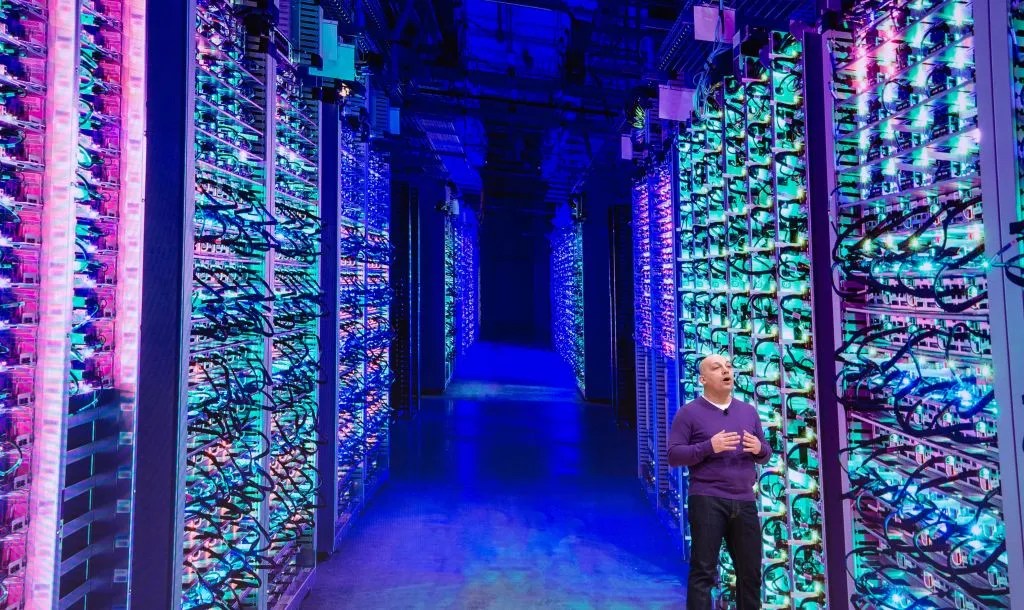
Uncovering the energy demands and environmental impact of the data-driven world.
The rise of artificial intelligence (AI) and the increasing demand for data are set to revolutionize the power consumption landscape, particularly for data centres in the US, Europe, and globally. This transformation will have significant economic and environmental implications as data centres’ appetite for electricity grows substantially. Google’s ambitious sustainability goals and the pressing need to address carbon emissions highlight the complex relationship between technology and the environment.
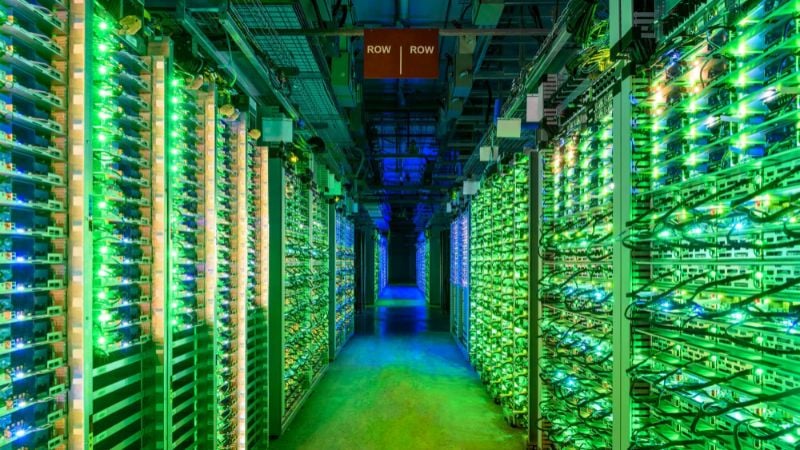
Data centers are the backbone of the digital age, responsible for processing, storing, and transmitting vast amounts of information. Historically, advancements in energy efficiency have kept their power consumption stable despite increasing workloads. From 2015 to 2019, data canter workloads nearly tripled, yet their power demand remained steady at about 200 terawatt-hours per year. However, since 2020, these efficiency gains have slowed, leading to a rise in power consumption.
The surge in AI technologies is a significant factor in this increased energy demand. AI enhances computing capabilities but is particularly energy-intensive. For instance, a single ChatGPT query consumes approximately 2.9 watt-hours of electricity, compared to 0.3 watt-hours for a Google search. Goldman Sachs Research projects that data center power demand will increase by 160% by 2030, with AI accounting for a significant portion of this rise.
Currently, data centres consume 1-2% of global power, a figure expected to climb to 3-4% by the decade’s end. In the US and Europe, this increased demand will drive significant growth in electricity consumption, reversing a long-standing trend of stagnant power demand. The carbon dioxide emissions from data centres are also anticipated to be more than double between 2022 and 2030, representing a “social cost” of $125-140 billion.
In the US, power demand has remained relatively flat over the past decade, thanks to efficiency improvements such as LED lighting. However, this is set to change. Between 2022 and 2030, power demand is expected to rise by about 2.4%, with data centres alone contributing around 0.9 percentage points to this increase. By 2030, data centres will use 8% of US power, up from 3% in 2022. To support this surge, US utilities will need to invest approximately $50 billion in new generation capacity and expand natural gas pipeline infrastructure to meet the growing demand.
Europe faces a similar challenge. Over the past 15 years, Europe’s power demand has been impacted by various crises, including the global financial crisis, the COVID-19 pandemic, and the energy crisis spurred by the war in Ukraine. Additionally, slower-than-expected electrification and ongoing de-industrialization have contributed to a cumulative decline in electricity demand since 2008. However, from 2023 to 2033, Europe’s power demand could grow by 40-50% due to data centre expansion and accelerated electrification. By 2030, the power needs of European data centres will match the current total consumption of Portugal, Greece, and the Netherlands combined.
The distribution of data centre power demand in Europe will vary by country. Nations with cheap and abundant power from nuclear, hydro, wind, or solar sources, such as the Nordic countries, Spain, and France, are expected to see significant growth in data centre power consumption. Additionally, countries with substantial financial services and tech industries, offering incentives to attract data centres, such as Germany, the UK, and Ireland, will also experience increased demand.
Goldman Sachs Research estimates that Europe will need to invest over $1 trillion to prepare its power grid for the AI-driven future. This investment will be critical in ensuring that the region can accommodate the rising power needs while supporting sustainable growth.
The environmental impact of increased data center power consumption cannot be ignored. The rise in carbon dioxide emissions poses a significant challenge to global climate goals. However, the technology sector remains optimistic about reducing energy intensity and meeting emission targets despite the rising demand. Substantial investments in renewable energy and emerging nuclear generation capabilities are expected to play a crucial role in mitigating the environmental impact.

AI itself may also contribute to environmental benefits by accelerating innovation in various sectors, including healthcare, agriculture, and education, potentially leading to emissions-reducing efficiencies. For example, AI can optimize energy use in buildings, improve supply chain efficiencies, and enhance agricultural productivity, all of which can contribute to lower overall emissions.
Google’s ambition to achieve 24/7 carbon-free energy for its data centres and offices by 2030 drives its extensive investments in renewable energy initiatives. Emphasizing air-cooled technology in some data centres enhances efficiency while preserving local water sources, aligning with Google’s sustainability goals. The company’s 2023 Environmental Report underscores the significant impact of electricity consumption on its carbon footprint, particularly through Scope 2 emissions, which arise from indirect electricity use. This commitment reflects Google’s proactive stance on environmental responsibility, aiming to mitigate its operational impact and advance towards a more sustainable future.
Globally, data centres and related data transmission networks consume up to 1.5% of electricity each, as reported by the International Energy Agency. Despite improvements in efficiency keeping this percentage stable, the growing demand for digital services continues to pose challenges. A report by Newmark projects that U.S. data centre demand will surge from 17 gigawatts (GW) in 2022 to 35 GW by 2030.
Google is focused on maximizing the efficiency of its data centers while meeting increasing global computing demands. The company employs various strategies, such as using outside air for cooling, custom servers, and maintaining temperatures at 80°F. On average, Google’s data centers are 1.5 times more efficient than standard enterprise facilities, and the company has tripled its computing capacity with the same amount of electrical power used five years ago.
To balance the high energy demands of its data centres, Google has entered into numerous power purchase agreements (PPAs) with organizations like SRP. Google has been procuring clean energy for over a decade to mitigate its electricity footprint. Between 2010 and 2022, the company secured over 80 PPAs, amounting to 10 GW of renewable generation capacity, which is equivalent to more than 31 million solar panels.
Despite Google’s commitment to renewable energy, its emissions have surged by 48% compared to the baseline year of 2019. The company attributes this increase to the demand placed on data centres by artificial intelligence and the constant need for electricity. Google’s energy consumption reached 22.29 terawatt hours in 2022, up from 12.7 terawatt hours in 2019, highlighting the significant growth in energy usage.
Data centres, especially large or hyperscale facilities, consume massive amounts of power due to various factors. These include the demand for high-performance computing, cooling requirements, and the continuous processing and storage of data. Managing the energy consumption of data centres poses a significant challenge, especially as Google handles over 2.5 exabytes of data daily, requiring robust infrastructure and secure storage facilities.
In the tech industry, sustainability initiatives vary among major players. Apple, for instance, has set targets for its suppliers to switch to renewable energy, positioning itself as a leader in this area. Google, on the other hand, has focused on achieving carbon neutrality and operating on 24/7 carbon-free energy. A comparison of sustainability efforts among tech giants reveals the need for continued innovation and collaboration to address environmental challenges effectively.
The surge in data centre power demand driven by AI and increasing data needs represents a significant shift in the global energy landscape. While this growth poses challenges, particularly in terms of carbon emissions, it also presents opportunities for innovation and investment in sustainable energy solutions. The need for substantial investments in power generation and infrastructure, coupled with advancements in energy efficiency and renewable energy, will be crucial in meeting the future energy demands of data centres. As data centres become increasingly central to the digital economy, their role in shaping the future of energy consumption and sustainability will be pivotal. By embracing AI and other emerging technologies, while simultaneously investing in sustainable energy solutions, the US, Europe, and the global community can navigate this transformation towards a cleaner and more efficient energy future.
visit arjasrikanth.in for more insights
 SOCIAL PERSPECTIVES