A Deep Dive into the Family Feud and Political Intrigue Making Headlines
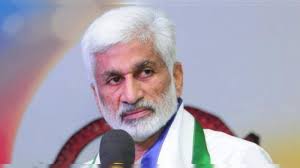
In an era where private lives are increasingly subject to public scrutiny, a recent controversy involving YSRCP Member of Parliament (MP) V. Vijaya Sai Reddy has captivated the public and media alike. This story, which initially appeared as a personal matter between a husband and wife, has now spiralled into a full-blown Episode involving allegations of extramarital affairs, financial impropriety, and political manoeuvring. The intricate web of accusations and defences has not only put the individuals involved under the microscope but has also sparked a broader debate on the balanced media reporting and the intersection of personal and political lives.
The controversy began with a highly publicized quarrel between Kalingiri Shanthi, an assistant endowment commissioner, and her husband, Madan Mohan Manipati. The dispute took a dramatic turn when Madan Mohan accused his wife of having an extramarital affair with V. Vijaya Sai Reddy, a prominent politician from the YSR Congress Party. According to Madan Mohan, Shanthi gave birth to a child in 2022 through “immoral means” and demanded a DNA test to determine the child’s paternity, implicating both Vijaya Sai Reddy and government pleader Pothireddy Subhash Reddy.
V. Vijaya Sai Reddy has vehemently denied the allegations, describing them as baseless attempts to tarnish his image. In a press conference held on July 15, he refuted claims of any impropriety, stating that his interactions with Shanthi were strictly professional and limited to official duties during his tenure in Visakhapatnam. He accused sections of the media and political opponents, orchestrating a smear campaign against him. Reddy announced his intention to file a defamation suit against the media houses responsible for propagating these allegations and to take the matter to the Editors Guild of India.
The media’s role in this controversy has been both influential and controversial. Critics argue that the sensationalist reporting has exacerbated the situation, violating journalistic balance by not considering the sensibilities of the individuals involved, particularly Shanthi. The publication of unverified claims has drawn sharp criticism from various quarters, highlighting the need for more responsible and balanced journalism. On the other hand, some defend the media’s role in holding public figures accountable, asserting that transparency is essential in a democratic society.
Madan Mohan’s allegations extend beyond the affair, accusing Vijaya Sai Reddy of financial misconduct. He claimed that Reddy financially assisted Shanthi in purchasing a villa worth ₹2.6 crores in Vijayawada and provided ₹1.6 crores in cash on two separate occasions. Madan Mohan substantiated his claims by presenting photographs of the cash transactions and detailed his suspicions about the paternity of the child, which he believes can be clarified through a DNA test.
In response, Vijaya Sai Reddy offered to take an oath in the name of Lord Venkateswara to prove his innocence, further criticizing the media for their irresponsible reporting. He also suggested that internal party conflicts and external political rivals might have played a role in perpetuating these allegations.
The controversy has sparked widespread public debate, with opinions divided on the veracity of the claims and the appropriateness of the media’s coverage. Many sympathize with the personal turmoil faced by the individuals involved, while others express concern over the potential misuse of media and political power to settle personal scores. The incident has also reignited discussions about the balanced boundaries of media reporting and the responsibilities of public figures.
This controversy brings to the fore several balanced dilemmas. For politicians like Vijaya Sai Reddy, maintaining a balance between personal and public life is fraught with challenges. The use of media for political gains can backfire, as illustrated by Reddy’s own predicament. His extensive use of media to criticize Chandra Babu Naidu, opposition members during his time in power has now turned against him, demonstrating the precarious nature of such strategies. The analogy of riding a tiger aptly describes the situation—once on the tiger, one is safe, but falling off can have dire consequences.
The legal implications of this case are significant, with potential defamation suits and complaints to various human rights commissions in the offing. Vijaya Sai Reddy’s threat to introduce a Private Members Bill in Parliament against unscrupulous journalists underscores the broader legal battles that could ensue. On a social level, the controversy highlights the impact of public scandals on private lives, raising questions about the privacy rights of individuals and the Balanced responsibilities of the media.
Reddy’s announcement of his intention to file defamation suits against media houses indicates a potential legal battle that could set precedents for future cases involving public figures and media reporting. Additionally, his threat to introduce a Private Members Bill in Parliament against unethical journalism highlights the potential for legislative responses to media overreach. Such measures, however, must carefully balance the need to protect individuals from unwarranted media attacks with the imperative to uphold freedom of the press.
There are crucial lessons to be learned from this episode. First, the need for Balanced journalism cannot be overstated. Media outlets must adhere to rigorous standards of verification and sensitivity, especially when dealing with personal matters that can have far-reaching consequences. Second, politicians and public figures must exercise caution in their interactions and be aware of the potential repercussions of their actions. The case of Vijaya Sai Reddy serves as a stark reminder that the power of the media, once harnessed, can turn into a double-edged sword.
The episode involving V. Vijaya Sai Reddy is a complex tale of personal conflict, political intrigue, and media dynamics. It underscores the delicate balance between public accountability and personal privacy, highlighting the balanced responsibilities of both the media and public figures. As the dust settles, the lessons learned from this controversy will hopefully pave the way for more responsible media practices and a more cautious approach to public life. The case serves as a reminder that while power may be transient, the impact of one’s actions, particularly in the public eye, can be enduring and far-reaching.
The broader implications of this controversy touch on several key areas. First, there is the issue of balanced journalism. The need for accurate, balanced reporting is paramount, especially in cases that involve personal lives. Sensationalism, while it may drive viewership and readership, ultimately erodes public trust in the media. This episode has underscored the necessity for media outlets to adopt more responsible reporting practices, ensuring that stories are both truthful and respectful of individuals’ privacy.
Second, the episode has highlighted the precarious nature of political life. For public figures, the line between personal and professional can often blur, leading to situations where private matters become public concerns. Vijaya Sai Reddy’s predicament is a case in point. His extensive use of media to critique his political opponents has come full circle, with the same media now casting a critical eye on his private life. This serves as a cautionary tale for politicians, emphasizing the importance of maintaining a clear distinction between their personal and professional lives.
On a social level, the controversy has sparked a broader conversation about privacy and the public’s right to know. The balance between transparency and privacy is delicate, and this episode has shown that tipping too far in either direction can have serious consequences. Public figures, by virtue of their roles, do have a diminished expectation of privacy. However, there is still a need to protect them from unwarranted intrusions that serve no public interest and only seek to sensationalize their personal lives.
In conclusion, the controversy involving V. Vijaya Sai Reddy is a multifaceted saga that touches on issues of personal privacy, balanced media , and political accountability. It serves as a stark reminder of the complex interplay between these elements in the life of a public figure. As the story continues to unfold, it offers important lessons for politicians, media professionals, and the public alike. By learning from this episode, we can hope to foster a more respectful, balanced , and balanced approach to the intersection of personal lives and public roles.
visit arjasrikanth.in for more insights
 SOCIAL PERSPECTIVES