
In modern society, animals often endure undue suffering at the hands of human activities, exemplified by pigeon racing in Punjab. Although not officially recognized as a sport, kabutarbazi adheres to village-level customs across rural Punjab, typically occurring from May to June and even streamed on platforms like YouTube. Despite its legality in most states, pigeon racing involves releasing thousands of birds into the wild each year, where many fail to return, raising concerns about animal abandonment and welfare. This practice highlights a troubling aspect of animal exploitation for entertainment, shedding light on the ethical implications surrounding such traditions.

In contrast, traditional animal races like Kambala in Karnataka, where buffaloes are whipped across muddy fields tethered to plows, and camel racing across India, Australia, and the Middle East over distances of 2.5 to 6 miles, illustrate cultural sports that spark ethical debates. Similarly, the Maramadi bull surfing festival in Kerala, where bulls race on freshly plowed fields post-harvest, blends tradition with competitive fervor but faces criticism for subjecting animals to stress and potential harm. Events like bulbul fighting and cockfighting further intensify ethical concerns, prompting ongoing discussions on balancing cultural heritage with animal welfare in regulated environments.

Pigeon racing involves taking competing birds from their lofts and releasing them to race home. The time the pigeon takes to get home and the distance it has flown are recorded, and the fastest bird is declared the winner. Races generally range from 75 miles to 500 miles in distance. Birds are entered into a race under strict regulations at the clubs’ racing headquarters, such as a local public house, sports club, or village hall. Once all the birds are race-entered, they are collected by a specially designed pigeon racing transporter and taken to a predetermined liberation point. Once the weather conditions and flight paths are deemed suitable for the race, the birds are liberated, and the time is notified to all the fanciers waiting for the return of their pigeons. Each pigeon returning to a different loft has to fly a different distance to the next loft. This racing distance between the bird’s home loft and the race point is carefully measured by GPS. The time taken by the bird to return is measured using one of two acceptable timing methods. A race season is normally separated between old birds and young birds (usually youngsters in their first year of competition) and another for older birds. A pigeon can start to be able to competitively compete from about six months of age and still be in competition at over ten years of age, although four to five years is an average racing career.

The traditional method of timing racing pigeons involves rubber race rings with a unique recorded number and a specially designed pigeon racing clock. The ring is attached around the pigeon’s leg before being sent to race. The serial number is recorded, the clock is set and sealed, and the bird carries the ring home. When the first bird returns, its trainer removes the ring and places it in a slot in the clock. The time that the ring was placed in the clock is recorded as the official time that the competing bird arrived home. From this timestamp, an average speed is measured, and a winner of the race can be determined. The latest development for timing racing pigeons is the Electronic Timing System. The bird’s arrival is recorded automatically. When using an electronic system, the pigeon fancier doesn’t even have to be at the loft to clock the birds as they return. Birds are fitted with a band that has a tiny RFID chip in it, which can be read when the bird comes home. At the home loft, the electronic scanning records the pigeon’s arrival. The pad is placed at the entry point to the loft entrance, and as the pigeon crosses it, the electronic band is scanned. The serial number of the transponder ring is recorded along with the time of arrival. This is very similar to timing systems used in human races.

Pigeon fanciers play a crucial role in pigeon racing. However, their practices often raise ethical concerns. Pigeons who don’t perform well in races may be killed, and racing pigeons have no control over their lives. Fanciers decide with whom and when pigeons can mate, when they can fly, and literally how long they live. Fanciers may also neglect their pigeons, leading to poor living conditions and health issues. Pigeons are smart, easy-going birds that quickly learn household routines. They do fine in homes with other pets and can live peacefully and unafraid with dogs and cats as long as they are kept safe. Pigeons are very emotional and do need a BFF, whether another bird or a human with whom they can spend the day. Despite their intelligence and emotional capacity, the treatment of racing pigeons often reflects a disregard for their well-being.
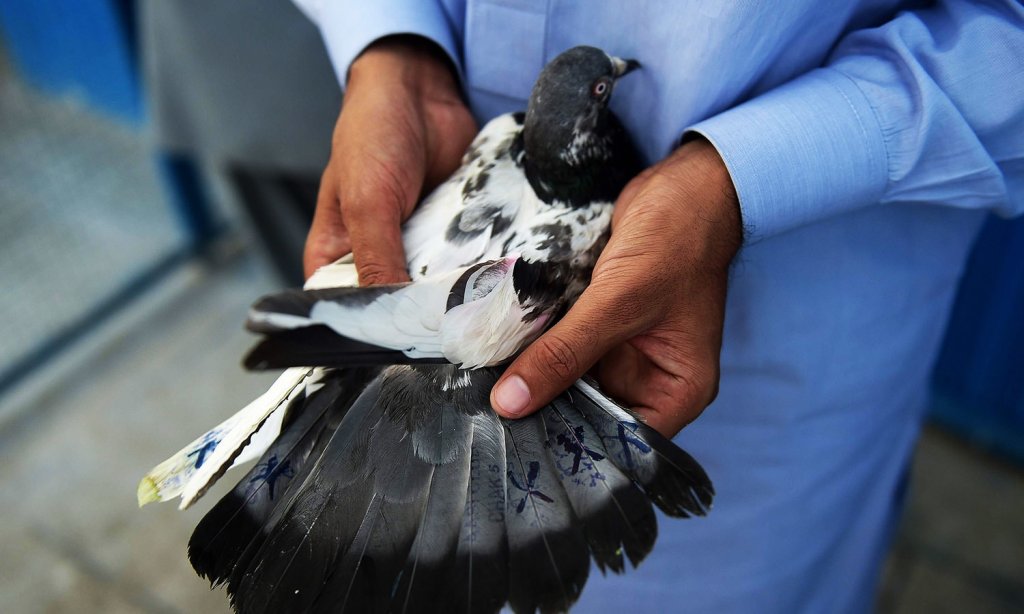
Pigeons can fly between 600 and 700 miles in a single day, with the longest recorded flight in the 19th century taking 55 days between Africa and England, covering 7,000 miles. Pigeons are thought to navigate by sensing the earth’s magnetic field and using the sun for direction. Their remarkable abilities make them ideal for racing, but these same capabilities are often exploited to the detriment of the birds’ health and welfare. Last month, an argument between two friends over who to invite for a pigeon racing event that they were jointly hosting in Ikolaha village of Punjab’s Ludhiana district ended in the death of one. Both Gurdeep Singh, 22, and his friend Kuldeep Singh alias Vicky Aujla, 44, co-owned a flock of over 100 pigeons and would frequently organize such events in the village. The friends had got into an argument over Kuldeep inviting a rival to the June 23 racing event. The argument ended with Kuldeep and his son Daman, 20, bludgeoning Gurdeep with an iron rod, police said. Gurdeep is survived by his minor brother and their grandmother Mukhtiar Kaur. This incident highlights the intensity and rivalry associated with pigeon racing in Punjab, where the stakes are high, and the competition can turn deadly.

Pigeon racing, thought to be popularized during the Mughal era, has become a significant sport in rural Punjab and certain areas of Pakistan. It is believed to have originated during the elite pigeon-keeping era and continues to attract enthusiasts who earn their livelihood through this sport. The objective of pigeon racing is to keep the birds in the sky for the longest possible duration. The rules and practices vary across different regions of Punjab. Pigeon racing events are well-organized, although they lack official recognition. The participating pigeons, numbering around 90, are distinguished by specific markings on their feathers. The owner of the pigeon that comes in last during the race is declared the winner. The sport involves significant amounts of money, with entry fees and prizes attracting participants, including NRIs (Non-Resident Indians). Prizes like tractors, cattle, and expensive bikes are often on the line, making the sport more intense and even brutal. Behind the glitz and glamour of pigeon racing lies a dark reality. To ensure their birds fly longer, owners subject them to harsh conditions. Pigeons are tied to speakers that play loud noises, fed laxatives to keep them light, and denied water to reduce their weight. Many pigeons succumb to extreme heat during these races, as they are forced to fly beyond their endurance limits. Pigeons who don’t perform well in races may be killed, and racing pigeons have no control over their lives. Fanciers decide with whom and when pigeons can mate, when they can fly, and literally how long they live. Fanciers may also neglect their pigeons, leading to poor living conditions and health issues.

Animal rights activists, including senior BJP leader Maneka Gandhi, have raised their voices against the cruelty inflicted upon pigeons in this sport. They advocate for a complete ban on pigeon racing, citing the inhumane treatment and high mortality rates. While some regulations exist, they are not effectively enforced, allowing the exploitation of these innocent creatures to continue. The pigeon race in Punjab highlights the dark side of human entertainment at the expense of animal welfare. These innocent birds suffer immensely due to the intense competition and cruelty they endure. It is crucial to recognize the ethical implications of pigeon racing and take necessary measures to protect these creatures from further harm. Only through awareness, education, and strict enforcement of animal welfare laws can we put an end to the cruel practice of pigeon racing in Punjab.
visit arjasrikanth.in for more insights
 SOCIAL PERSPECTIVES