
The assassination attempt on Donald Trump has left America at a crossroads. As the nation grapples with the shockwaves, the Republican Party must navigate its future under intense scrutiny.
In a shocking turn of events, former President Donald Trump recently faced a deadly assassination attempt during a rally, leaving the nation stunned and raising profound questions about the upcoming presidential election. The incident has triggered a wave of uncertainty and introspection, particularly within the Republican Party as it prepares for the pivotal Republican National Convention in Milwaukee. This article explores the evolving Republican platform under Trump’s influence, its implications for American society, and the potential outcomes should Trump return to the White House.

The Republican Party’s platform for the upcoming convention marks a significant departure, unmistakably moulded in Trump’s image. Core shifts include a notable absence of a national abortion ban, signalling a departure from traditional conservative positions, and a softened stance on same-sex marriage, indicative of a strategic move to broaden appeal while maintaining conservative values. Trump’s imprint is evident in proposals to dismantle the Education Department and weaponize the Department of Justice, reflecting a vision of streamlined federal governance and heightened executive power.
The aftermath of the assassination attempt has thrust Trump back into the spotlight, portraying him as a resilient figure against perceived establishment adversaries. The incident, where Trump was wounded but survived, has galvanized his base and intensified fundraising efforts, bolstering his narrative of being a victim of political persecution. Meanwhile, the Democratic Party faces internal discord amid President Joe Biden’s leadership challenges and concerns about his ability to unite a polarized nation.
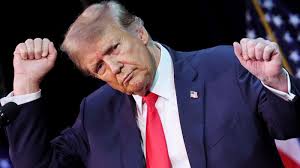
Globally, the attempt on Trump’s life resonates as a cautionary tale of escalating political divisions and violence, mirroring similar incidents involving world leaders facing ideological attacks. The FBI’s investigation into the assailant, Thomas Matthew Crooks, underscores the complex motivations behind such violent acts and the broader implications for domestic security and political discourse.
Looking forward, the upcoming Republican National Convention looms large as a crucible for defining the party’s future trajectory and its alignment with Trump’s populist agenda. Project 2025, a radical policy blueprint proposed by the Heritage Foundation, further aligns with Trump’s vision, proposing controversial measures such as banning pornography and overturning federal approval of the abortion pill. Despite Trump’s apparent disavowal of this project, its resonance within conservative circles underscores the deepening ideological fissures within the party.
The symbolic weight of Trump’s image as a defiant leader, bloodied yet unbowed, holds sway over the narrative of the 2024 presidential race. The assassination attempt has not only reinvigorated Trump’s political stature but also underscored the nation’s profound divisions and the urgent imperative to restore civil discourse and uphold democratic principles. Symbolism in politics plays a pivotal role, with Trump’s portrayal as a resilient fighter resonating deeply among his supporters and further polarizing an already divided electorate.

In conclusion, the recent assassination attempt on Donald Trump has irrevocably altered the landscape of the 2024 presidential election and the trajectory of the Republican Party. It has starkly illuminated the dangers of political polarization and underscored the critical imperative to restore civility and uphold democratic norms. As the nation grapples with the aftermath, the upcoming Republican National Convention and broader election campaign will be decisive in shaping the future course of American politics and society. Addressing the challenges exacerbated by this event demands a unified effort to foster civil discourse, confront the root causes of polarization, and promote national unity for the sake of stability and prosperity. Reflecting on historical precedents, such as past political assassinations, underscores the transformative impact of such events on societal norms and political landscapes. Effective leadership in these turbulent times requires unwavering commitment to democratic values and the cultivation of unity. Embracing these principles is paramount as the nation prepares for the election, ensuring a resilient future anchored in democratic integrity and collective strength.
visit arjasrikanth.in for more insights
 SOCIAL PERSPECTIVES