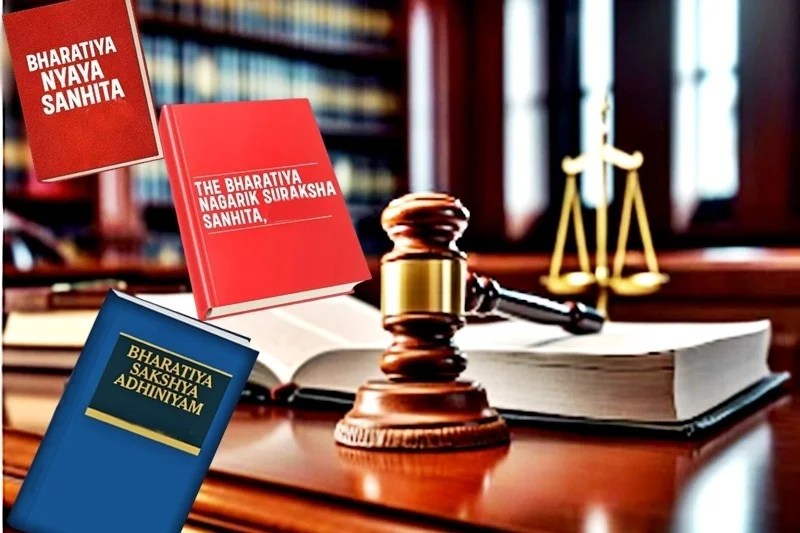
Analysing the Impact of Bharatiya Nyaya Sanhita (BNS), Bharatiya Nagarik Suraksha Sanhita (BNSS) and the Bharatiya Sakshya Adhiniyam (BSA)!!
On July 1, 2024, India enacted three significant new criminal laws: the Bharatiya Nyaya Sanhita, 2023, replacing the Indian Penal Code of 1860; the Bharatiya Nagarik Suraksha Sanhita, 2023, replacing the Code of Criminal Procedure of 1882; and the Bharatiya Sakshya Adhiniyam, 2023, replacing the Indian Evidence Act of 1872. These reforms aim to modernize the criminal justice system, moving away from colonial-era statutes. The enactment has sparked a national debate, receiving both praise and criticism.
India’s Chief Justice described the new laws as a “watershed moment for our society.” However, opposition parties and legal experts raised concerns about the lack of debate in Parliament before their enactment, arguing that the hurried implementation could worsen the already slow pace of justice in India. The colonial-era sedition law, often used to suppress dissent, has been replaced, seen as a step toward decolonizing the legal system. Laws dealing with sexual assault have been made more stringent, while the law criminalizing sodomy has been removed. The duration for which police can hold a suspect has been increased from 15 days to 60 days, and in some special cases, up to 90 days. The new laws require video recordings at the scene of serious crimes and update the provisions for admissible digital evidence.

Opposition members and legal experts criticized the manner in which these laws were passed, claiming insufficient discussion in Parliament, with only 30 hours of debate involving 34 members. This lack of thorough scrutiny has led to concerns about the laws’ robustness and effectiveness. Legal experts warn that the new provisions could lead to an increase in the number of cases awaiting trial. India’s judicial system is already burdened with millions of pending cases, and adding more without addressing existing inefficiencies could worsen the situation. India’s linguistic diversity and regional customs can hinder the uniform implementation of laws. Corruption is a significant issue, with criminals often escaping justice by bribing officials, undermining the legal process. There is a prevalent tendency among people to flout laws, complicating enforcement.
The Indian criminal justice system suffers from a massive backlog of cases, leading to prolonged delays in the delivery of justice. The system is plagued by inefficiency, a lack of resources, poor infrastructure, and insufficient training for personnel. The extended duration of police custody has raised concerns about civil liberties, with critics arguing that this could lead to abuse of power and prolonged detentions without trial. Some provisions are vague and open to interpretation, particularly those related to social harmony and terrorism, potentially leading to misuse of power. The new laws overlap with existing statutes like the Unlawful Activities (Prevention) Act (UAPA), creating potential confusion regarding their applicability. The new laws grant police more power to decide whether a case can proceed to trial, a role traditionally reserved for judges. This shift has raised concerns about the erosion of judicial oversight. Critics argue that many crucial safeguards have been omitted, violating constitutional protections against illegal detention and self-incrimination.
Opposition leaders and legal experts have called for a re-examination of the new laws. They argue that the hurried implementation without sufficient debate undermines the democratic process and could lead to significant legal confusion. Critics highlight that the new laws could encroach on civil liberties, particularly with provisions allowing extended police custody and discretionary registration of FIRs. The implementation of the new laws alongside the old ones for cases lodged before June 30 could lead to confusion and ambiguity in courts. The reintroduction of handcuffs and the broad discretion given to police could result in violations of human dignity and abuse of power. Effective implementation of these laws requires comprehensive police reform and addressing gaps in judicial infrastructure.
The government has defended the new laws, arguing that they are necessary for modernizing the criminal justice system. They claim that the laws were debated for three months and represent a significant improvement over the colonial-era statutes. The implementation of the new criminal laws in India marks a significant shift from colonial-era statutes. While the reforms aim to modernize the criminal justice system and address contemporary issues, their hurried passage and lack of thorough debate have raised significant concerns. Ensuring that these laws are implemented fairly and transparently, with adequate safeguards for civil liberties, will be crucial for their success. Ongoing monitoring, judicial scrutiny, and potential legislative adjustments will be essential to address the concerns and ensure that the reforms achieve their intended goals. The success of these reforms will depend on how well they balance the need for modernization with the protection of fundamental rights and freedoms.
The Bharatiya Nyaya Sanhita and Bharatiya Nagarik Suraksha Sanhita, new criminal laws replacing the British-era Indian Penal Code (IPC) and Criminal Procedure Code (CrPC), came into effect recently, marking a significant overhaul in India’s criminal justice system. These changes have generated extensive discussion and debate. Below is a detailed analysis of these new laws, their features, criticisms, and implications for India’s legal landscape.
The laws mandate the use of electronic modes for issuing summons, aimed at ensuring greater efficiency and transparency. Videography of crime scenes is now compulsory, intended to provide clear and unbiased evidence in criminal proceedings. Police complaints can now be registered online, making it easier for victims to file complaints and receive acknowledgment copies. This move is designed to enhance victim participation in the legal process. The laws introduce the death penalty for the rape or gang rape of minors, reflecting a strict stance on such heinous crimes. For the first time, mob lynching has been recognized as a specific offense with corresponding punishments. Crimes committed outside India are now under the jurisdiction of Indian courts, ensuring that offenders cannot escape justice by crossing borders. Organized crime has been categorized as a separate offense, indicating a focused effort to combat criminal networks. Community service is introduced as a form of punishment, promoting rehabilitation over mere incarceration.
Critics argue that the new laws were passed without sufficient parliamentary debate, with only 30 hours of discussion and participation from 34 members. The suspension of opposition members during the debate has raised concerns about the democratic process and transparency. The laws extend the duration of police custody from 15 days to up to 90 days in some cases, leading to concerns about potential civil liberties violations. Critics fear that this could lead to abuses of power and prolonged detentions without trial. Some provisions are considered vague and open to multiple interpretations, particularly regarding offenses related to social harmony and terrorism. This ambiguity could lead to arbitrary enforcement and misuse of power. The new laws overlap with existing statutes like the Unlawful Activities (Prevention) Act (UAPA), creating potential confusion regarding their applicability. Clear guidelines are needed to avoid legal ambiguities and ensure consistent enforcement.

Legal experts suggest that many provisions of the new laws will require judicial interpretation and possibly further legislative amendments. Legal Luminaries , emphasized the need for comprehensive consideration of diverse viewpoints and the involvement of various stakeholders in the law-making process. Despite the controversies, the new laws have been implemented. Approximately 80% of the provisions from the previous IPC and CrPC remain relevant, with some terms requiring further definition and judicial clarification.
Legal experts express concerns about the extended custody duration, highlighting the potential for civil liberties abuses. They stress the importance of judicial oversight to ensure fair and just application of these provisions. The vague definitions of some offenses, such as economic terrorism and organized crime, could lead to misuse. Experts call for clearer definitions and guidelines to prevent arbitrary application of the law. Opposition leaders criticized the new laws as a “copy-paste job,” arguing that they do not address the fundamental issues plaguing India’s justice system, such as delays and inefficiencies.
Balancing police powers and civil liberties is a critical issue in the new laws. The increase in custody duration has been particularly contentious, with critics arguing that it could lead to abuses and violations of individual rights. Ensuring that police powers are exercised judiciously and with adequate safeguards is essential for maintaining public trust in the legal system. The implementation of new technologies, such as electronic summons and crime scene videography, requires significant investments in infrastructure and training. Ensuring that law enforcement agencies have the necessary resources and capabilities to effectively use these technologies is crucial for the success of the new laws.
Given the significant changes introduced by the new laws, continuous monitoring and evaluation will be essential to identify and address any issues that arise. Judicial scrutiny, public feedback, and regular reviews will help ensure that the laws are effectively addressing the needs of the criminal justice system and protecting individual rights.

The Bharatiya Nyaya Sanhita and Bharatiya Nagarik Suraksha Sanhita represent significant reforms in India’s criminal justice system. While the new laws aim to modernize the legal framework and address contemporary challenges, their implementation has raised several concerns. Ensuring that these laws are applied fairly and transparently, with adequate safeguards for civil liberties, will be crucial for their success. Ongoing monitoring, judicial scrutiny, and potential legislative adjustments will be necessary to address the concerns and ensure that the reforms achieve their intended goals. The success of these reforms will depend on how well they balance the need for modernization with the protection of fundamental rights and freedoms.
visit arjasrikanth.in for more insights
 SOCIAL PERSPECTIVES