
Commemorating the visionary leadership and enduring legacy of P.V. Narasimha Rao, India’s 9th Prime Minister, on his birth anniversary, June 28th, who reshaped India’s economic landscape and political trajectory.
Pamulaparthi Venkata Narasimha Rao, often known as P.V. Narasimha Rao, stands as a towering figure in the annals of Indian political history. Born on June 28, 1921, in a small village in present-day Telangana, Rao’s journey from humble beginnings to becoming the 9th Prime Minister of India exemplifies a remarkable tale of grit, intellect, and political acumen. His tenure from 1991 to 1996 marked a pivotal period in India’s modern history, characterized by profound economic reforms, significant political developments, and enduring contributions to the nation’s cultural and intellectual landscape.
P.V. Narasimha Rao’s early life was shaped by a blend of traditional upbringing and exposure to modern education. Born into a modest Brahmin family, he demonstrated an early penchant for learning, mastering several languages and displaying a deep interest in literature and philosophy. Rao’s educational journey took him through Osmania University in Hyderabad, where he excelled in academics and developed a keen interest in public service and political discourse.
Rao’s entry into politics was gradual yet determined. He joined the Indian National Congress during the Indian independence movement and quickly rose through the ranks due to his sharp intellect and administrative skills. His initial foray into legislative politics began with his election to the Andhra Pradesh Legislative Assembly in 1957, marking the beginning of a long and distinguished political career.
The zenith of P.V. Narasimha Rao’s political career came with his appointment as the Prime Minister of India in 1991. His elevation to this position was politically significant, as he was the first from southern India and only the second from a non-Hindi-speaking region to hold this esteemed office. Rao assumed leadership at a critical juncture when India faced daunting economic challenges and political uncertainties.
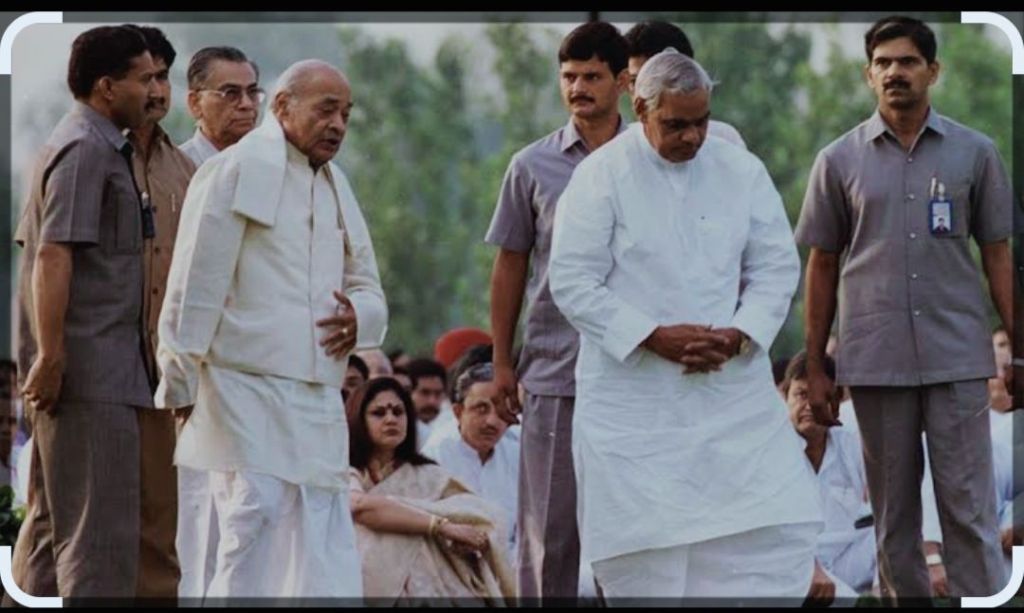
P.V. Narasimha Rao’s tenure as Prime Minister is primarily remembered for his pioneering role in dismantling the License Raj, a complex system of permits and regulations that stifled economic growth and innovation in India for decades. Under his leadership as the Minister of Industries, Rao initiated bold and sweeping economic reforms that liberalized the Indian economy, opening it up to global markets and foreign investments.
The dismantling of the License Raj was a watershed moment in India’s economic history, marking a decisive shift from a state-controlled, socialist economy to a market-driven one. Rao’s government unleashed a wave of economic liberalization that spurred entrepreneurship, fostered competition, and integrated India into the global economic order. This transformative policy agenda earned him the moniker of the “Father of Indian Economic Reforms,” a title that encapsulates his enduring legacy in economic policy-making.
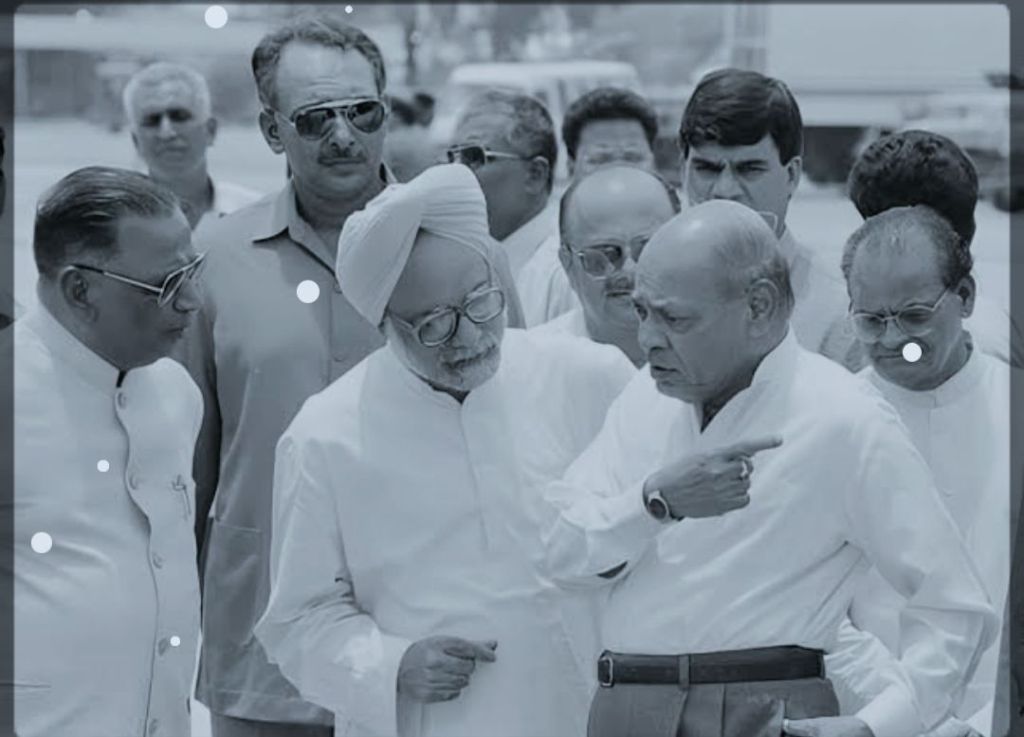
Central to Rao’s economic reforms was his collaboration with Dr. Manmohan Singh, whom he appointed as his Finance Minister. Together, they crafted and implemented historic economic policies that embraced globalization and modernization. Dr. Manmohan Singh’s stewardship as the architect of India’s economic reforms, under Rao’s leadership, was instrumental in stabilizing the Indian economy during a period of severe balance of payments crisis and fiscal challenges.
The economic reforms introduced during Rao’s tenure focused on liberalizing trade and investment, privatizing state-owned enterprises, and deregulating various sectors of the economy. These reforms aimed to enhance efficiency, promote growth, and position India as a competitive player in the global marketplace. The impact of these policies laid the foundation for sustained economic growth in the subsequent decades, transforming India into one of the world’s fastest-growing major economies.
P.V. Narasimha Rao’s tenure as Prime Minister was not without its share of challenges and controversies. One of the most contentious episodes during his tenure was the demolition of the Babri Masjid in Ayodhya, Uttar Pradesh, in December 1992. The destruction of the mosque by Hindu extremists, while BJP’s Kalyan Singh was the Chief Minister of Uttar Pradesh, triggered widespread communal violence across India, posing a severe test to Rao’s leadership and the secular fabric of the nation.
Despite these challenges, Rao’s ability to navigate through political complexities earned him the reputation of a strategic mastermind akin to ancient India’s renowned statesman, Chanakya. His pragmatic approach to governance and adept handling of coalition politics allowed his minority government to effectively steer through turbulent waters, balancing economic reforms with political stability.
Beyond his contributions to economic and political spheres, P.V. Narasimha Rao was a polymath with diverse interests in literature, philosophy, and culture. Fluent in over 17 languages, including Sanskrit, Rao’s intellectual curiosity and deep spiritual grounding enriched his worldview and governance philosophy. His profound knowledge of Sanskrit scriptures and classical literature influenced his approach to governance, blending traditional wisdom with modern pragmatism.
Rao’s literary pursuits extended to writing and translating works of fiction and non-fiction, reflecting his deep engagement with India’s cultural heritage and contemporary challenges. His intellectual contributions continue to resonate in scholarly circles, where his insights into governance, economics, and cultural revival remain subjects of academic discourse and admiration
P.V. Narasimha Rao’s legacy as a transformative leader continues to be celebrated for its enduring impact on India’s socio-economic fabric. His visionary leadership and bold reforms laid the groundwork for India’s emergence as a global economic powerhouse in the 21st century. The economic liberalization initiated during his tenure set the stage for subsequent governments to further integrate India into the global economy and accelerate its growth trajectory.
In recognition of his contributions, Rao was posthumously awarded the country’s highest civilian honor, the Bharat Ratna, in 2021, on the occasion of his centenary birth anniversary. This honor underscored his pivotal role in shaping India’s economic policies and political landscape during a critical phase of its history.
As we commemorate the birth anniversary of P.V. Narasimha Rao on June 28th, we celebrate not only a statesman of unparalleled vision and intellect but also a transformative leader who steered India through profound economic reforms and political challenges. Rao’s legacy as the architect of India’s economic renaissance continues to inspire generations of policymakers, economists, and political leaders. His ability to blend tradition with modernity, pragmatism with vision, and resilience with foresight remains a beacon of leadership in India’s democratic journey.
P.V. Narasimha Rao’s contributions to economic liberalization, political stability, and cultural resurgence have left an indelible mark on India’s trajectory. His legacy serves as a reminder of the transformative power of leadership, grounded in intellect, integrity, and a deep commitment to the nation’s welfare. As we reflect on his enduring legacy, let us draw inspiration from his leadership ethos and strive to uphold his vision of a prosperous, inclusive, and resilient India.
In honouring P.V. Narasimha Rao, we pay tribute to a leader whose ideas and actions continue to shape India’s journey towards progress, prosperity, and global prominence
Visit arjasrikanth.in for more insights
 SOCIAL PERSPECTIVES