
Delving into India’s Rich Past through Scientific Inquiry and Discovery !!!
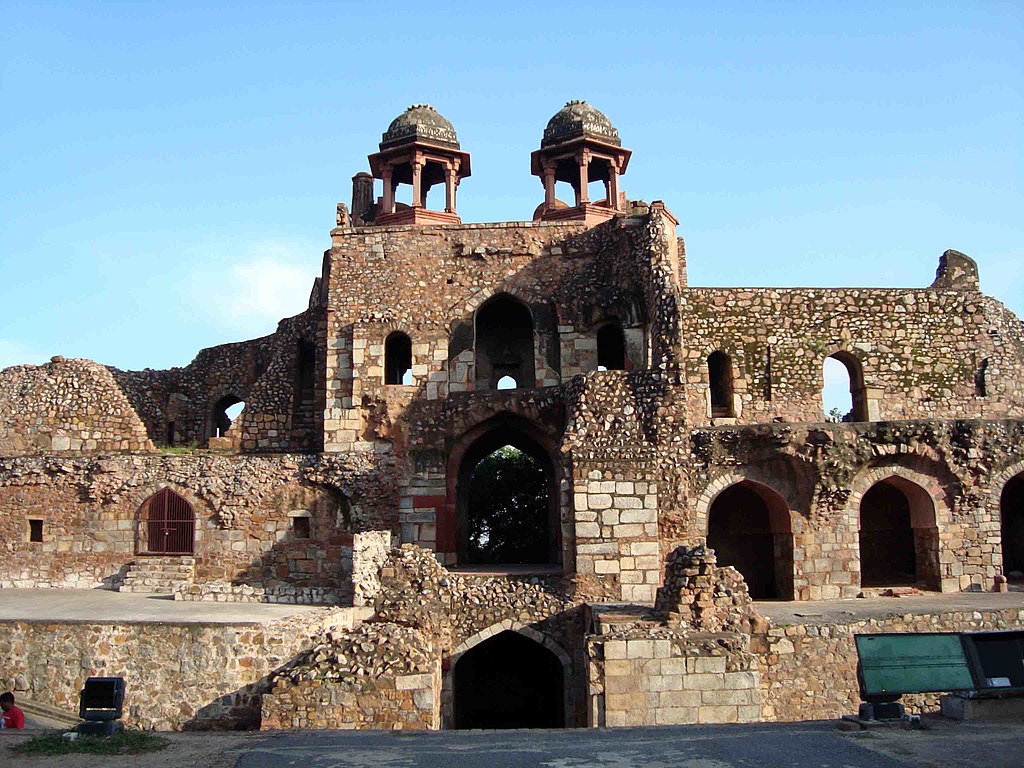
The Archaeological Survey of India (ASI) has been on a decades-long mission to establish a tangible connection between the epic Mahabharata and archaeological findings. Situated in the heart of India’s capital, Delhi, Purana Qila (Old Fort) has been a focal point of this endeavour, initially built by the Mughal emperor in the 16th century. As the ASI gears up for its seventh round of excavations, the potential to unearth significant insights into ancient India’s history looms large.
One of the most notable discoveries by the ASI includes Painted Grey Ware (PGW) pottery found at Delhi’s Purana Qila, dating back to 1100–1200 BC. Characterized by black spots and strokes on Gray pottery, its discovery beneath a Mauryan-era stepwell suggests continuous habitation, reinforcing its significance during the Mahabharata era.

In Bahaj village, Rajasthan, ASI uncovered needle-shaped bone tools from the Mahabharata period, showcasing advanced craftsmanship possibly used for writing or weaving. Rare black beads from the Shunga period were also found, shedding light on technological advancements and daily life during that era.

At Sanauli, 68 km from Delhi, evidence dating back to 1500–2000 BCE was discovered, including a war chariot, rusted bow and arrow, burial site, pottery, war shields, and weaponry. These artifacts offer a vivid glimpse into martial and daily life during the Mahabharata era, providing unique insights into ancient military technologies and strategies.
The Braj region, encompassing Bahaj village, has yielded artifacts from various periods, including the Kushan, Sunga, Maurya, Mahajanapada, and Mahabharata eras. This diversity underscores the area’s historical importance and potential for unearthing a comprehensive civilization from the Mahabharata period.
Across India, over 35 sites have yielded artifacts aligning with descriptions of ancient cities mentioned in the Mahabharata. Discoveries in Kurukshetra, the legendary battlefield, include iron arrows and spearheads dated to approximately 2800 BCE through thermoluminescence, aligning with the epic’s historical timeline.
ASI manages and protects 3,679 national monuments and archaeological sites. Excavations at Purana Qila are ongoing, aiming to link the fort with the Mahabharata’s ancient city, Indraprastha. Previous digs revealed pottery, coins, and figurines, with ongoing efforts supported by the Ministry of Tourism’s ‘Adopt a Heritage’ scheme, integrating the epic’s narrative into tourism and cultural events.

Renowned archaeologists have been pivotal in advancing this project since its inception in 1954, identifying sites mentioned in the Mahabharata and finding cultural evidence suggesting their historical existence. Challenges include interpreting findings to establish direct links to the epic amidst scholarly debates over its multi-author origins.
The ASI’s excavation project merges history, mythology, and archaeology, enriching our understanding of India’s past through scientific inquiry. Preservation efforts safeguard sites from urban development threats, ensuring continuity of India’s cultural heritage. Despite challenges, ongoing excavations yield insights into the Mahabharata’s era, enhancing our comprehension of ancient Indian civilization.
In conclusion, ASI’s excavation endeavours to connect the Mahabharata with tangible archaeological evidence underscore India’s dedication to preserving its cultural legacy. Through meticulous research and preservation, ASI unveils the mysteries of the Mahabharata era, enriching our understanding of India’s ancient past and its enduring cultural significance.
Visit arjasrikanth.in for more insights
 SOCIAL PERSPECTIVES