As India’s marathon election process reaches its final phase, the intricate dance of voter concerns, political strategies, and evolving dynamics shapes the future of governance.

As India’s marathon election process enters its final phase on June 1st, the world holds its breath, witnessing the culmination of the largest democratic exercise globally. Over a span of 44 days, more than 950 million voters have participated, shaping not only the political leadership in key states but also at the national level. This election is a dynamic tapestry of economic concerns, governance perceptions, and political narratives, influencing the electorate’s decisions and charting the future course of governance in India.
Many columnists, delved into the intricacies of the election dynamics across five pivotal states: Gujarat, Madhya Pradesh, Maharashtra, Bihar, and West Bengal. In states like Gujarat and Madhya Pradesh, the BJP has cemented its dominance, presenting formidable challenges for opposition parties, notably the Congress.
Gujarat and Madhya Pradesh stand as bastions of BJP power, where the party’s supremacy is underscored by the mass migration of elected representatives from other parties to its ranks. Notably, in Gujarat, the surge in defections, such as those of corporators in Surat, reflects the BJP’s perceived strength and viability. Meanwhile, the Congress grapples with bridging substantial gaps, like the 23.5 percentage point deficit in Madhya Pradesh from the 2019 elections, prompting politicians to align with the BJP as the winning side.
However, this influx of newcomers into the BJP has sown seeds of discord within the party, with longstanding members feeling marginalized in favour of recent defectors who often secure key party positions or election tickets. This internal cleavage, evident in states like Madhya Pradesh, poses a long-term challenge to the BJP’s unity and cohesion.
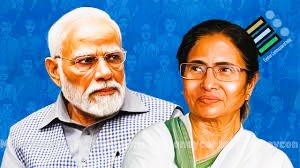
In West Bengal, the BJP has surged to become the primary challenger to the ruling Trinamool Congress (TMC), significantly reshaping the state’s political dynamics. Its rapid ascent has marginalized other parties like the Congress and the Left. Leveraging historical wounds from the Partition, the BJP has tapped into fears of demographic changes and governance failures, resonating with voters’ concerns and capitalizing on anti-incumbency sentiments against the TMC. Like Punjab, Bengal carries deep scars from the Partition, providing fertile ground for the BJP’s narrative. Exploiting fears of Muslim infiltration and demographic shifts, the BJP has consolidated support among voters anxious about the increasing Muslim population. Additionally, Mamata Banerjee’s TMC faces mounting anti-incumbency, particularly on economic fronts such as job creation. High youth migration due to lack of opportunities and corruption scandals like the Sandesh incident further tarnish the state government’s image, fuelling discontent among the electorate.

Maharashtra, another crucial battleground, has witnessed political upheaval, marked by significant splits within parties like the Shiv Sena and the Nationalist Congress Party (NCP). While the opposition seeks to exploit these divisions for sympathy votes, leaders like Uddhav Thackeray and Sharad Pawar’s political acumen complicates the narrative, challenging the opposition’s effectiveness.
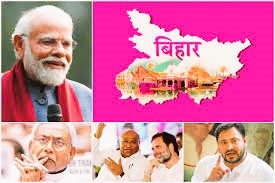
In Bihar, Nitish Kumar’s return to the NDA has disrupted the opposition’s coherence, leaving a void that the India Bloc struggles to fill. Rahul Gandhi, a prominent opposition figure, has embarked on initiatives like the Bharat Jodo Yatra, aiming to broaden his appeal. However, his lack of governmental responsibility remains a stumbling block in gaining broader trust and confidence.

Economic concerns, particularly farmer distress in Maharashtra, resonate strongly with voters across these states. Despite universal anxieties, the BJP’s multi-pronged strategy, combining social welfare initiatives with a narrative of national pride, continues to garner support. This dual approach, addressing immediate needs while fostering nationalistic sentiments, shields the BJP from the brunt of economic discontent.
The fear among marginalized communities about potential constitutional changes under another BJP term underscores the complexity of voter perceptions. While some express faith in Prime Minister Modi’s intentions, others remain wary, reflecting the diverse opinions among the electorate.
Farmer distress, especially in Maharashtra, remains a critical issue. Farmers face challenges from both market conditions and government policies perceived to favour consumers over producers. The BJP’s handling of agricultural policies and its impact on farmers’ livelihoods could influence voter behavior, although this discontent does not uniformly translate into opposition against the BJP.
The fluidity of Indian politics is evident in the frequent defections from opposition parties to the BJP, driven by career aspirations and pressure from investigative agencies. This dynamic reflects both the BJP’s strength and the opposition’s vulnerabilities.
As the final phase of the elections approaches, voters confront a complex choice shaped by economic concerns, governance perceptions, and political narratives. While the BJP maintains its dominance in Gujarat and Madhya Pradesh, its growing challenge in West Bengal underscores the shifting sands of Indian politics. Yet, internal strife and anti-incumbency factors pose challenges to the BJP’s ascendancy.
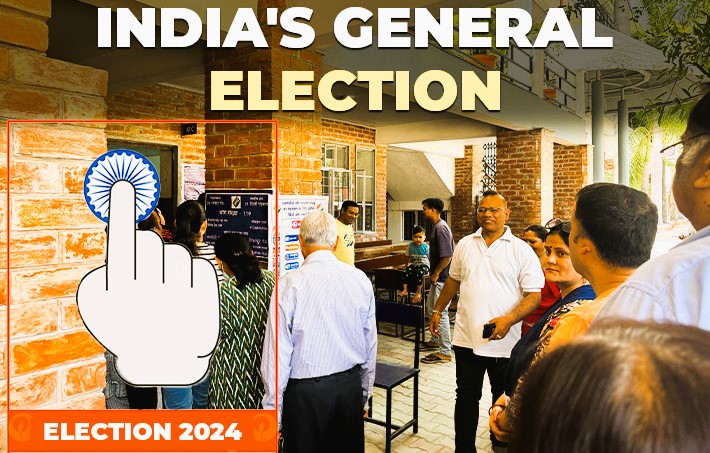
The outcome of these elections transcends mere political gains; they mirror the evolving nature of Indian democracy and the interplay of historical legacies, economic realities, and political aspirations. The voters’ verdict will not only determine the political landscape of these critical states but also chart India’s future trajectory. As India stands at this electoral crossroads, the resilience of its democratic ethos and the voice of its people will guide its path forward.
visit arjasrikanth.in for more insights
 SOCIAL PERSPECTIVES