
Tragedy on the Streets: The Case of a 17-Year-Old’s Fatal Accident and the Challenges of Juvenile Justice
The streets of Pune were marked by tragedy when a 17-year-old took to the wheel of a Porsche under the influence of alcohol. This reckless act led to a fatal accident, claiming the lives of two IT professionals. The teen’s night began with a lavish expenditure of ₹48,000 at Cosie pub, followed by more drinking at Blak Mariott, as confirmed by CCTV footage. The incident underscored a severe lapse in enforcing laws designed to protect minors and public safety.
The aftermath of the accident saw the teen’s father, a prominent Pune realtor, facing severe backlash and legal repercussions for allowing his son to drive. In an attempt to evade the law, he fled, using multiple cars and a new SIM card, traveling from Mumbai to Sambhajinagar to mislead authorities. However, the police, employing GPS tracking and CCTV footage, managed to locate and arrest him during a late-night raid at a lodge in Sambhajinagar. This elaborate escape attempt only added to the public’s outrage and complicated the legal consequences for the family.

The Pune police launched a thorough investigation, arresting pub executives for serving liquor to a minor and detaining the father for allowing his son to drive. Forensic analysis was conducted on the teenager’s blood samples to confirm intoxication. The Pune Police Commissioner indicated that charges under Section 304 of the IPC, which implies culpable homicide not amounting to murder, would be applied, asserting the teen’s awareness of the potential for causing death.
The Juvenile Justice Board (JJB) initially granted the 17-year-old bail under stringent conditions, which included educational mandates and social restrictions aimed at promoting responsibility and understanding of road safety. These conditions included tasks like writing an essay on road safety and making a presentation on road accidents. However, the leniency of these conditions sparked widespread controversy and public outcry, as many believed they did not adequately reflect the severity of the offense.
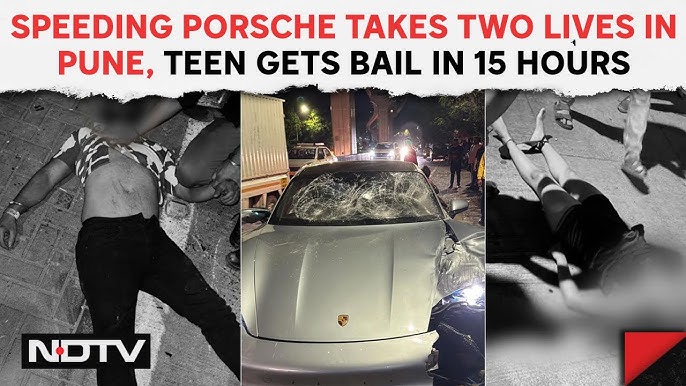
The public’s reaction to the initial bail decision was one of outrage. Critics argued that the conditions imposed were insufficient given the gravity of the crime, which had resulted in the deaths of two individuals. This outcry led to a dramatic reversal by the Juvenile Justice Board, which rescinded the bail and remanded the accused to an observation home for 14 days. This abrupt change, without new substantive evidence, drew scrutiny and speculation about the influence of societal pressure on judicial decisions.
The reversal was seen as a response to growing public demands for accountability and justice, addressing concerns that the gravity of the offense was initially overlooked. The JJB faced immense pressure to align its decisions with societal expectations, highlighting the challenges of maintaining judicial independence under public scrutiny. This shift underscored the perceived inadequacy of the initial measures and demonstrated the board’s responsiveness to demands for a more substantial and justice-oriented approach.

To comprehend the nuances of this case, one must understand the juvenile justice system, which prioritizes rehabilitation and reform over punishment. The Juvenile Justice Act focuses on the well-being and development of young offenders, granting significant discretion to the juvenile justice board in determining the best course of action. However, Section 12 of the Act imposes bail restrictions under certain conditions, emphasizing the need to balance rehabilitation with accountability.
The Act recognizes the potential for change in juveniles and aims to address their developmental needs. Juvenile justice boards, composed of judicial and social experts, play a crucial role in balancing accountability with rehabilitation. Globally, juvenile justice systems cater to the unique needs of young offenders, focusing on individualized justice and personal circumstances. The Indian Juvenile Justice Act embodies these principles, aiming to support positive behavior change and social reintegration.

The Juvenile Justice Board (JJB) is pivotal in adjudicating cases involving young offenders. Comprising judicial officers and social work professionals, the board ensures decisions reflect both legal and social perspectives. This interdisciplinary approach addresses the multifaceted needs of juveniles, balancing accountability with the imperative of rehabilitation. In the case of the 17-year-old Pune offender, the JJB initially granted bail under conditions aimed at promoting educational and social reform. However, these conditions were deemed inadequate by the public and media, leading to the reversal of the bail order.
The reversal decision involved placing the juvenile in an observation home, aligning more closely with the gravity of the offense. This decision was influenced by significant public and media scrutiny, raising questions about the impact of societal pressure on judicial decisions. The case exemplifies the challenges faced by the JJB in balancing the need for rehabilitation with public demands for accountability and justice. As the JJB proceeds with the case, it must consider comprehensive psychological and social assessments to determine whether the juvenile should be tried as an adult, a decision with profound implications for the offender’s future.
The public outcry following the initial bail decision underscores a broader societal expectation for justice that aligns with the severity of the crime. This case has highlighted the tension between the rehabilitative goals of the juvenile justice system and societal demands for punitive measures in serious offenses. The Juvenile Justice Act is designed to cater to the developmental needs of young offenders, emphasizing rehabilitation over punishment. However, in cases involving severe crimes, such as the fatal accident caused by the 17-year-old, the public often demands stricter punitive measures to ensure justice for the victims.
The reversal of the bail decision and the subsequent remand to an observation home reflect the judiciary’s responsiveness to these societal demands. This case has brought to light the complexities involved in maintaining judicial independence while addressing public expectations. The decision to potentially try the juvenile as an adult further complicates the issue, as it requires a careful balance between recognizing the developmental needs of the offender and addressing the gravity of the offense. This case serves as a critical point of reflection for the juvenile justice system, emphasizing the need for judicious decision-making that considers both rehabilitation and accountability.
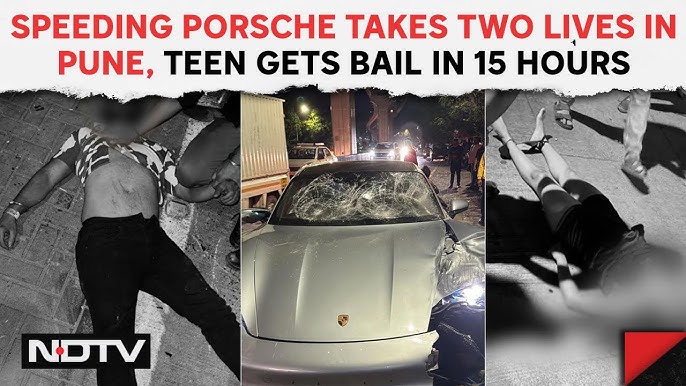
The media has played a significant role in shaping public perception and influencing judicial decisions in this case. The extensive coverage of the fatal accident and the subsequent legal proceedings has amplified public outcry and demands for justice. Media reports highlighting the perceived leniency of the initial bail conditions contributed to the pressure on the Juvenile Justice Board to reverse its decision. This case illustrates the powerful impact of media on the judicial process, where public opinion, shaped by media narratives, can influence legal outcomes.
The allegations of preferential treatment in custody, such as the claims that the juvenile received pizza and a burger, further fuelled public anger and demands for accountability. These reports prompted political figures to call for investigations and action against any police personnel involved in such preferential treatment. The case has underscored the media’s role in holding the judiciary and law enforcement accountable, but it also raises concerns about the potential for media coverage to unduly influence judicial independence.
As the Juvenile Justice Board deliberates whether to try the 17-year-old as an adult, the decision will involve comprehensive psychological and social assessments. Trying juveniles as adults is a complex and contentious issue. It involves weighing the offender’s cognitive and psychological state against the nature and severity of the crime. The Juvenile Justice Act provides for this possibility in cases of heinous offenses, recognizing that some crimes may warrant a different approach to justice.
The tragic case of the 17-year-old responsible for a fatal accident has underscored critical issues within the juvenile justice system. The initial bail decision, perceived as lenient, sparked public outrage and led to a reversal that saw the juvenile remanded to an observation home. This case highlights the tension between the system’s rehabilitative goals and societal demands for justice and accountability. As the Juvenile Justice Board considers trying the teen as an adult, comprehensive psychological and social assessments will be crucial. The decision will reflect the need to balance the offender’s potential for rehabilitation with the gravity of the offense. This case serves as a poignant reminder of the challenges and complexities in administering juvenile justice
In determining whether to try the juvenile as an adult, the board will consider factors such as the offender’s maturity, understanding of the consequences of their actions, and potential for rehabilitation. This decision carries significant implications for the juvenile’s future, as being tried as an adult could result in harsher penalties and long-term consequences. However, it also reflects the need to address the gravity of the offense and provide justice for the victims and their families.
The process of deciding whether to try the 17-year-old as an adult involves thorough psychological and social assessments. These assessments aim to understand the offender’s mental state, maturity, and capacity for rehabilitation. Psychological evaluations will examine the juvenile’s cognitive development, impulse control, and understanding of the consequences of their actions. Social assessments will consider the offender’s background, family environment, and social influences.
These assessments are crucial in ensuring that the decision is informed and fair. They provide a comprehensive understanding of the offender’s behavior and potential for change, allowing the Juvenile Justice Board to make a decision that balances rehabilitation with accountability. The goal is to ensure that justice is not only punitive but also transformative, supporting the offender’s development while addressing the severity of the crime.
The case of the 17-year-old offender has highlighted significant issues within the juvenile justice system. From the initial bail order to its subsequent reversal, the case has sparked widespread debate and scrutiny. The juvenile justice system prioritizes rehabilitation over punishment, emphasizing the well-being and development of young offenders. However, this case has underscored the need for a more nuanced approach that balances rehabilitation with accountability, particularly in cases involving severe crimes.
visit arjasrikanth.in for more insights
 SOCIAL PERSPECTIVES