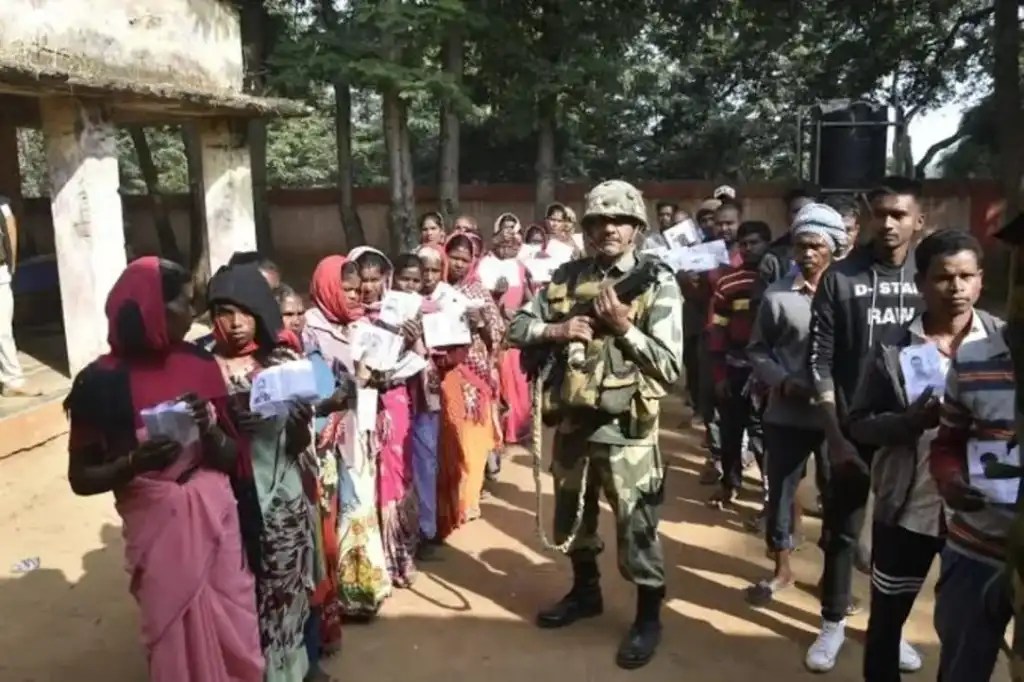
Despite progress, some still believe in gunfights over dialogue, highlighting persistent challenges in Chhattisgarh’s battle against Naxalism
Naxalism casts a daunting shadow over the heart of India, posing significant challenges to governance and security. In recent years, Chhattisgarh has emerged as a frontline in the struggle against Naxal militants, where security forces tirelessly combat to restore peace and stability. The recent anti-Naxal operation resulting in 29 casualties has reignited discussions around this enduring conflict. This article aims to explore the intricate dynamics of Naxalism in Chhattisgarh, encompassing its origins, recent confrontations, responses from authorities, and the prospective path forward.

Between 2004 and 2014, Chhattisgarh witnessed a staggering 17,679 incidents related to Left Wing Extremism (LWE), resulting in 6,984 fatalities. In the subsequent period from 2014 to 2023 (until June 15, 2023), the region experienced 7,649 LWE-related incidents, claiming 2,020 lives. These statistics underscore the persistent threat of Naxalism and the ongoing struggle to address its ramifications.

Originating in the Darjeeling District of West Bengal in 1967, Naxalism emerged as a response to the exploitation of peasants, initially advocating for land rights. The movement derived its name from Naxalbari village and swiftly expanded its influence across eastern India, encompassing regions like Chhattisgarh, Odisha, and Andhra Pradesh. Over time, fuelled by economic disparities and conducive terrain for insurgency, various Naxalite factions have intensified their operations, posing a formidable challenge to state authorities.

The impact of Naxalism extends far beyond individual states, as evidenced by the Red Corridor, stretching from Bihar to Tamil Nadu. Encompassing 16 provinces and nearly 200 districts across states like Andhra Pradesh, Bihar, Chhattisgarh, Jharkhand, Madhya Pradesh, Maharashtra, Odisha, Telangana, Uttar Pradesh, and West Bengal, this vast swath of territory represents the epicenter of Naxal activity in India. Among these states, Andhra Pradesh, Bihar, Chhattisgarh, Jharkhand, Madhya Pradesh, Maharashtra, Odisha, Telangana, Uttar Pradesh, and West Bengal bear the brunt of Naxal violence, grappling with its socio-economic and security implications.
On April 16, security forces launched a meticulously planned operation in Chhattisgarh’s Abujmarh region, resulting in a fierce encounter with alleged Naxal militants. The clash, which took place in Kanker district, led to the deaths of 29 individuals, including prominent Naxal leaders. While security forces hailed it as a significant victory, concerns about human rights violations and allegations of fake encounters emerged, questioning the authenticity of the operation.

The response to the encounter varied among political leaders. Union Minister Amit Shah commended the bravery of security forces, while Chhattisgarh Chief Minister Bhupesh Baghel advocated for dialogue with Naxals but demanded a cessation of new police camps and anti-operations. The political landscape was also marked by allegations of fake encounters, raising concerns about innocent villagers caught in the crossfire.
The recent confrontation underscores the complexities and challenges in Chhattisgarh’s battle against Naxalism. While security forces strive to maintain law and order, concerns about human rights violations and allegations of fake encounters cast a shadow over their operations. The Inspector General of Police emphasizes a multifaceted approach, integrating security operations with development initiatives and countering propaganda to build community trust.

As Chhattisgarh navigates the complexities of Naxalism, it faces a crucial crossroad where dialogue must prevail over gunfights. Despite progress, some still believe in the use of force rather than peaceful resolution, highlighting the deep-rooted challenges that persist in the region. Moving forward, a comprehensive approach that addresses socio-economic disparities, ensures justice, and promotes inclusivity is imperative for sustainable peace and stability. By prioritizing dialogue and holistic solutions, Chhattisgarh can not only curb Naxal violence but also pave the way for prosperity and harmony in Naxal-affected areas.
visit arjasrikanth.in for more insights
 SOCIAL PERSPECTIVES