
Unveiling the Impact of Karnataka’s Revolutionary Initiative on Women’s Empowerment!!
In May 2023, Karnataka embarked on a transformative journey with the launch of the Shakti Bus scheme, offering free bus rides to women across the state. Part of the Congress government’s manifesto, this initiative aimed to empower women by providing them with unrestricted mobility and access to public spaces. As we delve deeper into the remarkable journey of Shakti Bus, we uncover its profound impact on women’s lives and societal dynamics.
The Shakti scheme stands as a ground breaking endeavour that has redefined public transportation for women within Karnataka. By offering free bus travel, this initiative has facilitated women’s mobility, enhanced their safety, and fostered economic empowerment. A survey conducted post-implementation revealed that nearly 96% of respondents reported traveling more frequently by bus since the scheme’s introduction, highlighting its effectiveness and popularity among women across the state.
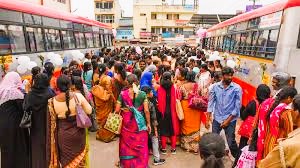
Moreover, the Shakti scheme is hailed for its cost-effectiveness and convenience. Women, particularly those residing in areas without metro service, find bus travel to be the cheapest and most convenient mode of transportation. This accessibility has opened up new avenues for women, enabling them to reach educational institutions, workplaces, and other destinations with ease.
Additionally, the scheme has contributed to enhanced safety for women commuters. With a higher number of female passengers on board, many women feel safer traveling by bus. This increased presence of women fosters a sense of security and vigilance, mitigating concerns regarding safety during transit.
The Shakti scheme, offering free bus travel for women in Karnataka, has positively impacted the Bangalore Metropolitan Transport Corporation (BMTC) by boosting its revenue and ridership. BMTC’s average daily earnings surged to Rs 5.3 crore in 2023 from Rs 4.4 crore in 2022-23, alongside a notable increase in women passengers, prompting BMTC to expand its daily trips. However, the scheme has brought forth challenges for BMTC, including a staff crunch with shortages of drivers and conductors, potentially limiting the optimal utilization of existing fleets.
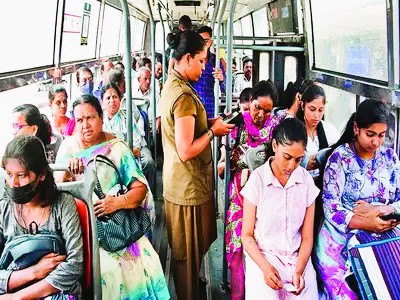
Additionally, there’s a concern about inadequate buses to accommodate the rising passenger count, leading to overcrowded buses, especially during peak hours. Conductors face the burden of managing passengers traveling without tickets, adding to operational challenges. Despite these hurdles, the scheme has also positively impacted the daily earnings of Karnataka’s other three state-run road transport corporations.
Despite these commendable outcomes, the scheme has encountered challenges that warrant attention and resolution. One such challenge is the increased workload faced by BMTC conductors due to the surge in passengers availing free travel. Verifying digital IDs and issuing zero tickets has become more time-consuming, particularly during peak hours, posing operational challenges for conductors.
Another significant challenge lies in the difficulty of verifying digital IDs, leading to instances of ticketless travel and disputes between conductors and passengers. Conductors often struggle to authenticate digital IDs, especially when photos are unclear or when passengers attempt to travel without valid tickets. This issue compromises the integrity of the scheme and necessitates streamlined verification processes to ensure compliance and accountability.
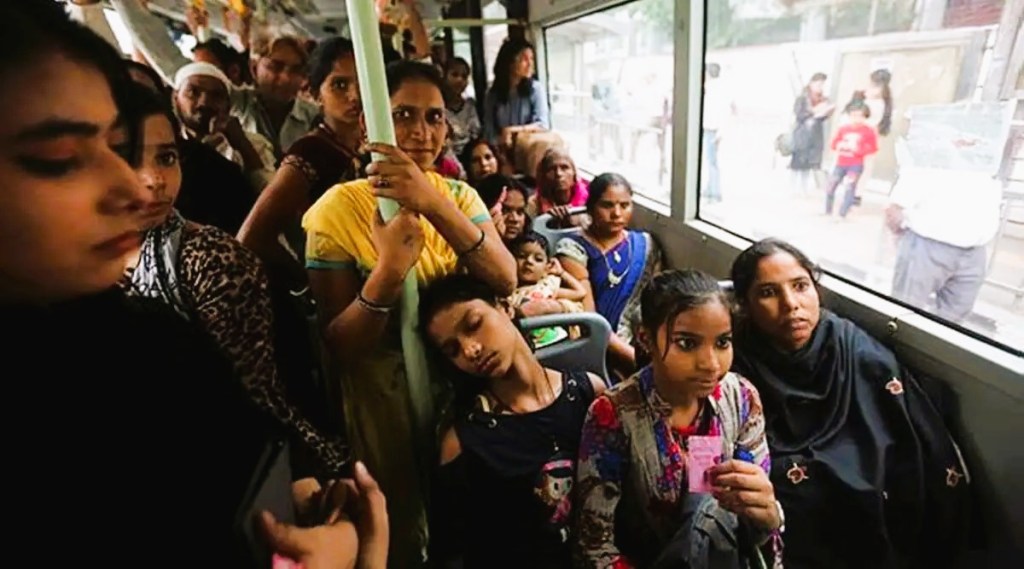
Looking ahead, it is imperative to assess the long-term impact of the Shakti scheme and address existing challenges to maximize its benefits. While the scheme has empowered women by enhancing their mobility and economic independence, its effect on female labour force participation rates requires further examination. Economists stress the importance of comprehensive assessments to evaluate the scheme’s cost-effectiveness and its efficacy in increasing women’s workforce participation.
Despite these challenges, the Shakti scheme stands as a testament to Karnataka’s commitment to promoting gender equality and empowering women. By facilitating free bus travel, the scheme has democratized access to transportation, enabling women to pursue education, employment, and other opportunities. As Karnataka continues to evolve, ongoing efforts to address challenges and optimize the scheme’s implementation are essential for realizing its full potential and advancing gender equity state-wide.
The Shakti Bus scheme, one of the five guarantees by the Congress government, revolutionized public transportation for women in Karnataka. Uma Vishnu’s investigative report for The Indian Express sheds light on the scheme’s inception and objectives. Launched alongside the Lakshmi scheme, Shakti Bus aimed to empower women by facilitating their mobility and enhancing their participation in public life.
Shakti Bus opened doors to economic opportunities and social interactions for women across Karnataka. By offering free bus rides, the scheme encouraged women to reclaim public spaces and engage in various activities, from commuting to work to visiting pilgrimage centers. Uma Vishnu’s first hand experience on a cross-country bus journey highlighted the overwhelming response and positive impact of the scheme on women’s lives.
The implementation of Shakti Bus not only facilitated women’s mobility but also challenged gender norms and societal perceptions. Women from diverse backgrounds, including Muslims and Hindus, embraced the opportunity to travel together, fostering friendships and shared experiences. The scheme’s success challenged traditional gender roles and encouraged women to assert their presence in public spaces.

Despite the scheme’s overwhelming success, challenges such as overcrowded buses and infrastructure limitations surfaced. Karnataka’s transport minister acknowledged these issues and pledged to address them, emphasizing the government’s commitment to enhancing public transportation for women. Additionally, experts highlighted the broader societal impact of Shakti Bus in promoting gender equality and women’s empowerment.
Karnataka’s Shakti Bus scheme stands as a beacon of women’s empowerment and social transformation. By providing free bus rides and enabling women’s mobility, the initiative has empowered women to pursue economic opportunities, engage in social interactions, and reclaim public spaces. As the scheme continues to evolve, it underscores the pivotal role of innovative policies in advancing gender equality and fostering inclusive societies. Shakti Bus serves as a testament to Karnataka’s commitment to empowering women and building a more equitable future for all.
visit ARJASRIKANTH.IN for more insights
 SOCIAL PERSPECTIVES