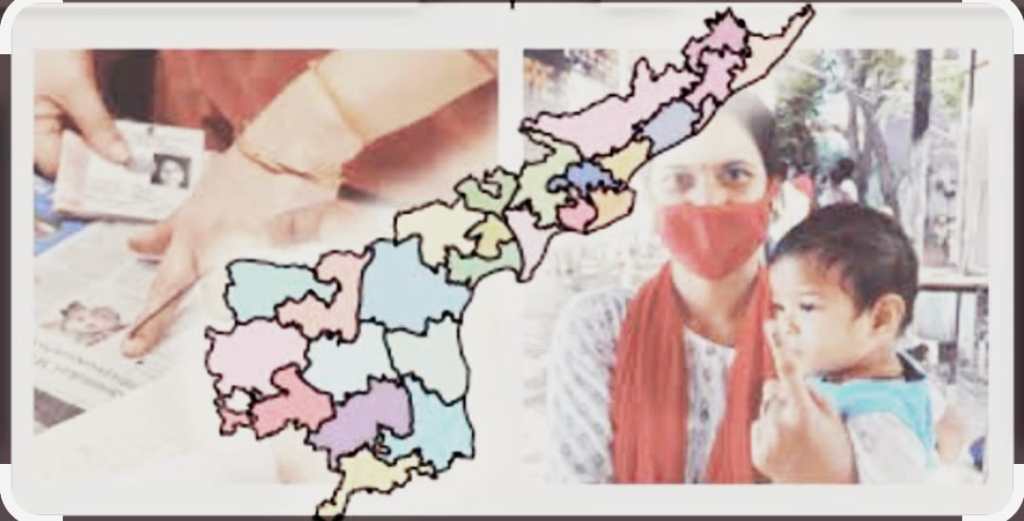
Andhra Pradesh, nestled in southern India, has undergone significant political transformations in recent years. The ascension of the Yuvajana Sramika Rythu Congress Party (YSRCP) to power in the 2019 assembly elections marked a paradigm shift in the state’s political landscape. However, the party now confronts multifaceted challenges, both within the state and at the national level, as formidable opponents like the Telugu Desam Party (TDP), Janasena Party, and Bharatiya Janata Party (BJP) assert their presence. In this comprehensive analysis, we delve into the myriad issues influencing Andhra Pradesh’s political dynamics and scrutinize the evolving political milieu.
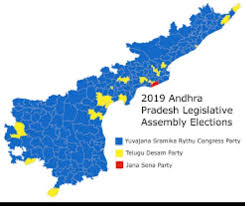
Led by Chief Minister Y.S. Jaganmohan Reddy, the YSRCP garnered substantial rural support in the 2019 elections, owing to the effective implementation of welfare schemes tailored to benefit the agrarian populace. Nevertheless, urban constituencies voiced concerns over development deficits, dearth of government employment opportunities, and infrastructural inadequacies. Furthermore, the BJP’s strategic alliances with the TDP and Janasena Party have reconfigured electoral dynamics, posing intricate challenges for the ruling party.

While the YSRCP initially exuded confidence in securing victory across all 175 assembly seats in Andhra Pradesh, certain contentious issues have emerged. Instances of misconduct by local YSRCP MLAs towards constituents, government officials, and law enforcement officers have precipitated discontent among the populace. Moreover, an overemphasis on welfare initiatives, coupled with a relative neglect of other developmental facets, has engendered apprehensions regarding the state’s overall progress.

Caste affiliations wield substantial influence in Andhra Pradesh’s political landscape, particularly in districts like East Godavari. The Kapu community, constituting approximately 25% of the populace and commanding sway over 34 assembly seats, remains a pivotal demographic bloc. While the community predominantly supported the TDP in the 2014 elections, a significant shift towards the YSRCP transpired in 2019. However, recent electoral outcomes suggest a fragmentation of the community’s allegiance, attributed partially to the emergence of actor-politician Pawan Kalyan’s Janasena Party.

The coalition comprising the TDP, BJP, and Janasena Party has levied sundry allegations against the YSRCP, ranging from, illegal sand mining & Liquor sales, allegations of corruption to accusations of stagnated developmental initiatives. Moreover, the YSRCP’s pledge to elevate Amaravati as the state’s capital has encountered considerable delays and uncertainties, fostering public disillusionment.

The development of Amaravati, envisaged as Andhra Pradesh’s new capital, has encountered impediments, impeding progress toward transitioning from a shared capital with Telangana. Chief Minister Jaganmohan Reddy has recently intimated his inclination towards prioritizing the development of Visakhapatnam as the administrative capital, contingent upon securing a renewed mandate.

The dynamics of the Lok Sabha elections in Andhra Pradesh are anticipated to diverge from those of the state assembly polls, with voters potentially prioritizing regional entities for the latter and gravitating towards national parties like the BJP for the former. Prime Minister Narendra Modi’s popularity in the state, underscored by his extensive campaign trails, augments the BJP’s electoral prospects.
Rahul Gandhi, spearheading the Indian National Congress, has castigated the YSRCP, TDP, and Janasena Party as the “BJP-B Team,” insinuating collusive undertones and mutual support during electoral contests. This accusation underscores the purported symbiotic relationship between these parties and the BJP, resonating with claims of a coordinated political front.

Andhra Pradesh’s political terrain is undergoing a seismic transformation, characterized by an interplay of dynamics encompassing rural-urban divides, caste equations, corruption allegations, and developmental impasses. As the state braces for the Lok Sabha elections, the ascendancy of national entities like the BJP and the spectre of being labelled a “BJP-B Team” loom large, exerting palpable influence on the unfolding political narrative. The trajectory of Andhra Pradesh’s political trajectory remains fluid, shaped by the capricious currents of shifting alliances and the discerning electorate’s aspirations.
visit ARJASRIKANTH.IN for more insights
 SOCIAL PERSPECTIVES