In the midst of explosions in the skies, Iran’s bold attack on Israel raises grave concerns about the future of the Middle East.

In a startling turn of events, Iran has unleashed a daring aerial assault on Israel, utilizing drones and missiles to wreak havoc in the skies of Jerusalem and other key locations. Despite Israel’s air defences intercepting multiple threats, including cruise and ballistic missiles, the Iran’s attack has sent shockwaves through the region. This article aims to delve into the depths of the situation, analysing its implications for regional stability and examining potential responses from both Israel and the international community.
Israel, a nation with a vast military apparatus, operates with 169,500 active military personnel across the army, navy, and paramilitary, as reported by the International Institute for Strategic Studies’ (IISS) Military Balance 2023. In addition, Israel has 465,000 reserve forces and 8,000 paramilitary members. On the other hand, Iran’s military is said to have more than 500,000 active members, with an additional 200,000 reserve personnel divided between the army and the Islamic Revolutionary Guards Corps (IRGC), according to The New York Times.

Iran’s decision to launch such a direct assault on Israel comes amidst escalating tensions between the two nations. Over the past year, Iran has faced numerous threats and attacks from Israel, including targeted assassinations and military operations. The recent strike on Iran’s embassy compound in Damascus served as a catalyst for Iran’s retaliatory strike, signalling its resolve to stand up against what it perceives as Israeli aggression.
The repercussions of Iran’s aerial assault extend far beyond the immediate vicinity of the attack. The Middle East, already grappling with various conflicts and proxy wars, now faces heightened tensions and instability. The international community, particularly the United States, has been closely monitoring the situation. President Biden’s reaffirmation of Washington’s commitment to Israel underscores the gravity of the situation and the need for a swift and decisive response.
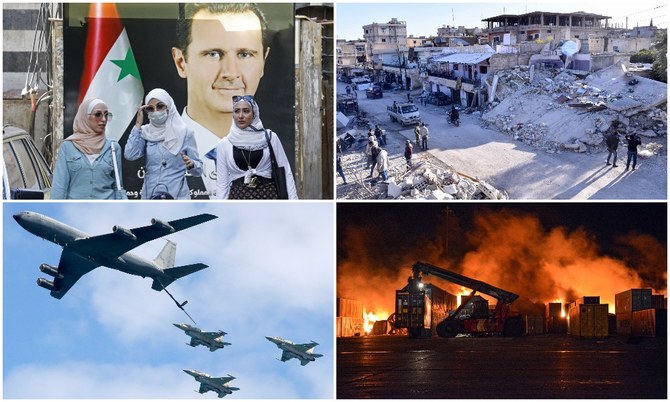
The October 7 Hamas attacks on Israel and the subsequent war in Gaza have had significant implications for Middle Eastern politics. Israel’s objectives are to destroy Hamas and secure the release of hostages, but doubts have emerged about the feasibility of these goals. The United States has supported Israel but expressed concerns about civilian casualties in Gaza . Iran has publicly supported Hamas and activated proxy groups to carry out attacks against Israel and the US. The Axis of Resistance, led by Iran, consists of militant groups that target Israeli and US interests. Hamas aims to disrupt the normalization process between Israel and Arab governments. Saudi Arabia has coordinated with Israel but called for restraint in the fighting with the Houthi rebels in Yemen. The Palestinian Authority has condemned Hamas, while Egypt has worked with Israel to blockade Gaza. The situation remains fluid, with various actors pursuing their own interests and alliances.
For Israel, the challenge lies in formulating a measured and strategic response to Iran’s aggression. The nation must tread carefully, considering the potential consequences of further escalating the conflict. A delicate balance must be struck to ensure the safety and security of Israel and its citizens while also avoiding exacerbating tensions in the region.
The conflict between Iran and Israel highlights the broader complexities of the Middle East. Arab Gulf monarchies, already on edge due to regional instability, must navigate the situation with caution. The Abraham Accords, aimed at normalizing relations between Arab states and Israel, now face uncertainty amidst escalating tensions. Turkey, straddling alliances with NATO and Russia, must carefully weigh its response, while Qatar’s role remains uncertain amidst the chaos.

At its core, this conflict lacks a clear method or rationale. Escalation between Iran and Israel would only lead to a devastating war of attrition with no clear winner. It is imperative that all parties prioritize dialogue and seek a peaceful resolution to prevent further escalation and loss of innocent lives. Only through diplomatic efforts and restraint can the region hope to emerge from this crisis unscathed.
Iran’s recent aerial assault on Israel has sparked widespread concern throughout the Middle East, exacerbating fears about regional stability. The boldness of Iran’s attack and Israel’s strategic response have heightened tensions, leaving the international community on edge. As the situation unfolds and the potential for escalation looms large, there is a critical need for diplomacy and careful action. With global attention focused on the unfolding events, the urgency for dialogue and a peaceful resolution has never been greater. It is imperative to prevent further loss of innocent lives and preserve the stability of the region’s future. The gravity of the situation underscores the necessity for concerted efforts to de-escalate tensions and pave the way for lasting peace and security in the Middle East.
visit arjasrikanth.in for more insights
 SOCIAL PERSPECTIVES