Exploring the nuances of religious and secular education rights within India’s diverse constitutional framework. !!
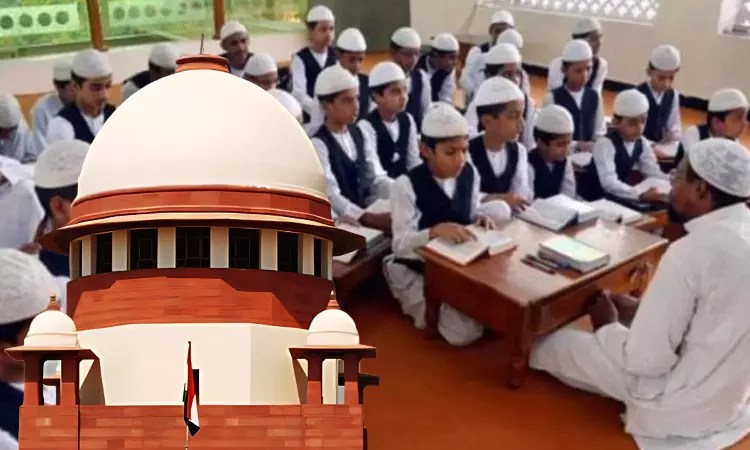
India, with its rich tapestry of cultures, languages, and religions, stands as a beacon of diversity. Yet, within this mosaic lies a complex intersection of religion and education, shaping the country’s constitutional landscape. Recent legal battles surrounding the Uttar Pradesh Madrasa board have ignited crucial conversations about the delicate balance between religious freedoms and secular principles within India’s educational system.
The Supreme Court’s intervention in overturning the Allahabad High Court’s ruling on the Uttar Pradesh Madras board Act, 2004, underscores the intricate legal and societal dynamics at play. This decision has prompted a deeper examination of India’s constitutional provisions, particularly Articles 28 and 30, which govern religious and minority educational rights.
At the heart of the debate lies the question of whether religious instruction can coexist harmoniously with secular education. Proponents argue that religious minority communities have the constitutional right, enshrined in Article 30, to establish and administer educational institutions based on their cultural and linguistic identity. However, opponents raise concerns about the potential for religious instruction to undermine the secular fabric of Indian society, as highlighted in the Allahabad High Court’s ruling.
Central to this discourse is the role of madrasas, traditional Islamic educational institutions that have been subject to scrutiny and controversy. While madrasas serve as vital centres of learning for millions of students, questions persist about the quality of education they provide and the extent to which they adhere to secular principles. The Supreme Court’s decision to uphold the regulatory framework of the Madras board Act reflects a nuanced approach to balancing religious freedoms with educational standards.
In parallel, the Catholic Conference of India’s recent guidelines for Catholic schools exemplify efforts to promote inclusivity and diversity within religious educational institutions. These guidelines underscore the importance of respecting all faiths and traditions while upholding secular values. Such initiatives highlight the potential for religious institutions to play a constructive role in fostering harmony and understanding within India’s diverse society.
A panel discussion featuring experts such as Firoz Bhat Ahmed provided valuable insights into the historical, legal, and societal dimensions of religious and minority educational rights in India. Through thoughtful dialogue and engagement, stakeholders can navigate the complexities of India’s religious-educational landscape while upholding constitutional principles of equality and non-discrimination.
In conclusion, the recent legal developments surrounding the Uttar Pradesh Madras board Act serve as a catalyst for deeper reflection on India’s commitment to diversity and pluralism. By embracing inclusivity and promoting quality education for all, India can uphold its constitutional values while fostering a society where every individual has the opportunity to thrive, irrespective of their religious or cultural background.
visit arjasrikanth.in for more insights
 SOCIAL PERSPECTIVES