Unveiling the Ripple Effect: Arvind Kejriwal’s Arrest and Opposition Dynamics
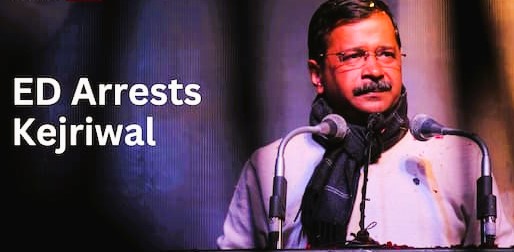
The recent arrest of a prominent political figure has not only set tongues wagging but has also cast a spotlight on the state of political landscape in our nation. This arrest, steeped in controversy and allegations, has sent shockwaves through the political landscape, prompting heated debates and soul-searching discussions about the sanctity of democratic principles and the role of the opposition.
In the eye of this political storm stands Arvind Kejriwal, the Chief Minister of Delhi and leader of the Aam Aadmi Party (AAP). His arrest, amidst swirling accusations and legal battles, marks a pivotal moment in India’s political narrative. As a prominent leader of a major political outfit, Kejriwal’s detention reverberates far beyond the confines of his party, casting a shadow over the broader opposition ecosystem. In this narrative, we delve into the aftermath of Kejriwal’s arrest, dissecting its ramifications on opposition dynamics and the democratic ethos.
The arrest of Arvind Kejriwal, stemming from the Delhi excise policy case, stands as a landmark event in India’s political annals. The allegations levelled against him, coupled with the relentless pursuit by law enforcement agencies, thrust him into the eye of a raging legal and political storm.
Kejriwal’s protracted legal tussles with the enforcement directorate, punctuated by repeated summonses and legal skirmishes, underscore the gravity of the situation. The allegations of his involvement in kickbacks related to the excise policy serve as tinder for the flames engulfing his political career.
The timing of Kejriwal’s arrest, against the backdrop of crucial political developments and impending elections, adds an extra layer of complexity to an already volatile situation. While law enforcement authorities justify their actions as a necessary step in combating corruption, opposition voices decry it as a blatant assault on democratic principles and a calculated move to stifle dissent.
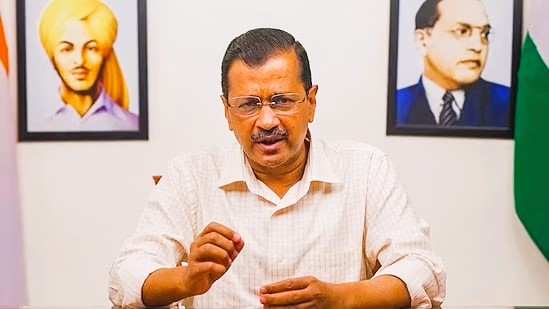
In the wake of Kejriwal’s arrest, opposition leaders have rallied behind him, denouncing what they perceive as a witch-hunt orchestrated by the ruling establishment. From various corners of the political spectrum, leaders have come together, echoing concerns about the erosion of democratic values and the stifling of opposition voices.
The scathing indictment of prominent ruling party leaders by opposition stalwarts, labelling them as “scared dictators,” serves as a poignant reflection of the collective outrage over Kejriwal’s arrest. The unequivocal support extended by the Congress party to Kejriwal underscores the unity among opposition parties, transcending ideological divides in the face of a common adversary.
The arrest not only galvanizes opposition forces but also reignites debates about the indispensable role of a robust opposition in a democratic polity. It serves as a stark reminder of the opposition’s pivotal role in holding the government accountable and safeguarding democratic principles against encroachments.
Amidst the cacophony of political rhetoric and legal wrangling, Kejriwal’s arrest raises pertinent questions about the fairness and impartiality of India’s investigative apparatus. Critics argue that the selective targeting of opposition leaders undermines the credibility of law enforcement agencies and raises doubts about their autonomy.
Furthermore, the freezing of the Congress party’s bank accounts under the guise of a crackdown on financial irregularities has sparked concerns about the misuse of state machinery for political ends. Allegations of government interference in the electoral process cast a long shadow over the integrity of India’s democratic institutions.
The arrest has also laid bare fault lines within the political landscape, with tensions simmering between regional and national players. While some regional parties throw their weight behind Kejriwal, others tread cautiously, wary of antagonizing the ruling establishment.
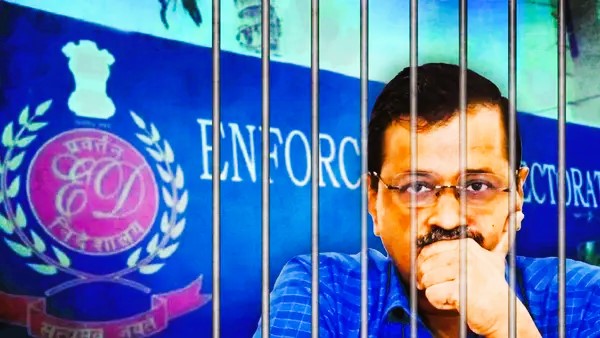
In conclusion, Arvind Kejriwal’s arrest emerges as a watershed moment in India’s political saga, with profound implications for democracy and opposition dynamics. As the nation grapples with the fallout of this arrest, it is imperative to reaffirm our unwavering commitment to democratic principles and institutional integrity.
The solidarity displayed by opposition parties in the aftermath of Kejriwal’s arrest underscores the resilience of India’s democratic fabric. It serves as a poignant reminder of the indispensable role of a vigilant opposition in safeguarding democratic values and ensuring governmental accountability.
As the political landscape continues to evolve, it falls upon all stakeholders—political leaders, civil society, and citizens alike—to uphold the pillars of democracy and strive for a more inclusive and participatory political system. In the immortal words of Mahatma Gandhi, “The true test of democracy is the freedom of dissent.” It is through robust debate, dissent, and dialogue that we can honour the spirit of democracy and pave the way for a brighter, more equitable future for all.
visit arjasrikanth.in for more insights
 SOCIAL PERSPECTIVES