Upholding transparency and accountability, the Supreme Court’s ruling on electoral bonds reshapes India’s political funding landscape.
In a ground breaking move, the Supreme Court has declared the Electoral Bonds scheme unconstitutional, sending shockwaves through India’s political landscape just ahead of the 2024 Lok Sabha elections. This controversial scheme, marred by anonymity concerns, has been at the forefront of debates regarding transparency in political funding. The court’s decision mandates the State Bank of India to disclose donor details by March 15, aiming to bring greater transparency to the often opaque realm of political donations.
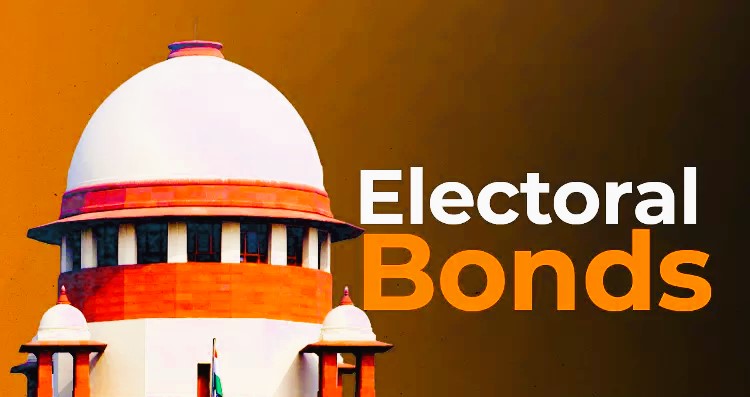
The Electoral Bonds scheme, introduced as a means of political funding, has faced persistent criticism for its lack of transparency. The scheme allows individuals and corporations to make anonymous donations to political parties, raising concerns about the violation of the right to information and free speech. The recent Supreme Court verdict aims to rectify this by compelling the State Bank of India to unveil the identities of donors, thereby enhancing transparency in the political funding process.
To comprehend the magnitude of the issue, it’s imperative to analyse how other democratic nations regulate political funding. In the UK, political parties face stringent regulations on donations, requiring detailed declarations of funding sources and amounts. Similarly, the US employs committees to oversee donations, with foreign nationals prohibited from contributing. In contrast, India grapples with a lack of transparency, exemplified by the Electoral Bonds scheme, which conceals the identity of donors and raises concerns about the influx of illicit money into the democratic system.
The primary challenge posed by the Electoral Bonds scheme lies in its lack of transparency. The anonymity afforded to donors undermines the principles of a democratic setup, where citizens have the right to know who funds political parties. Additionally, the absence of disclosure regarding the source of funding raises suspicions of potential misuse, especially when donations exceed 7.5% of the donor’s average net profit. The need for board resolutions authorizing donations and profit and loss accounts is compromised due to the anonymity of contributors.
The recent Supreme Court verdict emphasizes the constitutional principles underlying the protection of individual rights in a democratic framework. The right to privacy, often invoked in defense of anonymous political donations, is counteracted by the need for transparency to safeguard against corruption and crony capitalism. The court’s decision addresses the potential erosion of democratic values when a select few make substantial political donations in exchange for preferential treatment, encapsulating the essence of quid pro quo corruption.
While the Supreme Court’s verdict marks a significant step towards transparency, the broader issue of political funding in India requires comprehensive reforms. Drawing inspiration from international models, imposing caps on individual contributions, restricting corporate donations, and ensuring stringent reporting standards are essential steps. A re-evaluation of the entire political funding ecosystem is imperative to prevent crony capitalism and uphold the democratic ideals enshrined in the Constitution.

The Electoral Bonds saga signifies a critical juncture in India’s democratic journey, calling for introspection and reform. The Supreme Court’s decision is a clarion call for greater transparency in political funding, challenging the prevailing opacity that hinders the democratic process. As the nation grapples with the implications of this verdict, the need for sustained efforts to regulate and organize political funding becomes paramount. The trajectory of electoral reforms will determine whether India can effectively combat systematic corruption and uphold the democratic ethos envisioned by its constitution.
visit arjasrikanth.in for more insights
 SOCIAL PERSPECTIVES