As the CAA’s implementation sparks a nationwide discourse, India stands at a crossroads, grappling with diverse reactions and navigating the intricate web of socio-political implications.

The unveiling of the Citizenship (Amendment) Rules, 2024, by the Union Home Ministry has thrust the Citizenship Amendment Act (CAA) back into the spotlight, triggering a spectrum of reactions across the nation. This legal framework provides eligible individuals with the avenue to apply for Indian citizenship under the provisions of the CAA. However, the timing and consequences of this move have ignited a vigorous nationwide debate, manifesting in protests, celebrations, and political discord simultaneously. India, at this critical juncture, is witnessing the unfolding impact of the CAA on its socio-political fabric.
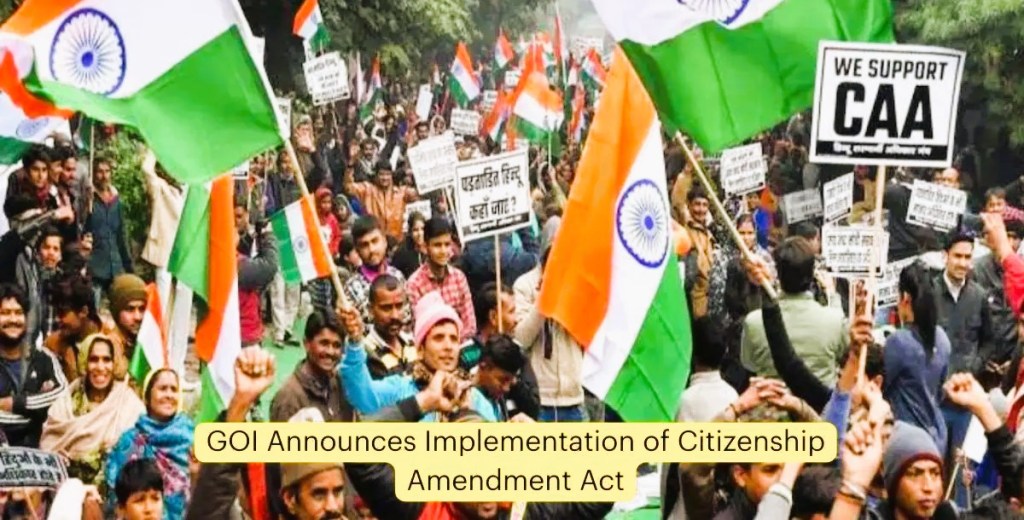
The announcement of the Citizenship (Amendment) Rules has led to a cascade of reactions, with protests erupting notably in Shaheen Bagh, Delhi, Lucknow, Jamia Millia Islamia, and Assam, unveiling deep-seated divisions in public sentiment. In contrast, states like West Bengal and Delhi have witnessed celebrations, with Chief Minister Mamata Banerjee publicly declaring non-implementation of the act in her state. This stark contrast illustrates the multifaceted nature of the CAA’s impact on Indian society.
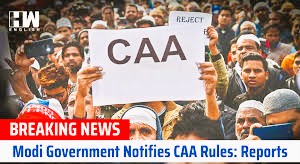
Enacted in 2019, the Citizenship Amendment Act (CAA) aims to extend Indian citizenship to persecuted non-Muslim migrants from Pakistan, Bangladesh, and Afghanistan, who arrived before December 31, 2014. The recently revealed rules outline the application process, covering provisions for registration or naturalization. However, the act’s implementation has led to starkly contrasting views among political leaders, activists, and citizens. While some view it as a necessary safeguard for persecuted religious minorities, others denounce it as divisive and discriminatory. The timing of its implementation amid protests and political unrest has raised suspicions about its underlying motivations.
Political leaders, including West Bengal Chief Minister Mamata Banerjee, have criticized the Bharatiya Janata Party (BJP) for the timing of the CAA’s implementation, raising questions about the delayed notification. AIMIM chief Asaduddin Owaisi labelled the CAA as divisive, particularly targeting Muslims, while the Nationalist Congress Party (NCP) alleged it was a diversionary tactic by the BJP to shift focus from the electoral bonds issue. Legal challenges to the CAA, focusing on its potential violation of Article 14 guaranteeing equality before the law, await Supreme Court scrutiny. Critics argue that selective citizenship based on religion undermines constitutional principles of equality and secularism.

The government defends the CAA by emphasizing its aim to protect those facing religious persecution, especially from neighbouring countries. Enacted in December 2019, the CAA seeks to grant citizenship to persecuted religious minorities like Hindus, Sikhs, Jains, Buddhists, Parsis, and Christians who fled Pakistan, Bangladesh, and Afghanistan before December 31, 2014. The opposition, represented by state governments like Kerala and West Bengal, openly rejects CAA implementation, expressing concerns about its impact on communal harmony and constitutional values. Widespread protests signify growing dissent against what’s perceived as a threat to the nation’s secular fabric.
To comprehend the CAA’s context, the National Register of Citizens (NRC) and the National Population Register (NPR) must be considered. While the NRC has been implemented in Assam to identify illegal immigrants, its application in the rest of India is pending. The NPR, initiated in 2010, serves as a national population database. The contentious issue lies in the timing of implementing the CAA, raising questions from various political quarters.
The CAA’s implementation has triggered a substantial debate on the definition of citizenship and the safeguarding of religious minorities. While opposition parties remain steadfast in their opposition, the government stands firm in its decision to implement the act. Legal and political battles are anticipated in the coming months as the future of the CAA hangs in the balance. As India navigates this complex terrain, it becomes evident that the nation is grappling with contrasting ideologies and visions for its future. The act’s implementation, met with mixed reactions, marks a pivotal moment in India’s socio-political landscape. The ensuing legal and political battles will play a decisive role in determining the fate of the CAA, influencing the contours of citizenship, secularism, and religious protection in the country.
Navigating the complexities of the CAA demands constructive dialogue and debate, ensuring the voices of all stakeholders are heard and respected. Beyond being a mere legal and administrative process, the CAA poses a moral and ethical dilemma, testing the foundational values of India’s democracy. Only time will reveal the unfolding saga of the CAA and the lasting impact it leaves on India’s socio-political fabric.
visit arjasrikanth.in for more insights
 SOCIAL PERSPECTIVES