Unravelling the Democratic Tapestry: A Closer Look at Arun Goel’s Resignation and India’s Electoral Conundrum
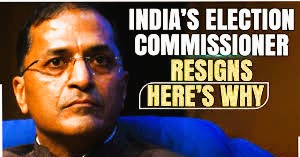
The unexpected resignation of Election Commissioner Arun Goel, just days before the anticipated announcement of the 2024 Lok Sabha election schedule, has ignited widespread concerns about the fairness and transparency of India’s democratic process. This abrupt departure, occurring on the eve of a crucial electoral event, has reverberated through the political landscape, raising significant questions about the health of the country’s democratic institutions. The incident, characterized by reported differences with Chief Election Commissioner Rajiv Kumar, further amplifies existing anxieties surrounding the gradual erosion of independent institutions and the potential influence wielded by the government. The timing of Goel’s resignation, coupled with the lack of clarity surrounding the reported disagreements, adds layers of complexity and uncertainty to the electoral process, leaving citizens and stakeholders alike apprehensive about the upcoming Lok Sabha elections and the broader state of India’s democracy.
Arun Goel, a retired bureaucrat and a seasoned 1985-batch IAS officer of the Punjab cadre, joined the Election Commission in November 2022. Known for his reputation as a “straightforward official who goes by the rules,” Goel’s sudden resignation, accepted by President Draupadi Murmu on March 9, citing “personal reasons,” has ignited speculation and raised concerns about the Election Commission’s functionality.
Sources point to apparent differences between Chief Election Commissioner Rajiv Kumar and Arun Goel during their visit to West Bengal to oversee preparations for the parliamentary elections. Insiders reveal that Goel refused to attend a press conference in Kolkata, differing with Kumar, who addressed the media alone on March 5. While Kumar mentioned Goel’s return to Delhi due to “health concerns,” sources close to Goel dismissed it, maintaining that he is in perfect health. Reports suggest that Goel cut short his visit due to serious differences with Kumar, but the exact nature of these disagreements remains undisclosed.
The timing of Goel’s resignation, on the eve of the crucial Lok Sabha elections, has added complexity and uncertainty to the electoral process. Despite attempts by the government to dissuade him and reconcile differences, Goel remained firm on his decision to exit, leaving many bewildered at the swift turn of events.
Arun Goel, born on December 7, 1962, in Patiala, is a highly educated individual with an MSc. in mathematics and a postgraduate with distinction in development economics from the University of Cambridge, England. Before joining the Election Commission, Goel served in various roles within the central administration, including Vice-Chairman of the Delhi Development Authority and Secretary in the Ministry of Culture and Ministry of Heavy Industries.
His appointment as Election Commissioner, following voluntary retirement from the Indian Administrative Services (IAS) on November 18, 2022, faced legal challenges. The Association of Democratic Reforms (ADR) moved the Supreme Court, challenging the appointment as arbitrary and violative of the institutional integrity and independence of the Election Commission of India. The Supreme Court dismissed the plea, but the circumstances surrounding Goel’s appointment continue to be a point of scrutiny.
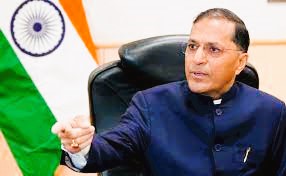
The sudden resignation of Arun Goel has triggered a wave of concerns and criticism from political leaders, with no specific party taking a prominent stance. Leaders from different quarters have questioned the transparency of the electoral process and expressed concerns about the potential impact on democratic institutions. Worries about the “systematic decimation” of independent institutions have been voiced, cautioning against any undue influence on the poll panel.
Some leaders have raised questions about the autonomy of the Election Commission, pointing to alleged differences on election-related matters. Concerns about transparency within constitutional bodies have been highlighted, drawing parallels with past instances of dissent within the Commission.
Expressing concerns about potential government influence on the appointment of Election Commissioners, some leaders emphasized recent changes in the law governing these appointments. The Chief Election Commissioner And Other Election Commissioners (Appointment, Conditions of Service And Term of Office) Act, effective from January 2, 2024, grants significant power to the government in appointing commissioners, raising questions about the potential politicization of these crucial roles.
With Goel’s resignation, the Election Commission is left with only one member, Chief Election Commissioner Rajiv Kumar, out of the mandated three members. This reduction in the number of commissioners raises doubts about the commission’s ability to carry out its duties effectively, especially with the looming Lok Sabha elections.
Under the new law, a search committee led by the law minister is tasked with shortlisting five candidates, and a selection committee headed by the Prime Minister finalizes the appointment. However, concerns about the independence of the selection process have been raised, given the significant role of the ruling government in these appointments.
Arun Goel’s resignation has ignited a profound discourse on the resilience and independence of India’s democratic institutions. The mysterious circumstances surrounding his departure, coupled with reported discord with Chief Election Commissioner Rajiv Kumar, spotlight the formidable challenges faced by the Election Commission. As the specter of the upcoming Lok Sabha elections looms, there is a heightened scrutiny of the transparency in the electoral process, necessitating vigilant oversight.
Allegations of government interference, compounded by recent legislative alterations governing the appointment of Election Commissioners, evoke fundamental concerns about the robustness of India’s democratic foundations. The enduring vitality of democratic principles and the capability of institutions to withstand external pressures emerge as decisive elements shaping the nation’s political trajectory.
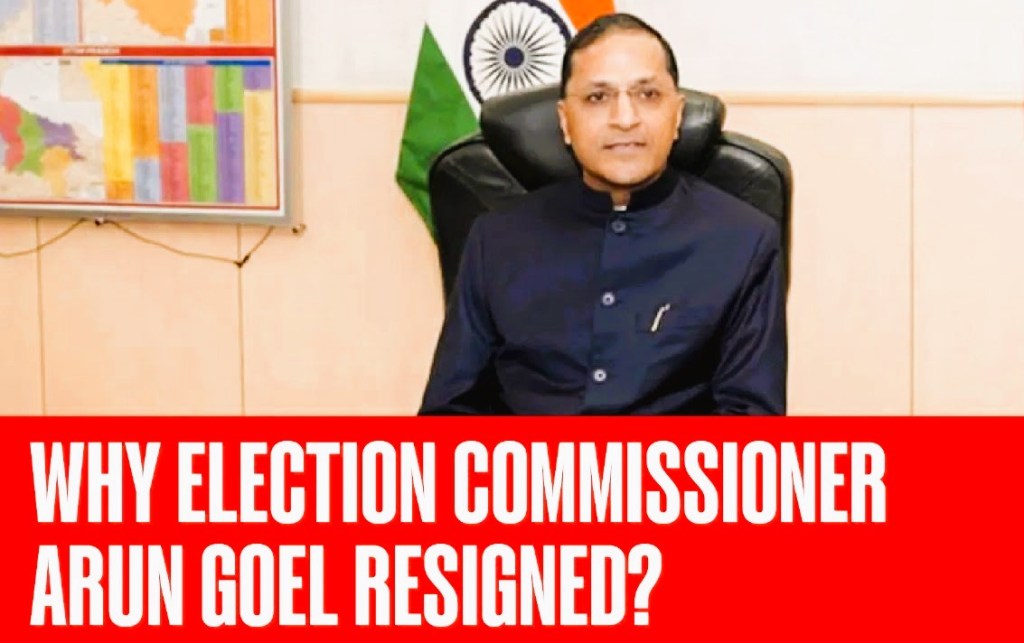
Capturing national attention, the unfolding political narrative prompts citizens and stakeholders to remain watchful, advocating for a fair, transparent, and democratic electoral framework that upholds the fundamental tenets of the world’s largest democracy. Arun Goel’s resignation echoes as a poignant reminder of the delicate equilibrium between political influence and the preservation of democratic ideals. Meeting the challenges ahead necessitates a united effort to fortify India’s democratic fabric against adversarial forces.
visit arjasrikanth.in for more insights
 SOCIAL PERSPECTIVES