Patanjali’s clash with modern medicine in the courtroom raises questions about advertising ethics and the balance between traditional and contemporary healthcare systems.
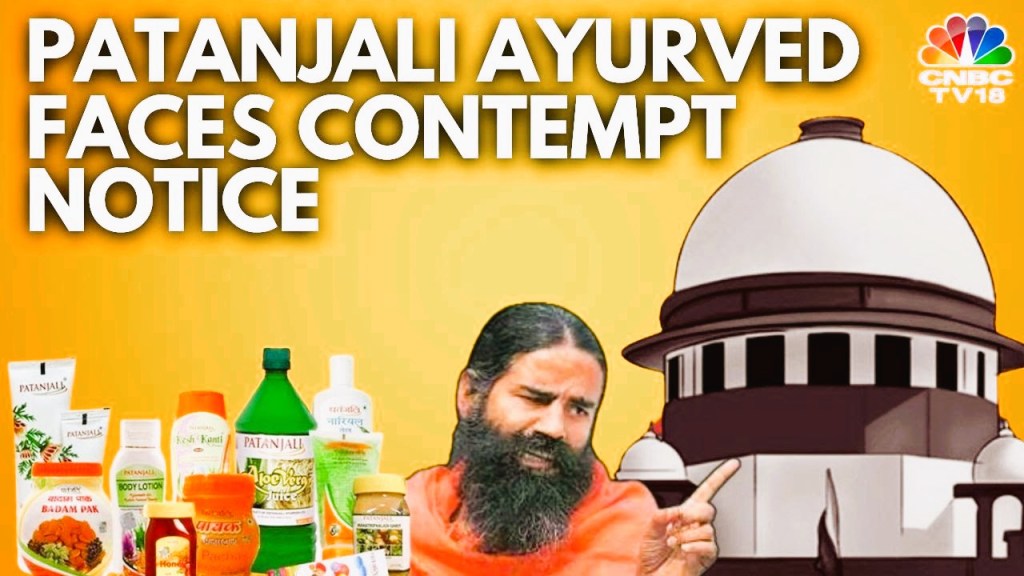
In the ongoing legal saga, Patanjali and its Managing Director, Acharya Balakrishna, find themselves engulfed in controversy, sparking a nationwide debate. A contempt of court notice, coupled with an undertaking to cease drug advertising and refrain from disparaging remarks against any medical system, follows accusations by the Indian Medical Association (IMA) of Patanjali conducting a smear campaign against modern medicine and vaccination.
Simultaneously, the Supreme Court has delivered a landmark decision, rebuking Patanjali Ayurved for its ‘misleading’ advertisements and instituting a ban on advertising products related to diseases or medical conditions. This ruling stems from an IMA petition, alleging the dissemination of deceptive advertisements claiming to cure various ailments. Beyond addressing false claims, the court’s decision initiates a broader discourse on accountability in the marketing practices of wellness conglomerates, prompting a critical examination of ethical standards within the industry. As the legal proceedings unfold, the case signifies a pivotal moment in shaping the dynamics between traditional and modern healthcare systems, with implications reaching far beyond the courtroom.
The legal dispute was instigated by the Indian Medical Association (IMA), which accused Patanjali of orchestrating a smear campaign against modern medicine and vaccination. Concerned about the potential ramifications on public health, the IMA implored the court to intervene and safeguard the integrity of medical practices.

At the heart of the controversy are allegations of Patanjali’s deceptive advertising practices, particularly regarding the efficacy of its products in treating ailments such as diabetes and asthma. The IMA’s legal action against Patanjali Ayurved underscores the gravity of the situation, highlighting the company’s alleged violations of advertising regulations and dissemination of misleading information to the public. This clash between traditional and modern medical approaches epitomizes the broader tensions within the healthcare industry and underscores the imperative for transparency and accountability in medical advertising.
The issuance of a contempt of court notice against Patanjali and Acharya Balakrishna marks a significant escalation in the legal battle. The court’s action reflects its stance on the seriousness of the accusations made by the IMA, signaling that the judiciary is not willing to tolerate any attempts to undermine the credibility of modern medicine.
The Supreme Court, in a scathing rebuke, banned Patanjali Ayurved from publishing any advertisements related to diseases or medical conditions. The court expressed concern that the “entire country was being taken for a ride” through deceptive advertisements, emphasizing the need to address the issue promptly. This ruling comes as a significant blow to the wellness giant, known for its traditional ayurvedic medicines and extensive marketing campaigns led by yoga guru Baba Ramdev.
In addition to the ban, the Supreme Court issued a contempt of court notice to Patanjali Ayurved and Acharya Balakrishnan for their involvement in spreading misleading advertisements across various media platforms. Both entities have been given a three-week period to respond to the contempt notice. This legal action underscores the court’s commitment to holding individuals and companies accountable for disregarding previous court orders and persistently engaging in misleading advertising practices.
As part of the legal proceedings, Patanjali has provided an undertaking to the court, promising to refrain from advertising its drugs and making casual statements against any system of medicine. The court has further restrained the company from advertising its products for treating diseases or conditions, aligning with the provisions of the Drugs and Magic Remedies (Objectionable Advertisements) Act, 1954, and the rules framed under it.
The recent ban is not the first instance of the Supreme Court addressing concerns about Patanjali’s advertising claims. In November 2023, the court warned the company of a Rs 1 crore fine if false claims were made about its products’ ability to “cure” certain diseases. Despite these warnings, the court noted that Patanjali continued to release advertisements asserting the superiority of its products over chemical-based medicines.
During the court hearing, Patanjali Ayurved’s defense included claims that Baba Ramdev, featured in the advertisements, is a ‘sanyasi’ who does not know English. However, the court dismissed this defense, deeming the advertisements as contemptuous and a clear violation of previous court orders. The court also questioned the Ministry of Ayush about its actions in response to the misleading advertisements, expressing dissatisfaction with the ministry’s data collection efforts on complaints and violations by Patanjali Ayurved.
The contempt of court notice and the subsequent restrictions on advertising pose significant challenges for Patanjali. The company, known for its foray into Ayurvedic products, now faces the task of navigating a delicate legal landscape while balancing its commitment to traditional medicine with adherence to contemporary regulatory frameworks.

The ban and contempt notice have immediate and far-reaching consequences for Patanjali Ayurved. The company, co-founded by yoga guru Baba Ramdev in 2006, has built a massive fan following in India, offering yoga-based cures through TV shows and selling personal care products and ayurvedic medicines. The court’s decision may lead to a significant loss of trust among consumers and impact Patanjali’s market standing.
Marketing experts weigh in on Patanjali’s broader strategy, pointing out the pitfalls of entering multiple product categories without a focused approach. The company’s weak supply chain management and distribution issues have been cited as contributing factors to its recent slowdown in revenue. The need for Patanjali to recalibrate its strategy and concentrate on specific products is emphasized as a crucial step toward future growth.
visit arjasriknath.in for more insights
 SOCIAL PERSPECTIVES