Unravelling the Legal Battle and the Quest for Electoral Integrity
In a landmark ruling that reverberates through the corridors of democracy, the Supreme Court of India has overturned the results of the Chandigarh mayoral elections, reinstating justice and restoring the faith of the electorate. The judgment, delivered on Tuesday, marks a significant victory for the Aam Aadmi Party (AAP) and underscores the judiciary’s unwavering commitment to upholding the principles of fairness and transparency in the electoral process.
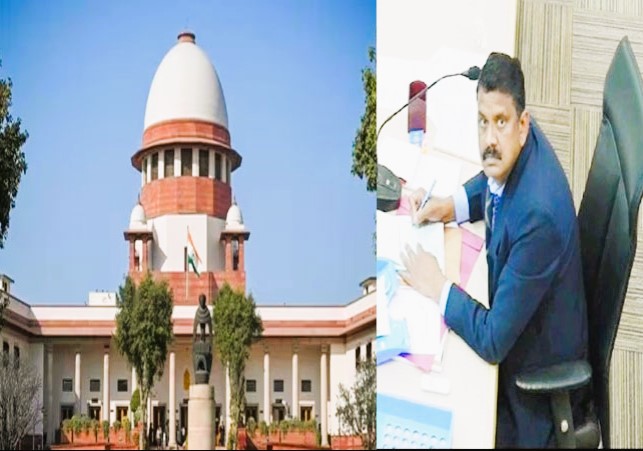
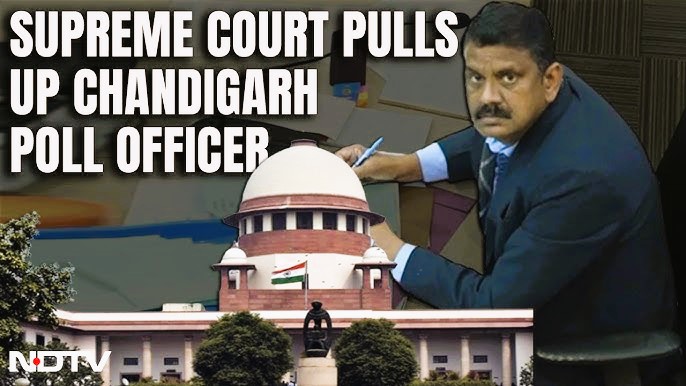
At the heart of the controversy lies the invalidated ballots that tilted the scales in favour of the Bharatiya Janata Party (BJP) candidate in the mayoral elections. The Returning Officer, Anil Masih, had disregarded eight ballots, claiming they were defaced. However, a closer examination by the Supreme Court revealed no evidence of defacement, prompting scrutiny of Masih’s actions.
The Supreme Court’s three-judge bench, led by Chief Justice DY Chandrachud, meticulously dissected the case, uncovering deliberate efforts to manipulate the outcome of the election. Masih’s act of defacing the ballots without valid grounds not only subverted the democratic process but also eroded public trust in the electoral machinery.
The apex court’s scathing indictment of Masih’s conduct underscores the judiciary’s commitment to accountability and transparency. By directing a recount of the invalidated ballots and declaring them valid, the court has not only rectified a grave injustice but also sent a powerful message that electoral malpractice will not go unchecked.
Chief Justice Chandrachud’s rebuke of Masih’s actions exemplifies the judiciary’s role as the guardian of democracy. By holding public officials accountable for their actions, the court reinforces the foundational principles of fairness and integrity in the electoral process.
The Supreme Court’s verdict represents a resounding victory for democracy and the rule of law. By upholding the sanctity of every vote cast, the court affirms the fundamental tenet that the will of the people must prevail, free from undue influence or manipulation.
In a democracy, the integrity of the electoral process is sacrosanct. The court’s decisive intervention not only corrects past injustices but also safeguards the democratic rights of every citizen. By ensuring that justice prevails, the judiciary reaffirms its pivotal role as the custodian of democracy.
As the dust settles on the Chandigarh mayoral election controversy, one thing remains abundantly clear: the judiciary’s unwavering commitment to upholding democracy and the rule of law. The Supreme Court’s verdict serves as a beacon of hope, inspiring confidence in the electoral process and reinforcing the principle that no one is above the law.
In the annals of India’s legal history, this judgment will be remembered as a testament to the resilience of democracy and the triumph of justice. As the nation marches forward, guided by the principles of fairness and integrity, the Supreme Court’s verdict stands as a testament to the enduring strength of India’s democratic institutions.
visit arjasrikanth.in for more insights
 SOCIAL PERSPECTIVES