“Unmasking Democracy: The Supreme Court’s Verdict on India’s Electoral Bond Scheme“

In a historic unanimous decision, the Supreme Court of India declared the electoral bonds scheme “unconstitutional and manifestly arbitrary.” This pivotal ruling, delivered by a five-judge bench led by Chief Justice D.Y. Chandrachud, marked the culmination of a seven-year legal battle initiated by the Association for Democratic Reforms (ADR) in 2017. The court found that the scheme, introduced in 2018 to enhance transparency in electoral funding, violated voters’ right to information, emphasizing the need for accountability in political financing.
Introduced in 2018, the electoral bond scheme aimed to bring transparency to political funding. It allowed anonymous donations to political parties in denominations ranging from Rs 1,000 to Rs 1 crore. Administered by the State Bank of India (SBI), the scheme provided donors with anonymity, with political parties able to encash these bonds within 15 days for electoral expenses. Despite being hailed by the government as a measure to curb black money, the scheme faced vehement opposition and concerns about accountability.
The electoral bond scheme encountered strong opposition from various quarters, including the ADR, the Communist Party of India (Marxist), Congress leader Jaya Thakur, and Spandan Biswal. Senior advocates Kapil Sibal, Vijay Hansaria, and Prashant Bhushan, representing the challengers, argued that the scheme undermined transparency, leading to an imbalanced electoral landscape. In response, the government contended that the scheme protected donors’ identities and facilitated funding from recognized sources.
On February 15, 2024, the Supreme Court delivered a unanimous verdict, declaring the electoral bond scheme and related legal amendments unconstitutional. The court emphasized that the scheme violated citizens’ right to information under Article 19(1)(a) of the Constitution, citing concerns about anonymity, lack of disclosure, and unlimited corporate donations. The decision reinstated the pre-2017 scheme, setting stricter regulations on corporate funding.
The court’s decision had immediate and far-reaching implications. The State Bank of India (SBI) was directed to cease the issuance of electoral bonds immediately. Moreover, the SBI must submit details of bond purchases and their encashment by political parties to the Election Commission (EC) by March 6. The EC is mandated to publish this information on its website, enhancing transparency in political funding.
The concerns raised about the electoral bond scheme revolved around key issues. Anonymity of donors, lack of disclosure, unlimited corporate funding, concerns about black money, and limited public scrutiny were among the significant criticisms. The court’s decision addressed these concerns, reinstating transparency and accountability measures that were perceived to be compromised by the electoral bond scheme.
In its verdict, the court scrutinized the government’s argument that the scheme aimed to curb black money. It emphasized the need for less intrusive methods that do not compromise fundamental rights. By striking down specific amendments, including the removal of the cap on corporate funding, the court effectively reinstated the pre-2017 scheme, reinforcing the importance of transparency and accountability in political finance.
The landmark decision from the Supreme Court served as a robust reinforcement of the principles of transparency and accountability in political funding. It delivered a clear message regarding the imperative for regulations that strike a balance between privacy rights and the right to information. As political parties navigate the post-verdict landscape, adhering to the pre-2017 scheme in corporate funding, the ruling stands as a cornerstone for ensuring free and fair elections and fortifying the democratic fabric in India.
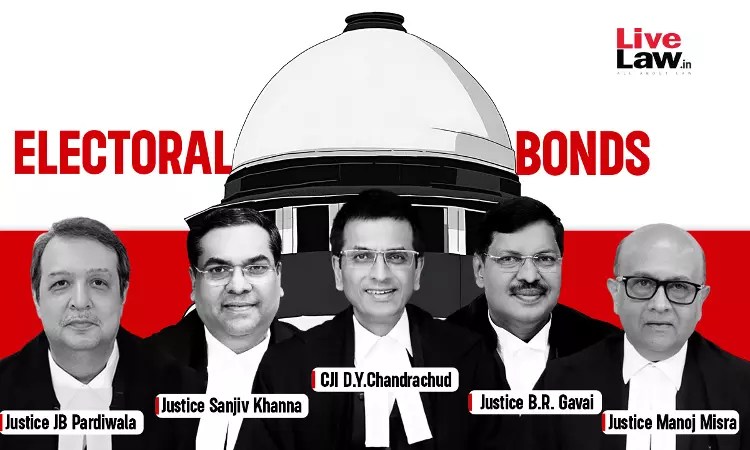
The Supreme Court’s ground breaking verdict on the electoral bond scheme represents a transformative juncture in India’s political landscape. This historic decision not only upholds democratic principles but also sets the stage for a comprehensive reassessment of campaign finance laws. As the nation embraces a renewed commitment to democratic ideals, the ruling signifies a triumph for transparency, accountability, and the integrity of free and fair elections. In the quest for an equitable electoral process, the Supreme Court’s decision stands as a beacon, guiding India towards a future where citizens can confidently engage in the democratic process with trust and transparency.
visit arjasrikanth.in / @DrArjasreekanth for more insights
 SOCIAL PERSPECTIVES