Navigating the Path to the American Dream**

Every year, a growing number of Indian students embark on a journey to the United States, drawn by the promise of the American Dream and the prospect of expanded opportunities. However, recent events have brought to light the unsettling reality of safety concerns that accompany this pursuit, revealing a stark dichotomy between aspirations and the harsh realities encountered overseas. This article delves into the surge in Indian students opting for U.S. education, reaching a record 268,923 in the 2022-2023 academic year, underscoring the enduring allure of American academia. While statistics highlight the significant presence of Indian Americans, constituting 1.35% of the U.S. population, the pursuit of education in the U.S. is not without its safety apprehensions. Tragic incidents and discriminatory experiences underline the need for a nuanced approach in navigating the path towards the American Dream. With the continued increase in the number of Indian students, striking a delicate balance between ambition and ensuring their safety emerges as an increasingly vital imperative.
For individuals hailing from middle-class backgrounds in India, the decision to pursue education or employment opportunities abroad often stems from a desire to secure a better future for themselves and their families. However, the journey to realizing these aspirations is fraught with challenges and unexpected obstacles.
The initial motivation for many middle-class individuals to seek opportunities abroad often revolves around economic stability and the prospect of upward mobility. Like many others, I embarked on my journey with hopes of providing financial security for my loved ones and myself. Yet, upon arriving in the US, many were confronted with the harsh reality of financial strain and the daunting cost of living. Despite best efforts, the disparity between earnings and the soaring expenses became evident, highlighting the precariousness of the economic situation.

On average, the trappings of success—a steady job, a comfortable lifestyle, and aspirations for homeownership—were far from attainable without significant financial backing. The dream of purchasing a home for parents or financing a wedding quickly dissipated in the face of insurmountable financial hurdles. The stark realization that savings were inadequate to fulfil even the most modest aspirations was a sobering wake-up call.
Amidst the economic challenges, the allure of the American Dream continues to beckon, promising boundless opportunities for growth and prosperity. For many, the prospect of working in a thriving economy, contributing to cutting-edge projects, and experiencing a higher quality of life fuels the pursuit of opportunities abroad. The promise of better infrastructure, work-life balance, and the rule of law serves as a beacon of hope amidst the uncertainties.
However, recent incidents have cast a shadow over the perceived safety of Indian students in the US. Tragic occurrences, including the untimely deaths of several students, underscore the vulnerability and risks faced by those pursuing education overseas. From mysterious deaths to instances of racial discrimination and hate crimes, the safety concerns plaguing Indian students in the US have sparked widespread apprehension and uncertainty.
The harsh reality of safety risks cannot be ignored or dismissed lightly. While the pursuit of education and opportunities abroad holds immense potential, it is imperative to acknowledge and address the inherent risks and challenges associated with life in a foreign land. The tragic loss of young lives serves as a sobering reminder of the importance of prioritizing safety and well-being above all else.
In the pursuit of education and opportunity abroad, it’s imperative to approach our endeavours with caution and a keen awareness of the associated risks. While the allure of the American Dream may captivate us with promises of success, prioritizing safety and well-being is paramount. By remaining grounded and resilient, we can navigate challenges with determination and work towards a brighter future. Recent tragedies involving Indian students in the United States have sparked concerns about their safety and well-being. The brutal murder of Vivek Saini, the tragic suicide of Sameer Kamath, and the unexplained deaths of Neel Acharya and Akul Dhawan have left the Indian diaspora grappling with uncertainty.
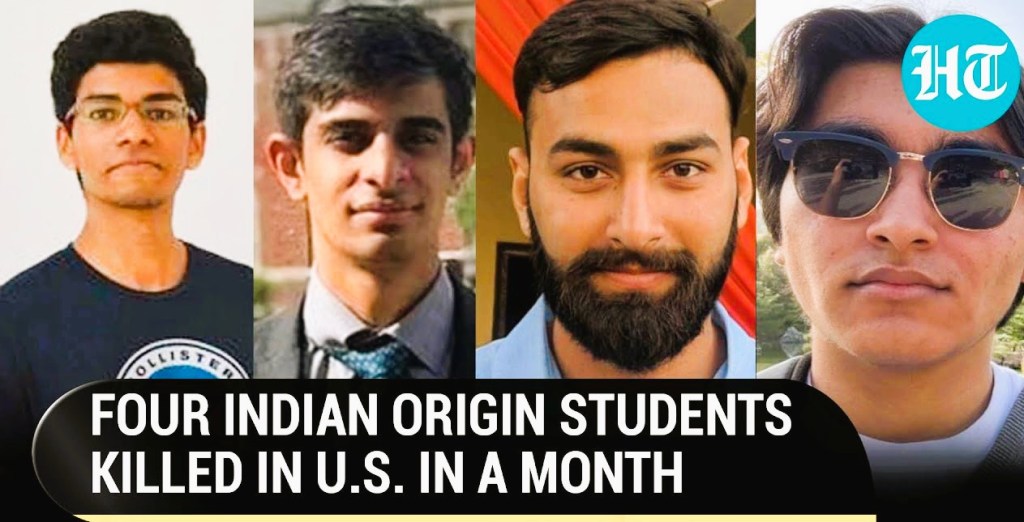
These incidents shed light on the complex social climate, prompting discussions about heightened situational awareness and the need for improved security measures. As Indian students continue their pursuit of education in the US, addressing safety concerns becomes crucial to fostering an environment that ensures their well-being and success. It’s a reminder that while opportunities abound, safeguarding one’s security is paramount in the journey towards realizing aspirations abroad.
visit arjasrikanth.in / @DrArjasreekanth for more insights
 SOCIAL PERSPECTIVES
2 responses to “Navigating the Path to the American Dream: Safety Concerns for Indian Youth in the USA”
Dr Arja, a very well thought of article indeed!.
In addition to the dangers of security, to Indian youth, this exodus also creates other socio economic problems for the families sponsoring the studies. Many middle class families who sponsor their ward for studies in US or. elsewhere abroad sell their meagre assets and get into debt trap hoping that their ward would help them out of the financial mire when the ward is financially independent. This not only puts a lot of pressure on the ward but also disturbs the financial security of the families. This could also aid in perpetration of social evils like dowry harassment and marital discord.
What can we do to make our higher education system in India more accessible and attractive to these aspiring youth? How can increase employment opportunities in the country and incentivise the youth to remain in India and contribute and participate in the. Indian economic boom. Regards Dr Esther Malini
LikeLike
Yes , it is a really a matter of great concern for us as Indian parents about he safety of our children.
LikeLike