Navigating the farmers’ fervour, the Indian government faces a test of resilience and adaptability in the political arena.*
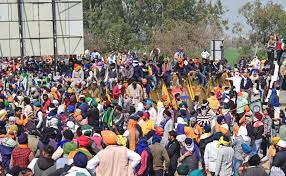
In the crucible of the farmers’ fervour, India’s political landscape witnesses a seismic shift as the ongoing protest at the Delhi borders, fuelled by aspirations and genuine grievances, becomes a pivotal force. The clash of political aspirations and the demand for the legal assurance of Minimum Support Price (MSP) form the core of this multifaceted struggle. As the descendants of resilient warriors face off against a government led by astute, business-oriented political leaders, the battle transcends physical borders to evolve into an intellectual versus tenacious confrontation.
The protest unfolds with farmers converging from Shambhu and Khanauri borders of Punjab and Haryana, marching resolutely towards Delhi. Despite Haryana government’s preparations, unforeseen clashes with paramilitary forces erupt, plunging the scene into chaos and stampede risks.
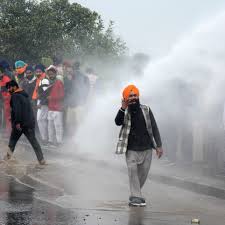
As tensions escalate, the use of drones by security forces introduces a new dynamic, yet farmers strategize to breach barricades, driven by unwavering resolve and supported by the solidarity of villagers. A stark departure from the previous year’s protests is revealed through heightened security measures, increased injuries, and the introduction of drones and direct tear gas hits.
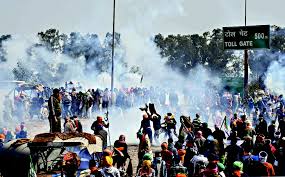
Remarkable resilience defines the farmers’ response. Despite injuries, many return to the protest, symbolizing an unyielding commitment to their cause. Updates on barricade removal efforts and innovative tactics like flying kites to disrupt security forces highlight the farmers’ unwavering determination amid continued clashes.
The protest poses a political conundrum for the government. Despite projecting confidence, the absence of an ongoing parliamentary session and concerns regarding the legal guarantee of MSP enforce a cautious approach. The delicate dance involves addressing the demand for a legal MSP with multifaceted implications while downplaying immediate electoral impacts by leveraging the timing without an imminent legislative session.
Simultaneously, allegations of political motivation linger, posing a threat to the protest’s legitimacy. This nuanced scenario prompts debates on the government’s political standing, revealing complex challenges and opportunities for its electoral future. The Governments apparent indifference undergoes scrutiny in this analysis, exploring the potential consequences of navigating the farmers’ agitation.
Electoral considerations loom large, particularly in key constituencies in Uttar Pradesh and Punjab. While alliances may offer respite, managing regional dynamics remains a delicate balancing act. The Government is cautious about endorsing a legal MSP, fearing potential negative impacts on farmers and disruptions in agricultural markets. Allegations of political motivation risk polarizing public opinion.
Despite concerns about electoral repercussions, alliances and nuanced regional strategies could help mitigate potential setbacks. Challenges persist in managing Punjab’s political landscape amid strained alliances and regional dynamics.
The farmers’ protest unfolds as a new chapter in India’s political narrative. Faced with a resilient adversary, the government must navigate the shifting sands of public sentiment and regional alliances. Amidst the tumult, one truth remains evident: the farmers’ unwavering resolve echoes a call for justice that transcends politics. In this crucible of contention, the path to resolution lies not in stubbornness but in understanding, heralding a new dawn of collaboration and compromise.
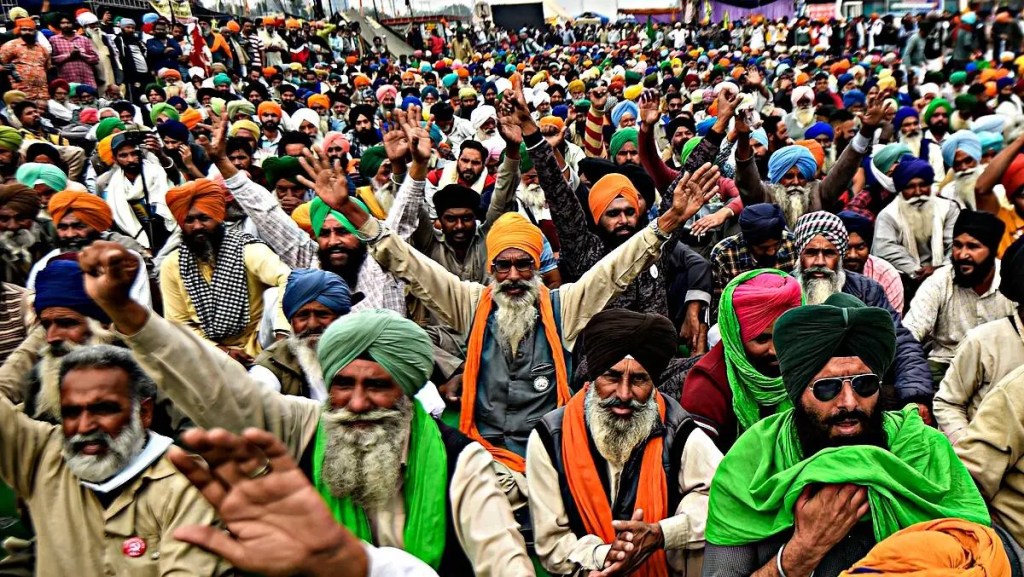
The farmers’ protest emerges as a pivotal factor reshaping the Government’s electoral calculus. While the Government exhibits confidence, underlying concerns and regional dynamics warrant careful consideration. The protest’s trajectory underscores the evolving political landscape, highlighting the imperative for the Government to engage meaningfully with farmers’ grievances and navigate the complex terrain of Indian politics. As the protest unfolds, its impact on the Government’s electoral fortunes remains a subject of scrutiny, marking a critical juncture in India’s political narrative.
visit arjasrikanth.in for more insights
 SOCIAL PERSPECTIVES