“Safeguarding Integrity: A Deep Dive into the Public Examination Prevention of Unfair Means Bill 2024”

The recent surge in cheating cases during public examinations has prompted the Indian Parliament to take a decisive step in ensuring the sanctity of the examination process. The introduction of the Public Examination Prevention of Unfair Means 2024 bill marks a significant effort to enhance transparency, credibility, and fairness in the country’s examination system. This article aims to explore the provisions of the bill, the reasons behind its introduction, the strict penalties it prescribes, the examinations it covers, and its broader implications for the education sector. In an attempt to arrest cheating in government recruitment exams, the Parliament on February 9 cleared the Public Examinations (Prevention of Unfair Means) Bill, 2024, which aims to prevent use of “unfair means” in public examinations in order to bring “greater transparency, fairness and credibility”.
The core of the Public Examination Prevention of Unfair Means 2024 bill lies in its definition of “unfair means.” It encompasses a range of actions, including unauthorized access to question papers or answer keys, collusion with others, and any form of assistance provided during a public examination. The bill serves as a robust framework to combat these unfair means, considering them as violations that warrant strict penalties. This comprehensive approach addresses the multifaceted challenges posed by cheating and malpractice.

The necessity for this legislation arises from the alarming prevalence of cheating and unfair means across the country. An investigative uncovered 41 cases affecting a staggering one crore candidates and over one lakh vacancies. The widespread impact on candidates and the inadequacy of existing laws in addressing the issue prompted the government to introduce a dedicated law. While existing laws already penalize exam malpractice, the need for a specific legislation underlines the government’s commitment to curbing the rising tide of cheating cases.
The Public Examination Prevention of Unfair Means 2024 bill introduces stringent punishments for individuals involved in exam malpractice. Offenders can face imprisonment for 3 to 5 years, coupled with fines of up to ₹10 lakh. In cases of organized collusion or larger conspiracies, the punishment escalates to imprisonment for up to 10 years, with a minimum fine of one crore rupees. Notably, the law allows for the confiscation of properties of companies involved in such crimes. This escalation in penalties aims to serve as a strong deterrent and establish a robust framework for eliminating unfair practices.
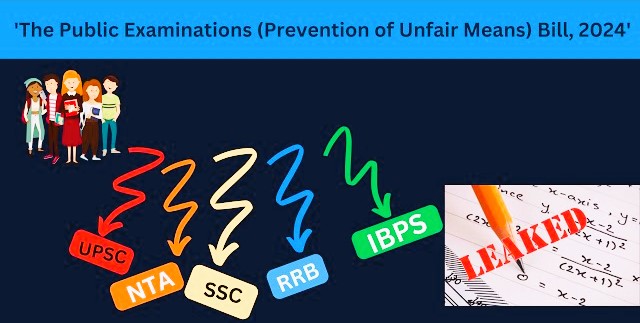
The ambit of the new legislation extends to a wide array of examinations conducted by central authorities, including UPSC, SSC, Railways, and banking recruitment exams. Additionally, exams conducted by the National Testing Agency (NTA), such as NEET, JEE, and university entrance exams, fall under its purview. State boards, universities conducting annual exams, and school board exams are also covered. The bill serves as a model for states to adopt and replicate, ensuring a standardized approach to preventing unfair means in examinations.
Crucially, the legislation provides protection for innocent candidates who may be unaware of malpractice around them. It holds not only individuals but also examination centres, agencies, and organizations involved in the examination process accountable. This holistic approach ensures that the entire examination ecosystem adheres to the highest standards of integrity, reinforcing the credibility of the examination system.

The Public Examination Prevention of Unfair Means 2024 bill emerges as a crucial stride towards ensuring fairness, transparency, and integrity in public examinations across India. By comprehensively addressing the challenges posed by cheating and unfair means, the bill aims to restore confidence in the examination system and create a level playing field for all candidates. Beyond its immediate impact, this legislation sets a precedent for other states to adopt similar measures, fostering a fair and merit-based education system. As the guardians of integrity speak through this bill, the future of examinations in India appears brighter, more secure, and free from the shadows of malpractice. The comprehensive provisions, stringent penalties, and broad coverage of examinations send a resounding message – cheating will not be tolerated, and the pursuit of knowledge and merit shall prevail.
visit arjasrikanth.in / @DrArjasreekanth for more insights
 SOCIAL PERSPECTIVES