Undermining Justice: The Menace of Adhocracy in Indian Policing
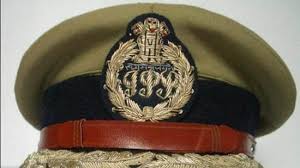
In the intricate tapestry of Indian policing, a concerning trend threatens to unravel the very essence of democratic governance—the appointment of temporary Directors General of Police (DGPs). This pervasive adhocracy, originating from the central government and permeating state administrations, imperils institutional independence, accountability, and the rule of law. As the fabric of Indian policing frays, this article explores the far-reaching consequences of the rise of temporary DGPs and the urgent need for corrective measures to safeguard democratic ideals.
At the heart of every state’s policing mechanism stands the Director General of Police (DGP), a pivotal figure entrusted with the monumental responsibility of upholding law and order, supervising criminal investigations, regulating VIP movements, and managing traffic. The DGP, as the chief of police, plays a paramount role in shaping the policing landscape of a state.
A disconcerting trend has emerged in various Indian states, including Uttar Pradesh, Andhra Pradesh, Telangana, Punjab, West Bengal, Jammu and Kashmir, and Uttarakhand, where temporary DGPs assume extended roles. This departure from the 2006 Supreme Court guidelines on DGP appointments, designed to curb political interference and establish a transparent, seniority-based selection process through the UPSC, is a cause for profound concern. The origin of this adhocracy can be traced back to the central government’s practice of leaving top police positions vacant, a practice now replicated at the state level, sidestepping the Supreme Court’s police reform directives.

The 2006 Prakash Singh case marked a watershed moment in police reforms, mandating a fixed two-year tenure for DGPs and a meticulous selection process overseen by the UPSC. However, the contemporary surge in appointing acting DGPs stands in stark contradiction to these well-crafted guidelines. The deviation from the Supreme Court’s directives compromises the essence of stable and unbiased leadership, jeopardizing the foundational principles of justice, transparency, and impartiality within the realm of policing.
Acting DGPs, in contrast to their regular counterparts, grapple with a critical deficit—a lack of a secure, fixed tenure. This absence of stability leaves them vulnerable to arbitrary removal based on political considerations, hindering their capacity to make impartial decisions aligned with the principles of justice and law. The precarious nature of their roles compromises the very essence of unbiased and effective leadership within the police force.

The ascendancy of temporary DGPs often manifests as a tool for political elites to wield influence over the police force. Despite the UPSC’s role as a safeguard against such interference, challenges emerge from states’ lapses in submitting well-formed proposals or presenting proposals marred by technical errors. This surge in adhocracy imperils the operational efficacy of policing and corrodes the fundamental bedrock of institutional independence.
Surprisingly, the Supreme Court, traditionally a guardian of justice and democracy, has not shown substantial interest in addressing this issue. The lack of hearings or judgments on police reforms for over three years raises questions about the judicial oversight crucial for upholding the rule of law.

In conclusion, the evolving trend of appointing temporary Directors General of Police (DGPs) raises concerns about the institutional independence crucial for democratic governance in India. This shift, originating from the central government and extending to state administrations, challenges the principles of justice and raises questions about the integrity of the police force. While it’s essential to address these issues, a collaborative effort, including the Supreme Court, is needed to ensure adherence to UPSC guidelines and the preservation of the rule of law.
The significance of a robust and impartial policing system cannot be understated. The current situation prompts reflection on the delicate balance between political influence and institutional independence. As we navigate these challenges, it becomes increasingly imperative for the judiciary to actively participate in safeguarding the democratic foundations of the nation. The fabric of Indian policing, facing strain, necessitates careful and considerate corrective measures to foster a narrative of justice, transparency, and democratic resilience.
visit arjasrikanth.in / @DrArjasreekanth for more insights
 SOCIAL PERSPECTIVES