The Political Turmoil in Maharashtra: The Rise and Fall of the Nationalist Congress Party
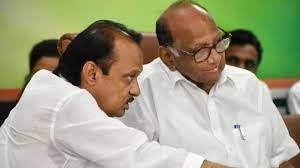
In the intricate web of Indian politics, few stories rival the dramatic saga of the Nationalist Congress Party (NCP) in Maharashtra. Founded in 1999 by stalwarts like Sharad Pawar, P. A. Sangma, and Tariq Anwar, the NCP emerged as a significant force, challenging the dominance of the Indian National Congress. However, in recent years, internal rifts and power struggles have threatened to tear the party apart, culminating in a bitter battle for control between Sharad Pawar and his nephew, Ajit Pawar.
The genesis of the NCP’s troubles can be traced back to its inception, which was born out of a dispute over leadership within the Indian National Congress. Sharad Pawar, along with his allies, broke away from the Congress, objecting to Sonia Gandhi’s ascendancy to the party’s helm. This rupture led to their expulsion from the Congress and the formation of the NCP, marking the beginning of a tumultuous journey in Maharashtra politics.

Over the years, Sharad Pawar’s leadership steered the NCP through various challenges, cementing its position as a key player in Maharashtra’s political landscape. Pawar’s astute manoeuvring and strategic alliances propelled the party to prominence, with him serving as Chief Minister of Maharashtra on four occasions and holding crucial ministerial portfolios at the centre.
However, cracks began to appear in the NCP’s unity with the emergence of factions led by Sharad Pawar and his nephew, Ajit Pawar. The younger Pawar’s ambitious bid for power culminated in a shocking alliance with the BJP-Shiv Sena coalition, leading to his appointment as Deputy Chief Minister of Maharashtra. This move sparked a bitter feud within the party, with both factions laying claim to the NCP’s name and symbol.
The Election Commission of India’s intervention provided a moment of reckoning for the warring factions. In a landmark decision, the Commission recognized Ajit Pawar’s faction as the legitimate NCP, dealing a severe blow to Sharad Pawar’s authority. The directive to the latter to choose a new name for his faction signalled a decisive shift in Maharashtra’s political landscape, with the younger Pawar emerging as a formidable force in state politics.

The fallout between Sharad Pawar and Ajit Pawar mirrors the classic tale of familial betrayal and political intrigue. The rift between uncle and nephew threatens to upend decades of political legacy built by Sharad Pawar, posing a formidable challenge to his leadership and influence in Maharashtra. The power struggle within the NCP underscores the volatile nature of state politics, where alliances are forged and broken at the whim of ambitious politicians.
As Maharashtra braces itself for the upcoming Rajya Sabha elections, the fate of the NCP hangs in the balance. The choice of a new name for Sharad Pawar’s faction and the ensuing political realignment will shape the state’s political landscape for years to come. The NCP’s tumultuous journey serves as a cautionary tale of the perils of internal discord and familial rivalries in Indian politics, reminding us that power is often fleeting and alliances are fragile.
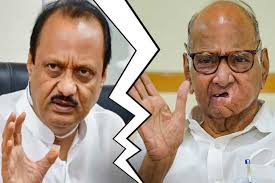
In conclusion, the rise and fall of the Nationalist Congress Party in Maharashtra epitomize the complexities and contradictions of Indian politics. From its inception as a formidable challenger to the Congress hegemony to its current state of internal strife, the NCP’s journey is a testament to the highs and lows of political fortune. As Maharashtra navigates the turbulent waters of state politics, the fate of the NCP remains uncertain, reminding us that in the game of politics, nothing is ever certain.
Visit arjasrikanth.in / @DrArjasreekanth for more insights
 SOCIAL PERSPECTIVES