
In a momentous announcement on February 3, 2024, Prime Minister Narendra Modi declared that Lal Krishna Advani, the veteran BJP leader and former Deputy Prime Minister, would be honoured with the Bharat Ratna. This prestigious recognition comes as a culmination of a lifetime dedicated to India’s cultural heritage, politics, and progress. As the nation rejoices in this long-overdue acknowledgment, it’s imperative to delve into the journey of Lal Krishna Advani and the reasons behind the deserving honour.
Born on November 8, 1927, in Karachi, British India, to Kishanchand D. Advani and Gyani Devi, Lal Krishna Advani hails from a Sindhi Hindu Brahmin family. His educational journey took him through St. Patrick’s High School, Karachi, and D.G. National College, Hyderabad, Sindh, laying the foundation for his future endeavours.
Advani’s foray into Indian politics marked the emergence of a leader who would significantly shape the destiny of the nation. As a founding member of the Bharatiya Janata Party (BJP), Advani played a pivotal role in establishing the party’s ideological framework. His leadership was instrumental in transforming the BJP into a mass organization, setting the stage for a new era in Indian politics.
One of Advani’s most defining moments was in 1989 when, as the party president, he incorporated the construction of the Ram Mandir at Ayodhya as a crucial agenda in the Palampur National Executive resolution. This decision laid the groundwork for a movement that would shape the socio-political landscape of India for years to come.
Prime Minister Modi, in announcing the Bharat Ratna for Advani, highlighted his invaluable contributions to the country’s cultural heritage, politics, and progress. Modi commended Advani’s exemplary parliamentary interventions, emphasizing the honour as recognition for the ideology of ‘nation first’ and a tribute to the millions of BJP workers and leaders across the country.
The Prime Minister’s announcement reflects the special relationship between Narendra Modi and Lal Krishna Advani. It signifies the acknowledgment of Advani’s contributions not only from the people of India but, more importantly, from his own party.
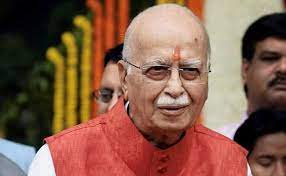
Advani’s journey in Indian politics spans seven decades, during which he served as the party president, home minister, and deputy prime minister. His steadfast dedication to the party’s goals and principles has been unwavering, making him a stalwart in the political landscape.
Advani’s role as an understudy to Atal Bihari Vajpayee is noteworthy. From serving as the party leader to becoming the home minister and finally the deputy prime minister, Advani’s journey was integral to shaping the nation’s political narrative.
The award of Bharat Ratna to Advani at the age of 96 is a testament to his enduring commitment and significant contribution to Indian politics over the span of 70 years.
While celebrating Advani’s achievements, it’s crucial to acknowledge that he is regarded as a polarizing political figure. His role in the Ram Temple movement and the subsequent Babri Masjid demolition brought both acclaim and criticism, making him a divisive figure in the country.
Despite being the BJP’s longest-serving party president, Advani faced challenges within the party. Sidelined by his ideological mentors in the Rashtriya Swayamsevak Sangh (RSS), he found himself on the retirement bench, known as the “margdarshak mandal.”
The Bharat Ratna, instituted in 1954, stands as the highest civilian award in the country. It recognizes exceptional service and performance of the highest order in any field of human endeavour. Advani’s recognition with this honour adds a new chapter to the award’s historical significance.
Over the decades, the Bharat Ratna has become a tool for political messaging. While various fields have seen deserving recipients, political ideologies often influence the choice of awardees. In Advani’s case, the honor holds a unique resonance given his ideological standing.
Lal Krishna Advani’s legacy extends beyond political affiliations. His imprint on Indian politics, especially through the articulation of the BJP’s ideology, has left an indelible mark. The award of Bharat Ratna recognizes not just an individual but a chapter in India’s political evolution.
The timing of Advani’s Bharat Ratna is poignant. In a new India grappling with uncertainty and change, his contributions, even as a divisive figure, become integral to understanding the nation’s journey. His role in the Ram Temple movement and the subsequent socio-political implications are subjects of historical significance.
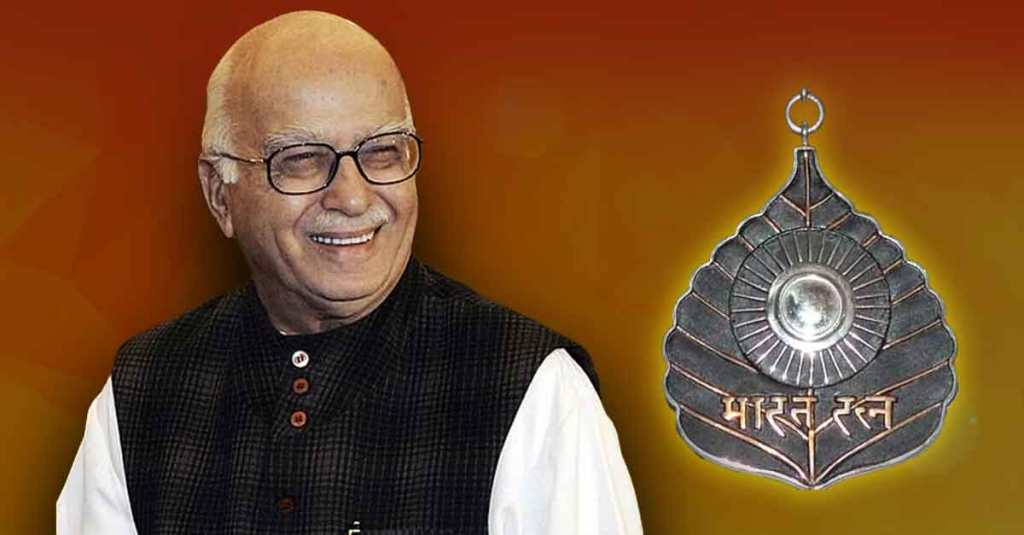
In conclusion, the Bharat Ratna conferred upon Lal Krishna Advani is more than an individual honour; it’s a recognition of an era in Indian politics. Advani’s contributions, though marked by controversies, have shaped the ideological landscape of the country. As India moves forward, the acknowledgment of Advani’s legacy prompts reflections on the evolution of the nation’s political discourse and the enduring impact of key figures. The Bharat Ratna, in this context, serves as a symbol not just of individual achievement but of the intricate tapestry that weaves together the threads of India’s political narrative.
visit arjasrikanth.in / @DrArjasreekanth for more insights
 SOCIAL PERSPECTIVES