“Crafting Political Narratives: Interweaving the Threads of India’s Leadership Tapestry”
In the diverse canvas of Indian politics, leaders emerge as architects of narratives, weaving tales that resonate across the nation. This exploration delves into the political sagas of prominent figures, each contributing a unique thread to the intricate tapestry of India’s political legacy. From Narendra Modi’s Political prowess to Indira Gandhi’s triumphs and controversies, Nandamuri Taraka Rama Rao’s enduring legacy, Naveen Patnaik’s strategic acumen, M.K. Stalin’s economic challenges, Mamata Banerjee’s enigmatic politics, Chandrababu Naidu’s Economic Renaissance Rajasekhar Reddy’s Peoples friendliness to Y.S. Jagan Mohan Reddy’s populist strategies, these leaders embody the essence of a craft that transcends mere administration.

India’s Prime Minister, Narendra Modi, (Bridging Tradition and Modernity) is a master craftsman in shaping a compelling public image through diverse media channels, crafting a relatable political saga. His monthly radio show serves as an unconventional yet effective tool, connecting him directly with the masses and positioning him as a grassroots leader. Despite the seemingly outdated format, Modi’s strategic use of social media amplifies his role as a mentor and confidant. His ability to navigate economic challenges while retaining youth support showcases his political acumen. Modi’s messaging, rooted in cultural ties, stability, and populist initiatives, deflects attention from contentious issues. The seamless blending of tradition and modernity in his media campaigns underscores Modi’s prowess in shaping a resonant and aspirational narrative, steering India’s political landscape with finesse.
Indira Gandhi, (Triumphs and Turbulence) India’s first female Prime Minister, is a complex figure with a legacy marked by triumphs and turbulence. Her monumental achievements include the Liberation of Bangladesh in 1971, the Green Revolution, and pioneering advancements like sending Rakesh Sharma into space. Bold decisions, such as ending Privy Purse and defiance against American hegemony, have etched her as a stateswoman. However, the controversial Emergency and Operation Blue Star cast shadows on her legacy. The imposition of Emergency in 1975, while contentious, had complex origins reflecting intricate political dynamics. Despite the negatives, Indira’s resilience and connection with the marginalized created a new constituency, reshaping India’s political landscape with enduring impact.
Atal Bihari Vajpayee, (A Statesman’s Legacy) a global statesman, exhibited remarkable leadership during pivotal moments in India’s history. In the 1999 Kargil war, he staunchly resisted American pressure, refusing to concede Kashmir to Pakistan and boldly asserting that there would be no sign of Pakistan on the world map if nuclear threats persisted. Prioritizing the nation over party interests, Vajpayee referred to Indira Gandhi as “Durga” during the 1971 Bangladesh liberation war and gracefully accepted defeat in the 2004 elections. His enduring legacy encompasses economic reforms, diplomatic prowess, technological advancements, and a commitment to democracy, guiding India toward a promising future under leaders like Narendra Modi. Vajpayee’s belief, “Andhera Chatega, Suraj Niklega, Kamal Khilega,” resonates as a guiding principle for India’s ongoing journey.
Manmohan Singh, (A Global Statesman’s Journey) India’s former Prime Minister, holds a complex legacy marked by global acclaim and domestic critique. His role in averting the 1991 economic crisis and fostering international relations earned him admiration globally. However, Singh faced disapproval domestically for his perceived silence during leadership. Singh’s pivotal role as Finance Minister in 1991, involving the elimination of the ‘permit raj’ and stabilizing the economy, is often overlooked in the domestic narrative. Despite challenges during his prime ministership, his integrity and avoidance of corruption charges stand out. Singh’s journey from a humble background to a global statesman reflects admirable personal and professional growth, contributing significantly to India’s economic reforms and global standing.

Revered as NTR, Nandamuri Taraka Rama Rao (The Cultural Icon) left an indelible mark on both Telugu cinema and Indian politics. From his early days as a lead actor in Madras to ascending to stardom, NTR played a pivotal role in shaping the Telugu film industry alongside legends. His foray into politics with the Telugu Desam Party (TDP) marked a daring move, and within eight months, he became the Chief Minister of Andhra Pradesh. NTR’s legacy transcends politics; he championed Telugu pride, introducing innovative welfare schemes and landmark projects. Known for unwavering courage, selfless service, and cultural elevation, NTR remains an enduring symbol of integrity and Telugu cultural pride.
Yeduguri Sandinti Rajasekhar Reddy (YSR), (Peoples Leader) the revered former Chief Minister of Andhra Pradesh, left an indelible legacy as a godly figure, particularly among farmers. Affectionately known as the “one rupee doctor,” his commitment to providing affordable healthcare reflected his dedication to the common man. YSR’s leadership journey began with student activism, and his transformative governance was marked by the fulfillment of promises, such as free power supply for farmers. His revolutionary schemes, including Arogya Shree, free public ambulance service, and affordable rice, focused on social welfare and poverty eradication. Despite facing opposition and internal conflicts, YSR remained steadfast. The Rachabanda program, initiated to connect with people, tragically concluded with YSR’s untimely demise.

Chief Minister Naveen Patnaik’s (Odisha’s Resilient Leader) electoral wins not only secured his fifth term but also reshaped Odisha’s political narrative. In a unique style reminiscent of a presidential contest, Patnaik’s leadership, though lacking traditional charisma, has cultivated voter engagement. Employing a right-of-centre approach and implementing populist schemes, he earned support for disaster management, women’s welfare, and youth-centric sports initiatives. Patnaik’s adaptability, evident in embracing social media and adopting a more public persona, fortified his position against a resurgent opposition and the BJP’s formidable presence. Despite governance challenges, economic issues, and corruption claims, Patnaik’s enduring reputation attests to his strategic prowess, solidifying his legacy as Odisha’s seasoned and unconventional leader.
In the recent Tamil Nadu assembly elections, the DMK-led alliance, led by M.K. Stalin, (Tamil Nadu’s New Dawn) clinched a resounding victory with 159 out of 234 seats. Stalin, despite controversies in his youth, emerged as a composed leader, securing widespread support. The election results indicate a clear mandate for his leadership, with promises to resolve disputes within 100 days. However, concerns arise about economic challenges as Tamil Nadu aspires to become a one-trillion economy by 2030. Obstacles, including mounting debt and lost investments, pose hurdles. As Stalin establishes an economic advisory council, the true test lies in navigating these challenges and delivering on ambitious promises, determining the effectiveness of his governance.
Opinions on Mamata Banerjee (Enigmatic Governance in West Bengal) may vary, acknowledging her as a leader who dismantled the left-wing stronghold but raising concerns about hindering industrial development and border issues. Her association with Muslim leaders has shifted perceptions, causing discontent among the traditionally secular Bengali population. The BJP’s growing influence suggests a changing political dynamic, fuelled by concerns over alleged appeasement policies. Despite infrastructure development, discontent with selective justice, and fears of a demographic shift contribute to shifting sentiments. The outcome rests on collective will, central government support, and addressing concerns, reflecting the ongoing struggle against perceived oppressive governance.
In the post-bifurcation era, Chandra Babu Naidu (Architect of Andhra’s Economic Resurgence) emerged as a transformative leader, showcasing exceptional administrative prowess that propelled the state towards a two-digit GDP. Naidu’s unwavering commitment to Amaravati’s rapid development became a beacon for progress, positioning the state as a testament to economic resurgence. His strategic initiatives reflected in Andhra Pradesh securing a top ranking in Ease of Doing Business, creating an environment conducive to investment and growth. Naidu’s leadership extended beyond economic metrics; he earned the trust of farmers, emphasizing agricultural development and welfare. While opinions may vary, Naidu’s achievements serve as a powerful testament to the trajectory of Andhra Pradesh’s growth under his stewardship. The narrative of Chandra Babu Naidu as the architect of Andhra’s economic renaissance is woven with achievements that resonate across diverse perspectives, reflecting the complexity and dynamism of his impactful leadership.
Andhra Pradesh’s political tapestry intertwines with caste dynamics, prominently featuring Chief Minister YS Jagan Mohan Reddy (Populist Politics in Andhra Pradesh). Hailing from the influential Reddy community, Jagan inherits popularity from his late father, YS Rajasekhar Reddy. The Reddy legacy, coupled with YSR’s farming community ties, solidifies their political stronghold. Jagan’s rise, fuelled by his father’s populist strategies, diverts from the job-centric approach of predecessors. Despite corruption allegations, his enduring support stems from caste alignment, inherited goodwill, and tangible welfare schemes. While critics emphasize corruption concerns, supporters applaud immediate benefits, creating a nuanced narrative around Jagan’s leadership in Andhra Pradesh.
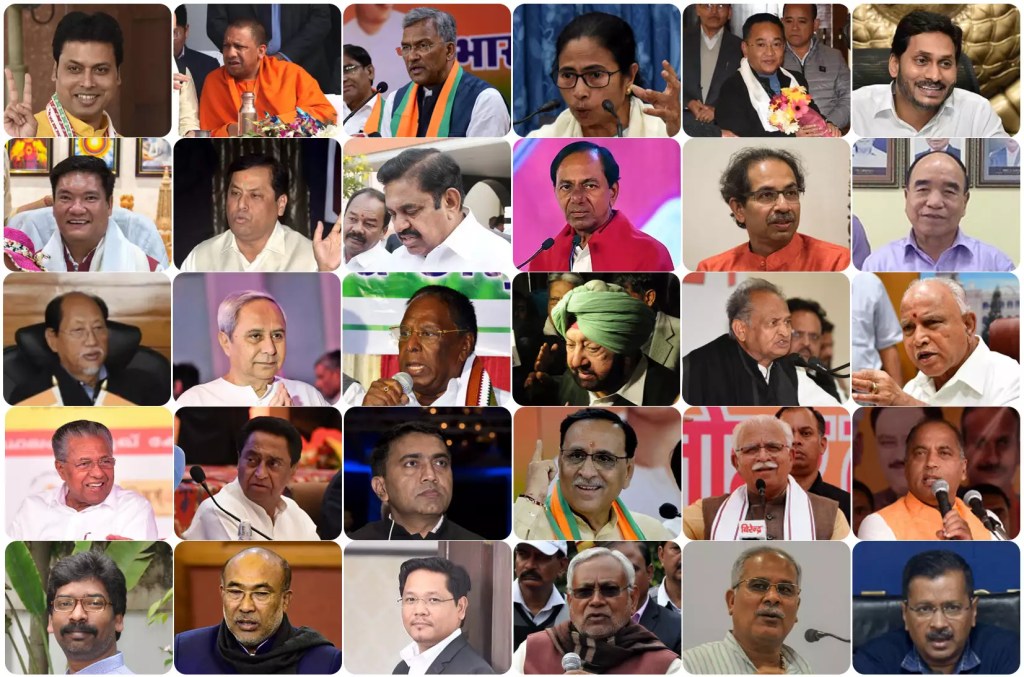
In unravelling the narratives of these leaders, a profound understanding emerges – politics transcends a mere administrative role; it is an intricate art form interwoven with the destiny of a nation. Narendra Modi’s adeptness at bridging tradition and modernity, Indira Gandhi’s resilience amid triumphs and turbulence, and Manmohan Singh’s nuanced leadership, blending global acclaim with domestic critique, highlight the intricate facets of leadership. Nandamuri Taraka Rama Rao’s enduring legacy, Naveen Patnaik’s strategic acumen, M.K. Stalin’s economic challenges, Mamata Banerjee’s enigmatic governance, Chandra Babu’s Economic Resurgence and Y.S. Jagan Mohan Reddy’s populist strategies contribute to a vibrant political narrative.
In the ever-evolving landscape of Indian politics, these leaders etch indelible imprints, shaping the destiny of their regions. The resounding theme echoes – politics is a craft requiring the delicate interweaving of triumphs, challenges, and the enduring spirit of democracy. As the tapestry of their narratives unfolds, it narrates a story of a nation advancing, guided by leaders who comprehend the profound artistry within the realm of politics. Each leader, from Narendra Modi’s political prowess to Y.S. Jagan Mohan Reddy’s populist strategies, contributes to the dynamic political narrative in India, underscoring that politics is more than administration; it is a rich tapestry woven with stories of triumphs, challenges, and the enduring spirit of democracy.
visit arjasrikanth.in / @DrArjasreekanth for more insights
 SOCIAL PERSPECTIVES