“Marching Towards Fitness: The Indian Army’s Revolutionary Health Overhaul”
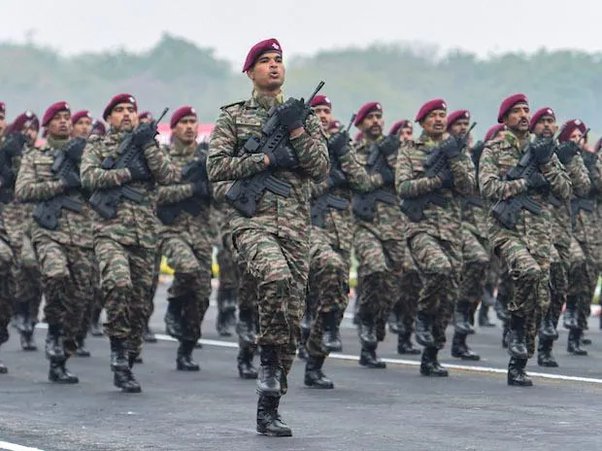
In the heart of one of the world’s most disciplined and physically adept military forces, a transformative wave has swept through the Indian Army. With an unwavering commitment to the well-being of its personnel, the force has recently introduced a ground breaking fitness policy. This policy not only addresses concerns related to overweight individuals but also ushers in a new era of comprehensive physical fitness assessments. In this exploration, we journey through the existing methods of assessment, the radical changes brought about by the new policy, and the potential repercussions for officers falling short of these redefined standards.
At the core of the Indian Army’s fitness evaluation are two pivotal tests – the Basic Physical Test (BPT) and the Physical Proficiency Test (PPT), conducted on a quarterly basis. The BPT spans a range of activities tailored to different age groups, including a demanding 5 km run and the formidable task of climbing a nine-meter vertical rope. Meanwhile, the PPT comprises a 2.4 km run, chin-ups, sit-ups, and a blistering 100-meter sprint. The outcomes of these tests find a home in the Annual Confidential Report (ACR), diligently maintained by the commanding officer.
Enter the era of the Army Physical Fitness Assessment Card (APFAC). This new policy mandates the use of this card for every individual, revolutionizing the way fitness is measured. Complementing the established BPT and PPT, additional tests join the roster. The policy takes a no-nonsense stance on visible improvement, demanding progress within 30 days for those struggling with weight issues. Emphasizing the gravity of these assessments, a brigade rank officer now presides over quarterly tests, joined by a medical officer on the board of officers.

Beyond the familiar BPT and PPT, the revamped policy introduces a 10 km speed march and a 32 km route march, held twice a year. An annual swimming proficiency test spanning 15 meters now applies universally across all ranks. This heightened scrutiny aims to maintain a perpetual state of peak physical fitness among the personnel, ensuring they are always prepared for the challenges that lie ahead.
For officers falling short of the new benchmarks, a phased approach to rectification is laid out. Initial consequences involve written counselling, offering a 30-day window for visible improvement. Subsequent actions may escalate to mandatory participation in special courses, and in extreme cases, the withholding of leaves. The introduction of Apex cards, intricately linked to the ACR, accentuates the weightiness of maintaining optimal fitness levels.
While the precise motives that spurred these guidelines remain shrouded in secrecy, what remains crystal clear is the Indian Army’s unyielding commitment to the physical fitness and overall well-being of its personnel. These guidelines are meticulously crafted to nurture a force that is not just fit but disciplined, capable of executing their duties with unparalleled efficiency.
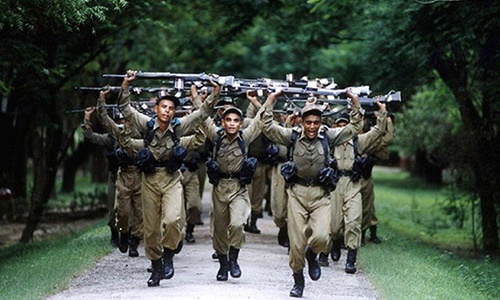
In the grand tapestry of the Indian Army’s legacy, the recent fitness policy stands out as a beacon of change, steering the force towards a future marked by vitality and resilience. This isn’t merely a tweak to the existing standards; it’s a comprehensive overhaul. With stringent fitness protocols, additional tests, and a renewed emphasis on weight management, the Army is making a resounding statement about its commitment to excellence. These guidelines are not just about individual fitness; they illuminate a path towards collective strength and readiness. In adopting these measures, the Indian Army continues to carve its indelible mark as a force that is not just robust, but resilient, and ready for any challenge that may come its way.
visit arjasrikanth.in for more insights
 SOCIAL PERSPECTIVES