Navigating the Agricultural Tax Maze: Decoding India’s Complex Landscape

In the diverse tapestry of India’s tax landscape, the treatment of agricultural income emerges as a distinctive thread, intricately woven with specific regulations and exemptions. This comprehensive exploration dives deep into the complex facets of agricultural income taxation, deciphering exemptions, potential liabilities, and the intricate challenges confronting the agriculture sector.
India’s agricultural sector, the backbone of its economy, faces a unique set of challenges in the realm of taxation. At the core of this discussion is Section 10(1) of the Income-tax Act, a pivotal provision that exempts agricultural income from direct taxation. Rooted in an understanding of the uncertainties ingrained in farming, this exemption serves as a mechanism to fortify farmers, enabling them to reinvest in their farms for sustainable growth.
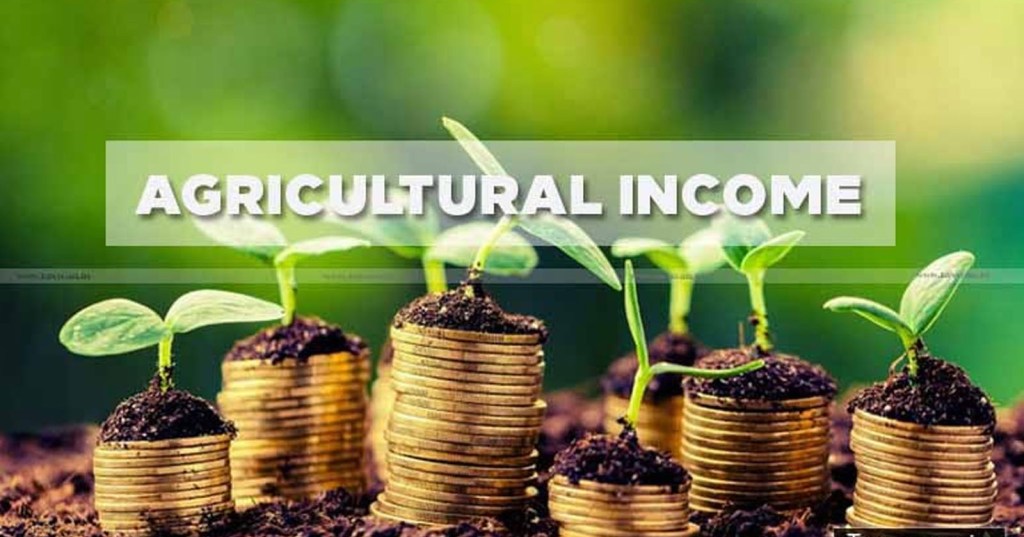
Section 10(1) stands as the linchpin of this discourse, explicitly carving out agricultural income from the realms of taxation. The motivation behind such an exemption is clear – to ease financial burdens on farmers, acknowledging the volatile nature inherent in agricultural pursuits. This provision erects a protective shield, preventing the Central Government from imposing or levying taxes on agricultural income.
The locus of authority for taxing agricultural income is under Entry 46 in the “State List” of the Constitution. This decentralization bestows exclusive legislative powers upon state governments to formulate laws imposing taxes on agricultural income. However, navigating state-level variations introduces a layer of complexity, reflecting the diverse agricultural practices and economic conditions prevailing across the myriad states.

The Goods and Services Tax (GST), a formidable indirect tax framework in India, extends a benevolent exemption to small-scale agriculture. Basic produce sold in its fresh, unprocessed form often escapes the GST net, aligning with the overarching goal of nurturing the agricultural sector’s pivotal role in India’s economic tapestry.
Within the realm of exemptions, complexities abound. While Section 10(1) stands as a bastion of exemption, state governments can exercise their prerogative to impose taxes if agricultural revenues transcend a stipulated threshold. This nuanced layer introduces a level of intricacy, with state-level regulations weaving their own distinct patterns.

Taxing agricultural income presents innate challenges, primarily owing to the demographic landscape of agriculture. A staggering 95% of total assets in this sector are owned by small and marginal farmers, leaving a mere 5% potentially liable for taxes. The confluence of limited revenue potential and the labyrinthine task of accurately assessing agricultural income amplifies the inherent challenges in taxing farmers.
A dichotomy unfolds in the distinction between agricultural and non-agricultural income. The former encompasses revenue derived from a spectrum of activities – cultivating crops, raising livestock, producing dairy goods, and engaging in poultry farming. Conversely, non-agricultural income spans a diverse array of sources, including beekeeping and poultry farming.
Indian agriculture grapples with a myriad of challenges intricately entwined in its fabric. Climate change, erratic monsoons, and soil degradation pose existential threats. Economic woes manifest in low incomes, restricted credit access, and market volatility. The labyrinthine institutions, characterized by complex land ownership and tenure systems, impede progress and amplify the sector’s struggles.

The exemption of agricultural income from direct taxation in India reveals a nuanced understanding of the challenges entrenched in the agricultural sector. However, this exemption is not isolated; it grapples with complexities, from nuanced state-level variations to evaluating income for small and marginal farmers. As India navigates the labyrinth of balancing economic imperatives with fortifying its agrarian backbone, the taxation of agricultural income emerges as a dynamic facet of the nation’s fiscal policies. Unravelling these complexities places India at a crossroads, delicately balancing the interests of farmers, economic sustainability, and tax transparency. This journey through exemptions and challenges is a testament to the intricate dance between historical commitments, constitutional provisions, and socio-economic dynamics shaping the fiscal policies of a nation deeply rooted in its agricultural heritage.
visit arjasrikanth.in for more insights
 SOCIAL PERSPECTIVES