India’s struggle for independence was marked by the unwavering commitment of numerous leaders, each contributing uniquely to the fight against British colonial rule. Among them, Netaji Subhas Chandra Bose stands out as a charismatic and defiant figure whose pursuit of India’s freedom took him on an extraordinary journey. This article delves into the life and legacy of Netaji, highlighting his significant contributions and examining the complex facets of his role in the struggle for independence.

Subhas Chandra Bose emerged as a prominent leader in the Indian National Congress during the late 1920s and 1930s. Known for his radical ideas and fiery speeches, he quickly rose to prominence within the younger, more assertive wing of the Congress. Bose’s tenure as Congress President in 1938 and 1939 showcased his ability to inspire and mobilize the masses, earning him the title “Netaji.” However, his differences with Mahatma Gandhi and the Congress high command led to his ousting from key leadership positions in 1939. Undeterred, Bose continued his pursuit of India’s independence and found himself placed under house arrest by the British authorities.
In 1940, Bose’s audacity took him beyond the confines of house arrest as he successfully escaped from India. Arriving in Germany in April 1941, he found an unexpected, albeit ambivalent, sympathy for India’s independence cause within the Axis powers. Establishing a Free India Centre in Berlin and later a Free India Radio, Bose utilized these platforms to broadcast his vision for a liberated India. The formation of the Free India Legion, comprising Indian soldiers captured by the Axis powers, showcased his determination to collaborate with Germany and Japan for the greater cause.
Bose’s collaboration with Japan and his identification with the Axis powers led to the revitalization of the Indian National Army (INA). Comprising both captured Indian soldiers and civilians enlisted in Malaya and Singapore, the INA became a symbol of diversity under Bose’s leadership. Creating popular slogans like “Jai Hind,” Bose infused the INA with unparalleled drive and charisma. The Provisional Government of Free India was formed in the Andaman and Nicobar Islands, underscoring Bose’s commitment to establishing an alternative governance structure.
The military campaign led by the INA, with Bose at its helm, faced challenges as the British Indian Army halted and reversed the Japanese offensive in late 1944 and early 1945. Despite Bose’s charismatic leadership, the INA suffered significant losses, and the dream of a liberated India seemed distant. The British Indian Army’s successful recapture of Singapore forced the INA to surrender, marking a turning point in Bose’s military endeavours. Bose, choosing not to surrender, aimed to escape to Manchuria with the hope of seeking Soviet support against the British.
Netaji Subhas Chandra Bose’s death in a plane crash in Taiwan remains shrouded in mystery and controversy. While some accepted the crash, others, especially in Bengal, held onto the belief that Bose would return to lead India to independence. The uncertainty surrounding his fate added an enigmatic dimension to his legacy. Post-independence, the Indian National Congress acknowledged Bose’s patriotism but distanced itself from his tactics and collaboration with fascist powers. The INA trials, where 300 officers were charged with treason, reflected the British Raj’s attempt to grapple with the legacy of Bose and the INA.
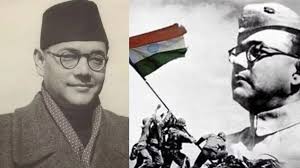
Netaji Subhas Chandra Bose’s life was a testament to unyielding courage and unwavering determination in the pursuit of India’s freedom. His leadership, though controversial, left an indelible mark on the struggle against British colonialism. As we remember Bose on his death anniversary, it is essential to critically examine his contributions, acknowledging the complexities of his choices and their impact on India’s journey to independence. Netaji’s legacy continues to inspire generations, reminding us of the sacrifices made in the pursuit of a free and sovereign India.
visit arjasrikanth.in for more insights
 SOCIAL PERSPECTIVES
One response to ““Remembering Netaji Subhas Chandra Bose: The Unyielding Spirit of India’s Freedom Struggle””
Wonderful post 👍🌹
LikeLike