“Redefining economic narratives: Exploring India’s resilience, growth, and shifting paradigms in the aftermath of the pandemic.”

The prevailing discussions surrounding a K-shaped recovery post-pandemic in India seem flawed, biased, and misinformed. These arguments primarily serve the interests of specific quarters who find India’s remarkable progress and its emergence as a leader in the new global south unpalatable. In this article, we will examine various patterns and indicators that challenge the notion of India’s underperformance and present a more nuanced perspective on the country’s economic trajectory.
The traditional proxies used to gauge India’s economic well-being, such as low 2-wheeler sales or fragmented land holdings, fail to capture the true dynamics of the Indian economy. Instead, we should focus on indicators like income, savings, consumption, expenditure, and policy measures aimed at empowering the masses. These factors, combined with the proliferation of digital technologies and support systems, paint a more accurate picture of India’s progress.
Contrary to popular belief, 2-wheeler sales in India have shown stellar performance, even during periods of economic slowdown. For instance, in FY’19, when the agricultural GDP slouched at 2.1% and rainfall deficiency reached around 14%, 2-wheeler sales reached approximately 2.12 crore units. Even in the current fiscal year, sales are projected to touch 1.80 crores. Furthermore, post-pandemic, we see a trend of households reallocating their savings towards physical assets such as real estate, and a significant percentage of buyers shifting to used or entry-level cars.
Tractor sales, often considered an indicator of rural well-being, have remained robust, further challenging the narrative of a K-shaped recovery. Additionally, we observe inter-group and intra-group transitions in both the 2-wheeler and 4-wheeler segments. With rising incomes, individuals are opting for more expensive motorcycles and cars, while two-wheelers are being considered as giffen goods, leading to the substitution effect.
Post-pandemic, there has been a shift from savings channelled into physical assets to financial assets, aligning with the global trend of taking advantage of lower interest rates. However, recent data suggests a renewed interest in financial assets in India since 2023.
An interesting example of the rising prosperity and disposable income in rural areas can be seen in the growth of food delivery platforms. These platforms have found significant traction in non-metro areas, with an estimated 2 crore family members actively using services like Zomato. This trend reflects the rich Indian heritage of sharing and prioritizing family well-being.
Contrary to popular belief, income inequality in India has significantly declined. Gini coefficient estimates using income tax data indicate a decline from 0.472 to 0.402 during FY14-FY22. This decline is due to a great migration at the bottom of the income pyramid, with a substantial number of individuals moving up the income ladder. The changing income patterns of MSMEs also reflect the evolving industry and service landscape, with more entities entering the formal economy.
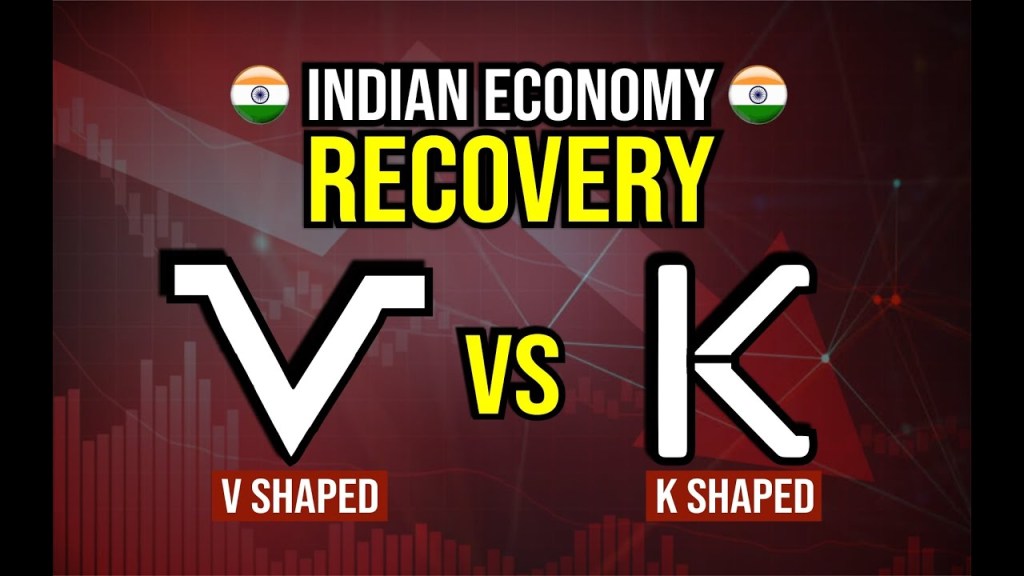
The narrative of a K-shaped recovery in India fails to capture the true essence of the country’s economic progress. The indicators discussed in this article highlight the resilience of the Indian economy and the positive shifts in income patterns, consumption behaviour, and investment trends. It is crucial to move beyond preconceived notions and embrace a more comprehensive understanding of India’s growth story, which is characterized by inclusivity, empowerment, and a renaissance of the new global south.
visit arjasrikanth.in for more insights
 SOCIAL PERSPECTIVES