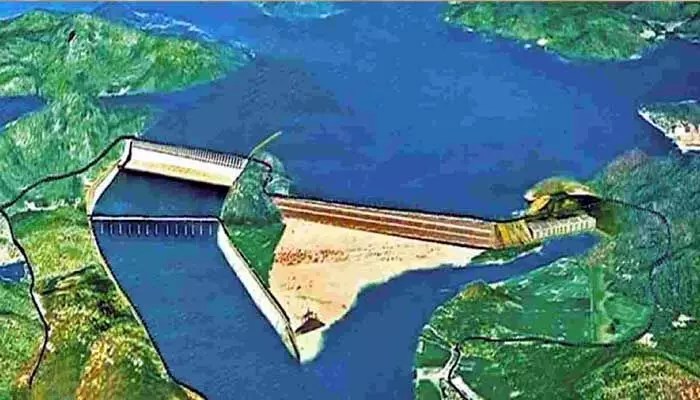
Proposed in 1941, the Polavaram project, a testament to the resilience of vision, has faced the ebb and flow of challenges – leadership transitions, managerial oversights, and financial disagreements. The once-set April 2022 completion deadline now hangs in uncertainty, whispers of a potential extension lingering until 2025. Launched in 2002, the project aspires to redefine Andhra Pradesh’s topography through expansive irrigation. However, its noble goals are entangled in a web of delays, controversies, and multifaceted challenges. This comprehensive exploration not only scrutinizes the project’s advantages and disadvantages but also unravels the intricate political dynamics and the formidable hurdles it encounters on its journey to realizing ambitious objectives. Nestled on the Godavari River, spanning West Godavari and East Godavari districts, the Polavaram Project, designated a national endeavour in 2014, emerges as a linchpin in addressing critical aspects of water resource management. Acknowledged by the Central Board of Irrigation and Power (CBIP), the project’s envisioned benefits stand poised to revolutionize the region’s socio-economic landscape.
The Polavaram Irrigation Project, a beacon of transformative aspirations, unfolds a tapestry of benefits across diverse domains. Envisioned to embrace vast expanses in Visakhapatnam, East Godavari, West Godavari, and Krishna Districts, the project emerges as a catalyst for agricultural prosperity, aiming to elevate crop yields and rural livelihoods. The meticulously planned 960 MW hydropower plant stands as a testament to the project’s commitment to meeting Andhra Pradesh’s burgeoning energy needs, thereby fostering a landscape of industrial and economic development. Beyond the realms of energy, the reservoir’s strategic capacity is poised to orchestrate a ballet of river regulation during monsoons, acting as a guardian against downstream flood risks.
Addressing the parched throats of water-scarce regions, the project takes on the mantle of a benevolent provider, aspiring to quench the thirst of numerous villages and towns. Stepping into the realm of infrastructure, the envisioned enhancement of inland waterway transportation along the Godavari River promises not just connectivity but an impetus for economic growth. In the crucible of construction and operation, the Polavaram Project unfolds as more than just a hydraulic marvel; it holds the potential to be a harbinger of employment, a catalyst for economic development, and a transformative force shaping the socio-economic landscape of Andhra Pradesh.
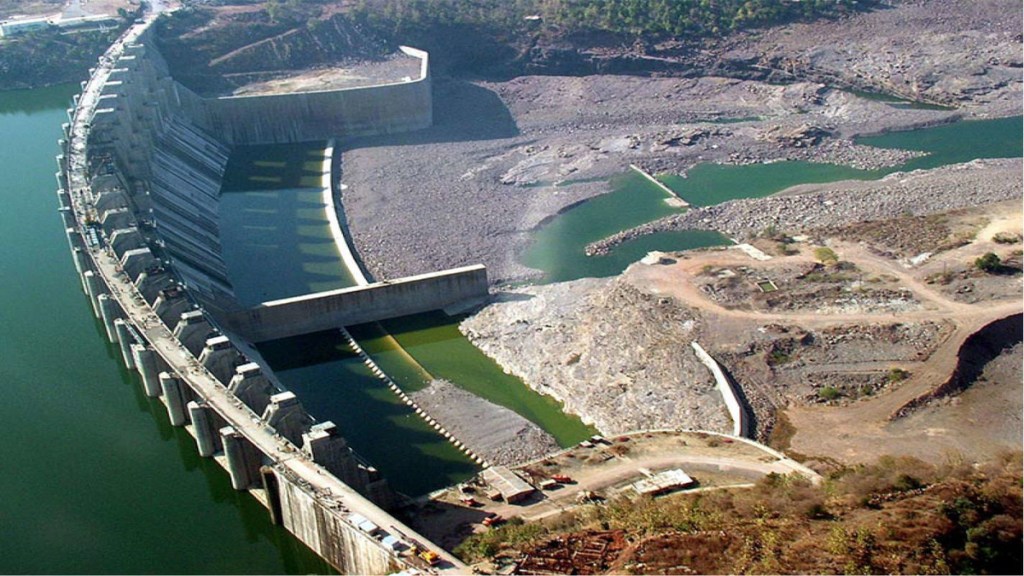
Amidst the transformative promises that the Polavaram project holds, a tapestry of challenges casts a shadow over its ambitious aspirations. The looming prospect of displacing over 1.88 lakh people across 222 villages presents a formidable humanitarian challenge, demanding intricate solutions from the government to ensure the seamless resettlement of affected communities. The project’s footprint extends beyond the boundaries of progress, submerging archaeological sites, wildlife sanctuaries, and coal deposits, echoing the environmental concerns that reverberate through opposition voices.
In the intricate dance of politics, the spectre of agitation looms large, with political entities and environmentalists poised to challenge the project, creating a contentious political landscape. The financial labyrinth adds another layer of complexity, with estimated costs soaring to Rs 65,000 crore. Bureaucratic delays further exacerbate the challenge, constraining the project’s timely execution and amplifying financial strains. Despite fervent efforts and revised completion targets, the elusive nature of meeting deadlines paints a portrait of uncertainty. The envisioned benefits of the Polavaram project, encompassing irrigation, hydropower, flood control, and water supply, are shackled by the chains of potential delays, postponing the realization of positive impacts on the landscape and the lives it aims to transform.
As of the current date, the Polavaram project stands at a crossroads, navigating through a labyrinth of uncertainties and challenges. The project, initiated by Y.S. Rajasekhara Reddy, continued under Chandra Babu Naidu, and presently overseen by Chief Minister Y.S. Jagan Mohan Reddy, finds itself entangled in disagreements between the state and central governments. The central government’s commitment to fund solely the irrigation component places the onus of managing rehabilitation costs squarely on the shoulders of the state.
The reimbursement process, demanding upfront expenditure by the state and subsequently claiming funds, has become a contentious point, further intensifying financial strains. The 2023 revised cost estimate for Phase I stands at Rs. 17,144.06 crore, yet the 2021-22 Union Budget remains devoid of any allocation for the project, compounding the financial challenges. The reimbursement-only commitment amplifies the financial burden on the state. Amidst these challenges, a glimmer of progress emerges with 50% completion of canal works. The Patti Seema Lift Irrigation Project provides a temporary solution, diverting Godavari water to the Krishna Delta, addressing immediate water scarcity concerns. However, critics contend that the state government’s emphasis on welfare schemes has redirected funds, impeding progress and intensifying the contentious nature of the project. The Polavaram project finds itself at a critical juncture, grappling with financial intricacies, political discord, and the imperative need for sustained momentum to overcome the hurdles on its transformative path.

The Polavaram Project stands as a testament to Andhra Pradesh’s unwavering commitment to water resource management and economic progress. Despite inherent challenges, its transformative potential in revolutionizing irrigation, power generation, and flood control is undeniable. As the project advances, a meticulous approach to environmental considerations, displacement issues, and financial constraints becomes imperative. Positioned as a beacon of sustainable development, the Polavaram Project holds the capacity to address pressing water challenges while fostering robust economic growth in the state. It symbolizes a profound commitment to balancing developmental aspirations with environmental consciousness.
In its journey, the project encounters multifaceted challenges, including displacement, environmental impacts, financial constraints, and political discord. Realizing its objectives depends on adeptly navigating these intricate complexities, forging consensus between state and central authorities, and empathetically addressing concerns of displaced communities and environmental activists. Termed as the “Lifeline of Andhra Pradesh,” the Polavaram project embodies lofty ambition and resilient perseverance. It stands as a testament to the intricate dynamics woven into large-scale infrastructure initiatives. As this transformative venture unfolds, it promises not only to alleviate water-related challenges but also emerges as a symbol of sustainable progress, showcasing the synergy between ambition, adversity, and the pursuit of a more prosperous future for Andhra Pradesh.
visit arjasrikanth.in for more insights
 SOCIAL PERSPECTIVES