Navigating Through Millennia – The Quest to Understand the Language of an Ancient Civilization
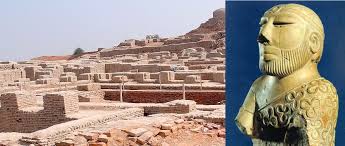
The Indus Valley Civilization, dating back to 3300 BC, remains a treasure trove of historical intrigue. For decades, scholars, historians, and scientists have endeavoured to decode the enigmatic script from that era. The linguistic basis, the number of symbols, and the very essence of whether it represents a language at all have fueled scholarly debates. In a recent research paper by Bangalore-based software engineer Bahaa Hanuma Ali Mukhopadhyay, new insights emerge, shedding light on the scientific underpinnings of the script and its potential commercial applications. This article delves into the complexities surrounding the ancient script, exploring its challenges, controversies, and the evolving perspectives of experts.
The Indus Valley Civilization, thriving between 3300 BC and 1300 BC, marked a pinnacle in ancient Asia. Reaching its zenith from 2600 BC to 1900 BC, it showcased remarkable urban planning, intricate economic systems, and dynamic overseas trade. Encompassing an expansive territory of over eight hundred thousand square kilometers, predominantly in present-day Pakistan and Northwest India, it served as the harbinger of subsequent urban cultures in the subcontinent. This ancient urban marvel emerged along the Indus River , spanning from present-day Chandigarh to the Arabian Sea coast. Flourishing for over 1,500 years, it left an indelible legacy through sophisticated urban planning, ground-breaking architecture, and advanced expertise in mathematics and astronomy, solidifying its significance in shaping the course of ancient civilizations.

The script of the Indus Valley Civilization serves as a crucial artifact, offering a glimpse into the thoughts and lives of its ancient inhabitants. The ability to write indicates a level of societal advancement, enabling the preservation of information deemed important. Much like contemporary written records, the script holds the key to understanding the civilization’s values, priorities, and societal structures.
Historians and researchers have grappled with numerous challenges in deciphering the Indus Valley script. With over a hundred proposed decipherments, the absence of bilingual inscriptions poses a significant hurdle. The script’s pictographic nature, coupled with the unknown language it represents, adds complexity. The diverse linguistic landscape of the civilization, spanning a large geographic area, further complicates the task.
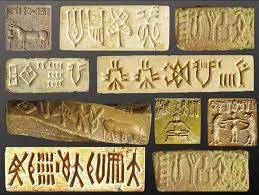
Debates surrounding the Indus Valley script have been rife with varying perspectives. Disagreements on the number of symbols, ranging from 62 to 676, exemplify the lack of consensus. The quest to identify the underlying language has seen theories ranging from Sanskrit to Dravidian, with recent propositions suggesting a non-linguistic, commercial purpose for the script.
Mukhopadhyay’s recent research introduces a fresh perspective, proposing that the script served primarily for commercial purposes. The inscriptions, she contends, functioned as permits for tax collection, licenses for crafts, or trade agreements. Challenging traditional beliefs about the script’s religious or literary nature, Mukhopadhyay’s theory reframes the narrative, emphasizing the pragmatic, economic utility of the script.
While few argue for revaluating the script’s classification, questioning whether it should be considered a script at all. Drawing parallels with modern-day QR codes, few posit that the Indus Valley inscriptions may have served a multifaceted purpose beyond linguistic communication. This raises questions about the traditional understanding of ancient scripts and encourages scholars to explore alternative interpretations.
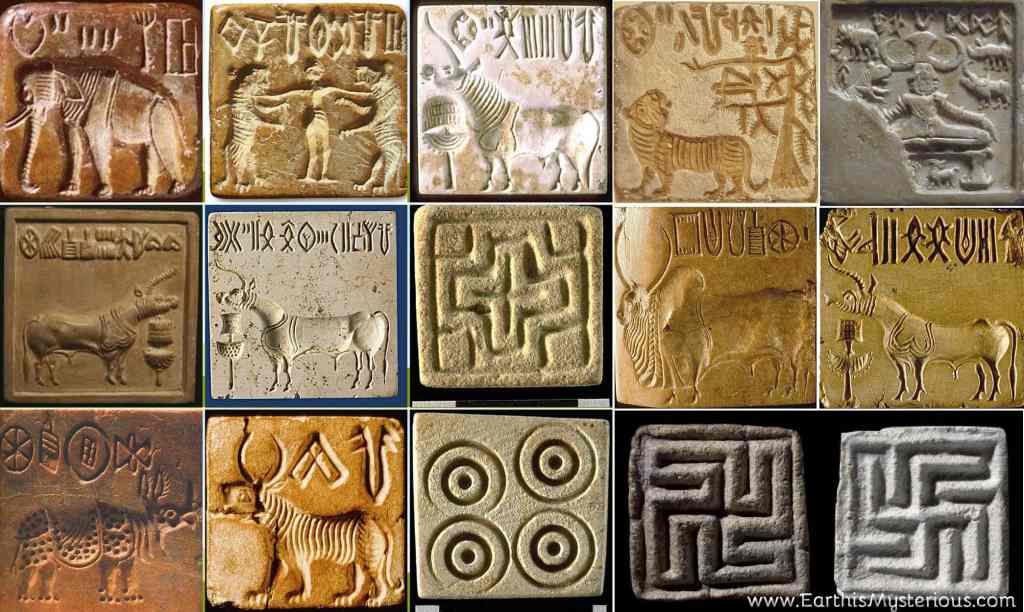
Despite decades of efforts, the script’s complete decipherment remains elusive. Yet, its significance as a historical artifact cannot be overstated. The script provides invaluable insights into the administrative, commercial, and possibly cultural aspects of the Indus Valley Civilization. Unravelling its mysteries is not only a scholarly pursuit but a key to unlocking the depths of an ancient civilization.
As we navigate through the millennia, attempting to decipher the script of the Indus Valley Civilization, the journey becomes as significant as the destination. The script, with its complexities and controversies, invites us to rethink our understanding of ancient languages and communication. While scholars continue their endeavours, the script stands as a silent witness to a civilization’s intricacies, awaiting the day when its secrets will fully emerge from the echoes of millennia past.
visit arjasrikanth.in for more insights
 SOCIAL PERSPECTIVES